Imagine being born into a world where your first breath is a struggle and your only hope for survival is held behind a military checkpoint. That's the nightmare currently facing families in Gaza. We aren't just talking about a lack of medicine on a shelf. We're talking about a systematic denial of the right to live.
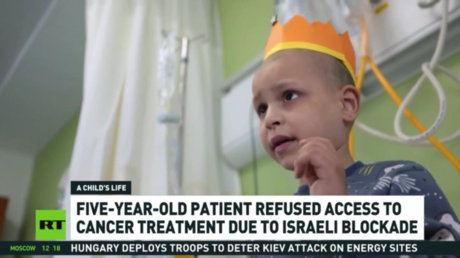
The case of a young boy born in Gaza who was refused cancer treatment by Israel isn't an isolated tragedy. It's a window into a collapsing healthcare system where "security concerns" frequently override the basic human right to pediatric oncology care. When a child has a tumor growing inside them, every hour spent waiting for a permit is an hour closer to an unthinkable outcome.
Why Gaza Kids Can't Get the Care They Need
The healthcare infrastructure in Gaza has been hollowed out. Decades of conflict and a strict blockade mean that specialized equipment, like radiation therapy machines and advanced chemotherapy drugs, simply aren't available. If you're a parent in Gaza and your child is diagnosed with cancer, your only choice is to look outward—usually toward hospitals in Jerusalem, the West Bank, or Jordan.
But getting there requires a permit from the Israeli authorities. This isn't a simple paperwork exercise. It's a bureaucratic labyrinth that often ends in a "no" without any clear explanation. According to data from the World Health Organization (WHO), nearly a third of permit applications for patients to leave Gaza are delayed or denied. For children, the rate of approval is slightly higher, but even a 10% denial rate means hundreds of kids are left to die in a strip of land that lacks the tools to save them.
The system is broken. It's not just about the child; it's about the "security clearance" of the parents. If a mother or father is deemed a risk, the child is often forced to travel alone or with an elderly relative. Imagine a five-year-old undergoing chemotherapy in a foreign city without their parents. It's cruel, and honestly, it's a stain on our collective conscience.
The Invisible Barriers to Life-Saving Treatment
We often hear about the physical blockade—the walls, the drones, the checkpoints. But the medical blockade is just as lethal. It's made of red tape and silence. When the Israeli District Liaison Office (DLO) denies a permit, they don't provide a roadmap for an appeal. They just provide a dead end.
Health rights organizations like Physicians for Human Rights Israel (PHRI) have been screaming about this for years. They point out that the "security" argument is often used as a blanket excuse. How is a toddler a security threat? How is a mother whose only goal is to see her son survive a threat? These are questions that rarely get an honest answer in the halls of power.
The impact of these delays is measurable. Cancer doesn't wait for a permit. Stage II becomes Stage IV while a file sits on a desk. By the time some children are finally allowed through the Erez Crossing, the window for effective treatment has slammed shut. We're seeing a generation of Gazan children whose survival is determined by politics rather than pathology.
The Myth of Medical Neutrality
International law is supposed to protect the sick. The Fourth Geneva Convention is pretty clear about the obligations of an occupying power to ensure medical supplies and care for the population. Yet, in the case of Gaza, "medical neutrality" is a myth.
Resources are weaponized. The entry of spare parts for MRI machines or medical isotopes for scans is frequently blocked or delayed because they're labeled "dual-use" items. This means a piece of equipment that could diagnose a brain tumor is treated with the same suspicion as a component for a rocket. It’s a logic that treats every hospital bed like a battlefield.
Breaking Down the Numbers of the Crisis
To understand the scale, you have to look at the sheer volume of need. Each year, thousands of patients in Gaza require referrals for treatment unavailable locally. In 2023 and 2024, the situation grew exponentially worse as active conflict decimated what remained of the local clinics.
- Over 40% of essential medicines in Gaza are at "zero stock" levels.
- The waiting time for a permit can range from weeks to months.
- The approval rate for companions (parents) is significantly lower than for the patients themselves.
These aren't just statistics. They represent empty chairs at dinner tables. When Israel refuses a boy cancer treatment, they're making a choice that goes beyond border control. They're deciding who is worthy of a future.
What Happens When the World Looks Away
The media cycle moves fast. A video of a suffering child might trend for a day, but the policy remains. This specific case—the boy refused treatment—is a symptom of a much deeper rot. The international community often expresses "deep concern," but concern doesn't provide chemo.
We see a lot of talk about humanitarian corridors. But a corridor that can be closed at any moment by a junior official isn't a corridor; it's a cage with a very small door. The Palestinian Ministry of Health is constantly trying to coordinate with international bodies, yet the ultimate power remains with the side that controls the gate.
Beyond the Headlines
If you think this is just about "one side versus the other," you're missing the point. This is about the fundamental obligation to protect children. No child chooses where they're born. No child should be penalized for the politics of their parents or the location of their home.
The reality on the ground is that Gaza's healthcare system is in a state of terminal collapse. Without a permanent, guaranteed mechanism for medical transfers that is insulated from political and military shifts, we'll keep seeing these stories. We'll keep seeing videos of parents pleading for their children's lives.
Practical Steps to Support Medical Access
If you're tired of just feeling bad about the news, there are ways to actually push back against this medical blockade.
Don't just share a video. Support organizations that are on the ground doing the legal and logistical heavy lifting. Groups like Physicians for Human Rights Israel and Medical Aid for Palestinians (MAP) don't just provide care; they fight the legal battles to get these permits approved. They challenge the "security" designations in court and often win, proving that the initial denials were arbitrary.
Demand transparency from international health organizations. Ask why the WHO and other bodies aren't more vocal about the specific names of officials blocking pediatric care.
Pressure your own government to condition aid and diplomatic support on the free movement of patients. Medical care shouldn't be a bargaining chip. It's a human right. Every day a child is denied treatment is a day the international legal system fails. Stop looking at this as a complex geopolitical issue and start looking at it as a simple question of survival. If a child has cancer and there's a hospital an hour away that can save them, the only moral answer is to let them through.
The boy in that video isn't a statistic or a propaganda tool. He's a kid who deserves a chance to grow up. Until the blockade on medicine and movement is lifted, the "security" Israel claims to be protecting will be built on the graves of children who never had a fair fight.