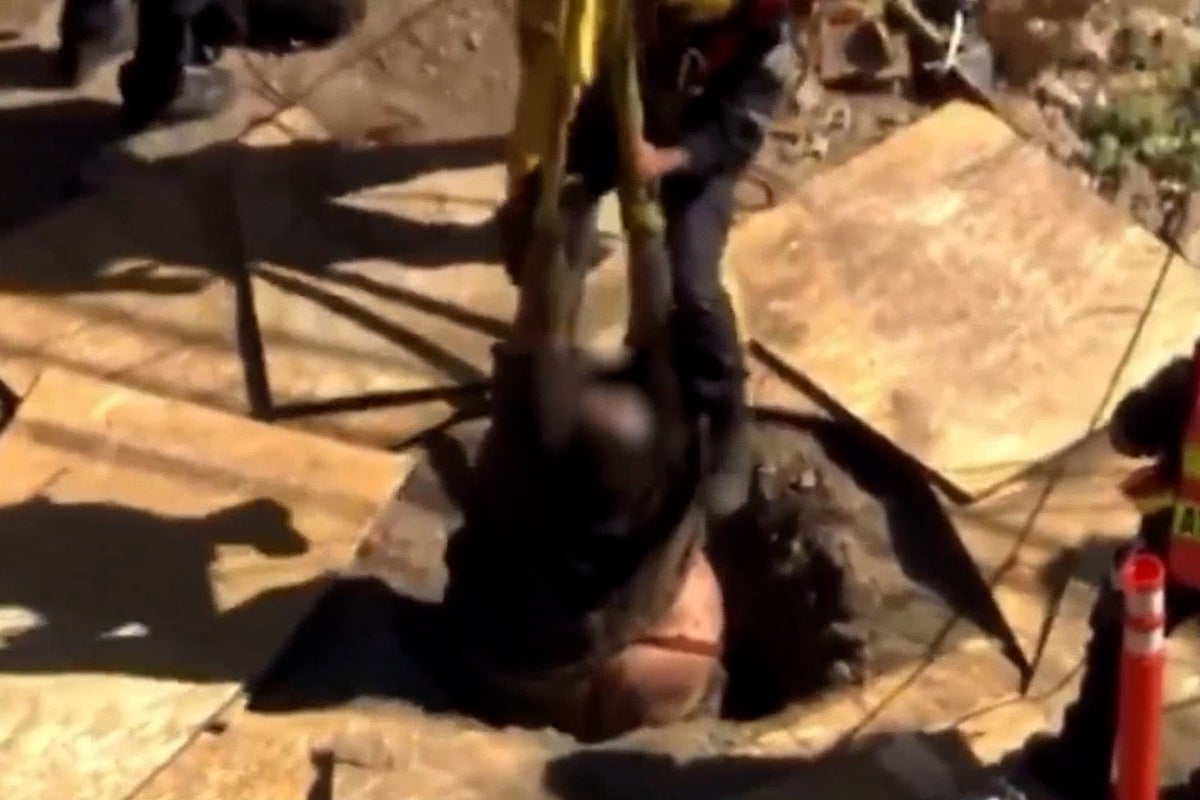
A fifteen-foot fall into a construction trench is rarely just an accident. It is a mathematical certainty born of skipped steps and razor-thin profit margins. When a worker was hoisted from a deep excavation site by firefighters this week, the headlines focused on the rescue—the ropes, the pulleys, and the heroism of the first responders. But the real story lives in the dirt. It is found in the absence of shoring, the weight of uncompacted soil, and a regulatory framework that treats human safety as a line item to be negotiated.
Excavation remains the most dangerous job in the American trades. The physics are unforgiving. A single cubic yard of dirt weighs approximately 3,000 pounds, roughly the same as a mid-sized sedan. When a trench wall collapses, there is no time to run. There is no air pocket. The pressure on the chest makes breathing impossible within seconds. While this specific worker survived the fall and the subsequent extraction, his presence in a fifteen-foot unprotected hole points to a systemic failure that the construction industry refuses to address head-on.
The Gravity of Negligence
Safety standards are not suggestions. OSHA regulations explicitly require that any trench deeper than five feet must have a protective system in place. These systems generally fall into three categories: sloping the ground at an angle, benching the soil into steps, or using mechanical supports like trench boxes or shoring.
When a worker is found at the bottom of a fifteen-foot pit without these protections, it is a deliberate choice.
Contractors often cite "tight schedules" or "soil stability" as reasons to bypass these requirements. They look at a wall of clay and decide it looks "sturdy enough" for a quick pipe installation. This is a gamble where the worker puts up the stakes and the owner keeps the winnings. The reality is that soil is a dynamic, living material. Moisture content, vibration from nearby traffic, and the weight of heavy machinery parked too close to the edge can all trigger a catastrophic shift in an instant.
The Cost of Speed
The economics of the job site often override the ethics of the foreman. In a competitive bidding environment, the firm that accounts for every hour of safety setup is frequently outbid by the firm that cuts corners. This creates a "race to the bottom" where the most dangerous operators are rewarded with the most contracts.
- Shoring Costs: Renting and installing hydraulic shoring or steel trench boxes adds thousands to a project budget.
- Time Constraints: Sloping a trench back to a safe angle requires moving significantly more dirt, which takes more time and fuel.
- Space Limitations: In urban environments, there often isn't enough room to slope or bench, making expensive mechanical shielding the only legal option.
When these costs are ignored, the worker pays the price. The rescue in question required a specialized technical team and hours of precision work. The irony is that the cost of the rescue—borne by taxpayers and the fire department—often exceeds the cost of the safety equipment that would have prevented the incident in the first place.
Why Fines Are Failing to Protect Workers
The current penalty system is a paper tiger. When a company is cited for a "willful violation" leading to a trench collapse or a near-miss, the fines are often reduced during the settlement process. For a multi-million dollar construction firm, a $15,000 or $50,000 fine is simply the cost of doing business. It is a tax on bad luck rather than a deterrent for bad behavior.
We see a recurring pattern in the industry. A company is cited, they pay a reduced fine, and two years later, they are back in the news for another "accident." To change the culture of the job site, the industry needs to move beyond fines and toward criminal accountability. Until project managers and owners face actual jail time for sending men into unprotected holes, the math will continue to favor the risk.
The Myth of the Unforeseeable Accident
The term "accident" is a misnomer in the world of excavation. An accident is a lightning strike. A trench collapse is a predictable outcome of physics. If you dig a vertical wall in unstable soil and do not support it, gravity will eventually claim that space.
Industry veterans know this. They see the cracks forming at the edge of the pit—the "tension cracks" that signal an imminent wall failure. They hear the small "sloughing" of dirt hitting the floor of the trench. A worker standing at the bottom of a fifteen-foot hole is trapped in a kill zone. If that wall moves, the force is equivalent to being hit by a freight train.
The Technical Reality of the Rescue
The rescue of a worker from a deep hole is a high-stakes engineering problem. You cannot just send more people into the hole to get him; the vibration of their movement could trigger a second collapse that buries the rescuers alongside the victim.
Fire departments use a process called technical rescue. This involves:
- Scene Stabilization: Ensuring no heavy equipment is running nearby to minimize vibration.
- Atmospheric Monitoring: Checking for "pockets" of gas like methane or carbon monoxide that settle in low points.
- Mechanical Advantage: Setting up tripod systems and high-angle rope hauls to lift the victim vertically.
In this instance, the victim was lifted out, but the psychological toll on a crew after such an event is permanent. The "near-miss" is a haunting reminder that the safety culture on that specific site was non-existent.
The Invisible Risk of Urban Infill
As cities get denser, we are digging deeper and closer to existing structures. This increases the complexity of every "simple" hole. An old water line might be leaking, saturating the soil and making it heavier and more prone to sliding. A neighboring building's foundation might be putting "surcharge" pressure on the trench wall.
The worker who was lifted out by firefighters is the face of a much larger problem: the fragmentation of the workforce. With the rise of sub-contracting and "gig" labor in construction, the person at the bottom of the hole is often three or four layers removed from the person who actually signed the safety plan. Responsibility is diffused until it disappears.
Breaking the Silence on the Job Site
There is a pervasive "tough guy" culture that prevents younger workers from speaking up when they see a dangerous trench. They are told to "get in there and get it done." They are told that "we've been doing it this way for twenty years."
This is a lie. The soil doesn't care about your twenty years of experience. It only cares about the laws of physics.
A fifteen-foot hole is not a workplace; it is a grave waiting to be filled. The fact that a man was pulled out alive is a testament to the skill of the firefighters, not the luck of the contractor. True industry leadership requires recognizing that every rescue is a failure of management.
If you are a worker on a site today and you are asked to enter a trench deeper than your head without a box or a slope, walk off the job. No paycheck is worth three thousand pounds of dirt. Until the workers themselves refuse to enter these death traps, and until the legal system treats these "accidents" as the crimes they are, the ropes and harnesses of the rescue teams will continue to be the final, desperate line of defense.
Check the shoring logs before you pick up the shovel.