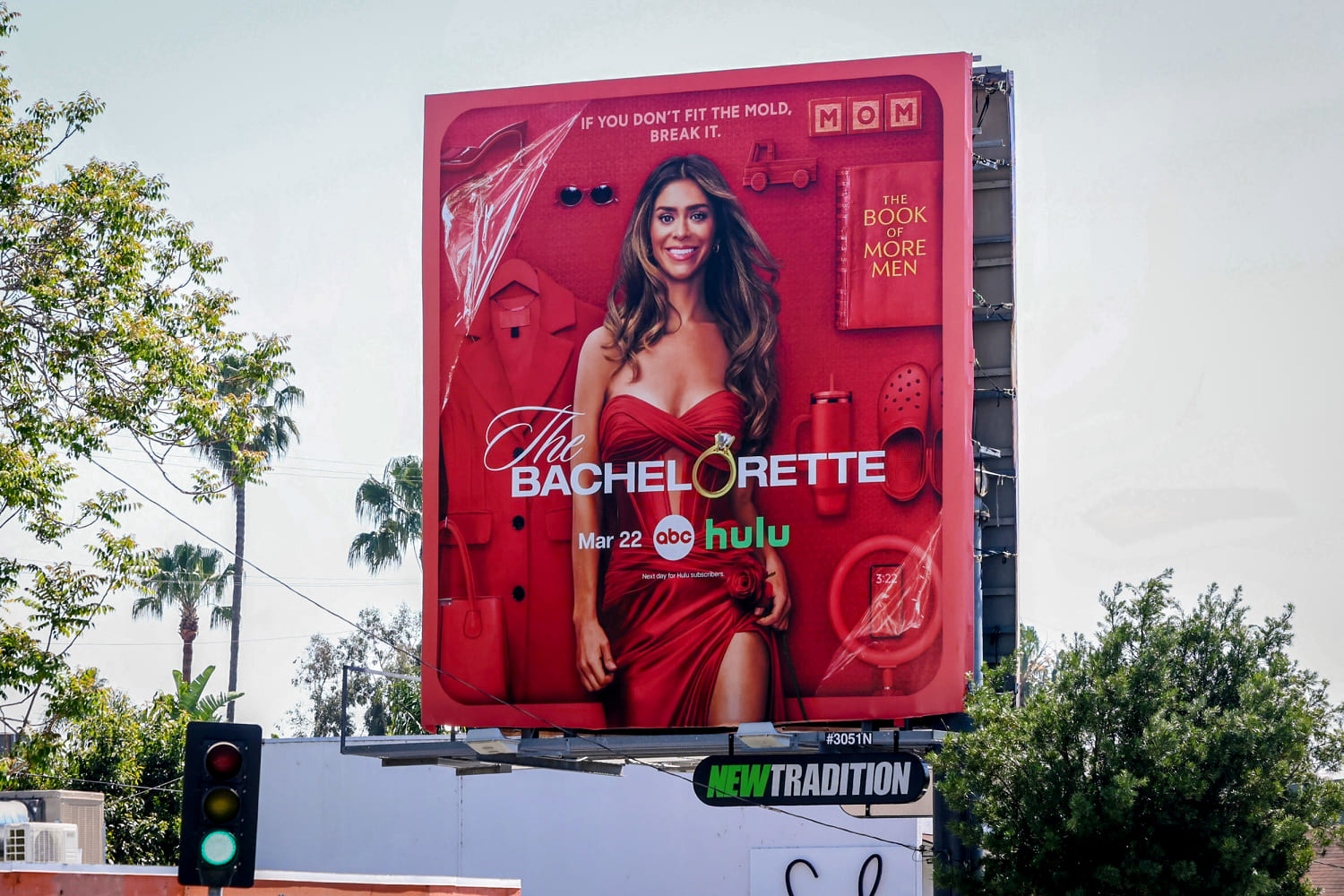
The long-standing marriage between ABC and The Bachelorette has finally hit the rocks, not because of a lack of "journey" or "connection," but because of a cold, hard spreadsheet. For years, the franchise served as the bedrock of the network’s unscripted slate. It was cheap to produce, easy to sell to advertisers, and guaranteed a loyal, if aging, audience every Monday night. But the recent decision to bench the spin-off signals a fundamental shift in how Disney views the value of its linear assets. The rose has wilted, and the pruning shears have come out.
Reality television is a volume business. To understand why a titan like The Bachelorette is suddenly persona non grata, you have to look at the intersection of ballooning talent costs, stagnant ratings, and the aggressive pivot toward streaming-first content. The show isn't just losing viewers; it is losing its ability to justify its existence in a world where Hulu and Disney+ demand fresh, bingeable IP that doesn't carry the heavy baggage of twenty years of production overhead.
The Margin Compression Trap
Every legacy television show eventually hits a wall where the cost of production exceeds the advertising revenue it generates. This is the "margin compression" trap. For The Bachelorette, that wall became a fortress. As the franchise aged, the costs associated with international travel, high-end production design, and the massive security apparatus required to keep "spoilers" from leaking became astronomical.
While costs climbed, the linear ratings took a nose-dive. Advertisers are no longer willing to pay a premium for a show that primarily reaches a demographic that has largely migrated to social media and streaming platforms. When the 18-49 demo—the holy grail for network sales teams—drops by double digits year-over-year, the internal math at ABC begins to look grim. They aren't just losing eyes; they are losing the specific eyes that brands like L’Oréal and Target are willing to pay the most to reach.
Streaming Cannibalization and the Hulu Factor
There is a quiet war happening inside the Disney ecosystem. On one side, you have the linear broadcast network (ABC), which still needs "appointment viewing" to stay afloat. On the other, you have Hulu, which thrives on next-day streaming and deep back-catalogs. The Bachelorette found itself caught in the middle.
The network realized that a significant portion of the audience was simply waiting 24 hours to watch the show on Hulu. While this helps the streaming numbers, it guts the live broadcast's value. If people aren't watching live, they aren't seeing the high-priced commercials that keep the lights on at the network. Disney executives have reached a point where they would rather invest those millions into a "Hulu Original" dating show with lower production costs and higher ownership stakes, rather than continue to prop up a fading broadcast relic.
The Social Media Leakage
Another overlooked factor is the loss of the "cultural conversation" monopoly. In the early 2010s, if you wanted to know who won the final rose, you had to watch the show. Today, the contestants are often more famous on TikTok and Instagram than they are on the TV screen. This creates a weird paradox where the show acts as a free marketing engine for the contestants’ personal brands, but the network sees very little of that "influencer" money.
The contestants are the ones winning. They go on the show, gain two million followers, and launch "fit-tea" empires or podcast networks. ABC, meanwhile, is left holding the bill for the private jets and the fancy gowns. The network is tired of being a subsidized talent agency for the next generation of social media stars.
The Brand Fatigue Problem
Even the most loyal fans have a breaking point. The formula for The Bachelorette has remained virtually unchanged for two decades. The same staged dates, the same manufactured drama, and the same "I'm starting to fall for you" scripts. This predictability was once its strength, providing a "comfort food" experience for viewers. Now, it is a liability.
Modern audiences, raised on the chaotic energy of Love Island and the high-concept hooks of Love is Blind, find the traditional Bachelor format stodgy and slow. The "Bachelor Mansion" feels like a museum. When a show becomes a parody of itself, the only way to save the brand is to take it off the air for a significant period. You have to let the audience miss it before you can successfully reboot it.
A Failure to Adapt
While competitors were experimenting with diverse casting, psychological twists, and more authentic "docu-style" filming, The Bachelorette stayed stuck in its ways. The production team tried to inject "drama" through heavy-handed editing, but the audience saw through it. The "villain" edits became predictable. The "shocker" endings became routine.
When a product stops innovating, it dies. ABC’s decision to move away from the show is a confession that they don't know how to fix the format without alienating the small, conservative core audience that still watches live TV. It is easier to walk away than it is to perform open-heart surgery on a twenty-year-old franchise.
The Rising Power of Independent Reality
We are entering an era where reality stars don't need a network to find an audience. If you look at the success of independent creators and smaller cable networks like Bravo, they are doing more with less. They rely on "messy" authenticity rather than the polished, cinematic look that The Bachelorette prides itself on.
ABC is looking at the success of The Golden Bachelor and realizing that if they are going to stay in the romance business, they need a new hook. The "senior" version of the show proved that there is still an appetite for the brand, but only if it feels fresh and hits a different emotional chord. The standard Bachelorette model of 20-somethings looking for an engagement—and an Instagram deal—is officially a depreciating asset.
The Production Power Dynamics
Warner Bros. Television produces the show for ABC. This creates a "work-for-hire" dynamic where ABC has to pay a licensing fee to air the program. As the budget gets squeezed, these negotiations become increasingly hostile. In a world where Disney (ABC’s parent company) wants to own all its content outright, paying a massive fee to a competitor like Warner Bros. for a show with declining ratings makes no strategic sense.
Disney is currently on a mission to cut billions in "non-content" costs. Trimming a high-license-fee show that they don't own 100% of the rights to is an easy win for the CFO. This isn't just a creative decision; it's a corporate restructuring move. They are clearing the deck for shows produced by Disney-owned studios where they can keep every cent of the backend profit, from international syndication to merchandising.
The Future of the Franchise
Does this mean the franchise is dead? Not necessarily. But the version of The Bachelorette we know—the one that defined the early 2000s—is gone. Any future iteration will likely be smaller, cheaper, and designed specifically for a streaming audience. Expect fewer international trips to the Swiss Alps and more dates at local breweries.
The "Bachelorette" brand has been diluted by too many spin-offs and too much overexposure. By pulling back now, ABC is attempting to preserve the "Bachelor" mothership. They are sacrificing the pawn to save the queen. It is a strategic retreat aimed at stopping the bleeding before the entire franchise becomes a punchline.
The New Reality of Unscripted TV
The era of the "Mega-Hit" broadcast reality show is ending. We are moving into a fragmented world where "niche" is the new "mass." ABC’s breakup with its long-time star is a warning shot to every other legacy show on the air. If your ratings aren't growing and your costs aren't shrinking, your days are numbered.
The network is looking for the next thing that can go viral on a budget. They want shows that can be chopped up into 60-second clips for social media and watched in a weekend binge on a streaming service. The Bachelorette, with its slow-burn narrative and rigid weekly schedule, is a dinosaur in a world of mammals.
The decision was inevitable. You can only ignore the data for so long before the board of directors starts asking questions. The breakup wasn't a sudden explosion; it was a slow, quiet fade-to-black.
Your Next Step
Check the internal production schedules of major networks for the upcoming pilot season. You will notice a drastic reduction in "competition" reality and a surge in "lifestyle-doc" formats that cost roughly 40% less to produce per episode.



