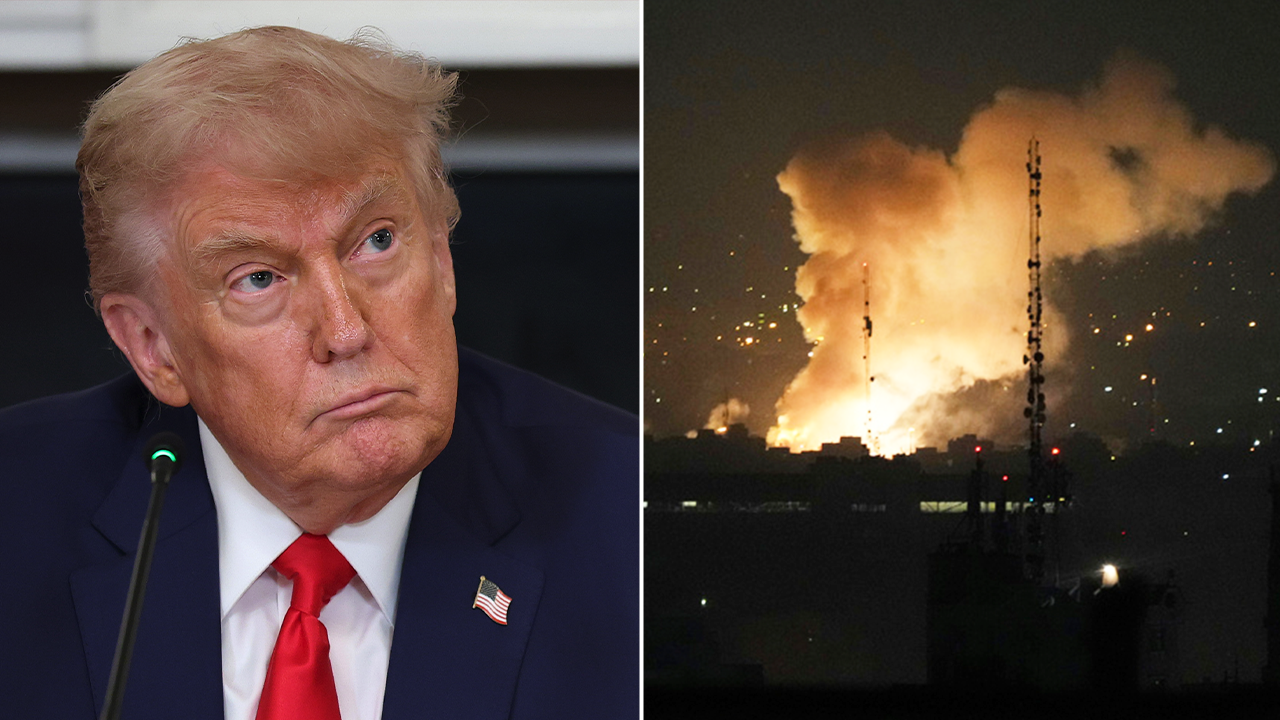
The myth of the Middle East "safe zone" evaporated at precisely 2:00 AM on February 28, 2026. When the first wave of U.S. and Israeli cruise missiles tore into Iranian air defense nodes, the shockwaves didn't just rattle the windows in Tehran. They shattered a decade of careful, multi-billion-dollar diplomacy designed to insulate the Arab Gulf monarchies from a direct hot war.
For years, Saudi Arabia and the United Arab Emirates (UAE) operated under a comfortable delusion. They believed they could host American "over-the-horizon" capabilities while simultaneously repairing ties with the Islamic Republic. They thought they could buy their way out of the line of fire. They were wrong. As the conflict enters its second month, Iranian President Masoud Pezeshkian has delivered a message that is as much a threat as it is an ultimatum: If you want security, stop letting our enemies run the war from your backyard. For a more detailed analysis into this area, we recommend: this related article.
The Geography of Retaliation
Tehran is no longer distinguishing between the hand that pulls the trigger and the soil that supports the shooter. In the early hours of March 2026, the strategy of "strategic patience" was replaced by a doctrine of total regional exposure. Iranian drones and ballistic missiles have not just targeted U.S. hangars at Al-Udeid in Qatar or the sprawling base at Al-Dhafra in the UAE. They have slammed into the very heart of the Gulf’s economic identity.
- Kuwait: Cruise missiles have crippled the Shuwaikh and Mubarak Al-Kabeer ports, effectively strangling the nation's maritime lifeline.
- UAE: Swarms of loitering munitions have targeted Amazon data centers and luxury districts in Dubai, sending a clear message to global investors that "business as usual" is a fantasy.
- Qatar: The world’s primary supplier of Liquified Natural Gas (LNG) saw 20% of the global market vanish overnight when Iranian drones ignited key production facilities.
This is not a series of accidental overshoots. This is a cold, calculated attempt to make the cost of hosting the U.S. military higher than the cost of a total break with Washington. Iran is betting that the Gulf monarchies, terrified of seeing their "Vision 2030" dreams reduced to ash, will eventually buckle and demand a U.S. ceasefire. For further context on this development, in-depth coverage can also be found on USA Today.
The Collapse of the De-escalation Era
The tragedy of the current escalation is that it follows a period of unprecedented diplomatic warmth. Just three years ago, the Beijing-brokered deal between Riyadh and Tehran suggested a new era of regional pragmatism. Embassies reopened. Trade missions were planned. There was talk of a "middle path" where the Gulf states could remain security partners with the West while being economic partners with the East and neighbors with Iran.
That path has been obliterated. The UN Security Council’s adoption of Resolution 2817—which condemns Iran's "egregious attacks" on its neighbors—formalizes what was already clear on the ground: the trust is gone. When Pezeshkian tells his neighbors that he "apologizes" for the strikes while simultaneously authorizing new launches against Emirati airfields, the hollow nature of Iranian diplomacy is laid bare.
The Iranian leadership is currently split. On one side, the pragmatists under Pezeshkian claim they are forced into this corner by U.S. aggression. On the other, the hardline remnants of the security establishment see the Gulf states as nothing more than American aircraft carriers with a flag. By targeting civilian infrastructure, Tehran is attempting to weaponize the "reputation risk" of the Gulf. They know that a missile hitting a desert base is a statistic, but a drone hitting a five-star hotel in Sharjah is an economic earthquake.
The American Umbrella’s Leaky Ceiling
For the Gulf states, the most harrowing realization hasn't been Iran's aggression, but the limitations of their own defenses. Despite spending hundreds of billions on Patriot batteries, THAAD systems, and advanced radar, the sheer volume of Iranian "suicide" drones has proven overwhelming.
Standard air defense logic is failing. It costs roughly $2 million to fire an interceptor at a drone that costs less than $20,000 to build. Iran is playing a game of industrial attrition. They are not trying to "win" a traditional military engagement; they are trying to drain the interceptor stockpiles of the GCC until the skies are wide open.
This creates a brutal paradox for leaders in Abu Dhabi and Riyadh:
- If they lean further into the U.S. security embrace, they provide Iran with more "legitimate" targets.
- If they distance themselves from Washington to appease Tehran, they lose the only intelligence and hardware capable of keeping them alive.
The Trump administration’s response has added another layer of volatility. While the U.S. has ramped up its bombing campaign against Iranian infrastructure, it has struggled to provide the granular, low-altitude defense needed to stop drone swarms from hitting a desalination plant in Oman or an oil refinery in Saudi Arabia’s Eastern Province.
A Failed Strategy of Exhaustion
Iran’s endgame is to create a "state of confusion" that forces the Gulf states to act as Tehran’s lobbyists in Washington. They want the GCC to tell the Americans: "Stop the war, or we will lose everything."
However, early indicators suggest Tehran has fundamentally misread the room. Instead of fracturing, the Gulf Cooperation Council has shown a rare moment of steel-plated unity. The joint statement issued by the UAE, Kuwait, Bahrain, Saudi Arabia, Qatar, and Jordan on March 26 was not the language of a group ready to negotiate. It was a declaration of the inherent right to collective self-defense.
By bombing the very neighbors who were trying to mediate, Iran has accomplished what decades of U.S. diplomacy couldn't: it has pushed the Arab world into a functional, if uncomfortable, security alignment with Israel and the West. The "trust gap" mentioned by regional officials isn't a temporary rift; it is a structural failure of the neighborhood.
The New Reality
We are no longer in an era of "gray zone" conflict. The Middle East has entered a period of total transparency where neutrality is treated as a hostile act. The Gulf monarchies are discovering that you cannot be a "friend to all" when one of your friends is trying to dismantle the global order and the other is trying to maintain it from your living room.
The ports are burning, the data centers are offline, and the diplomatic cables are screaming. Iran’s message is clear, but so is the response from the Gulf. If the price of "security" is the total abandonment of sovereign alliances under the threat of a missile, it is a price no monarchy in the region can afford to pay without losing its soul—and its throne.
The next move won't be made in a boardroom in Dubai or a palace in Riyadh. It will be decided in the silos of central Iran and the hangars of the U.S. Fifth Fleet. The Gulf is no longer an observer. It is the front line.