Combat Search and Rescue (CSAR) represents the most expensive, high-stakes gamble in modern warfare. It is the tactical fulfillment of a sacred promise: if you go down, we are coming for you. While the public often views these missions through a cinematic lens of heroism, the reality is a cold calculation of risk, specialized hardware, and the constant threat of losing even more lives to save a single individual. In the U.S. military, CSAR is not merely a "rescue mission." It is a massive, coordinated air and ground operation designed to snatch personnel from the teeth of enemy territory before they can be captured or killed.
The mission starts the second an aircraft disappears from the radar or an emergency beacon begins its lonely pulse. From that moment, the clock is the primary enemy.
The Architecture of a Recovery
A CSAR task force is a symphony of violence and precision. It is never just a lone helicopter flying into the sunset. To get a "PJ"—an Air Force Pararescueman—on the ground, the military moves an entire ecosystem of firepower into position.
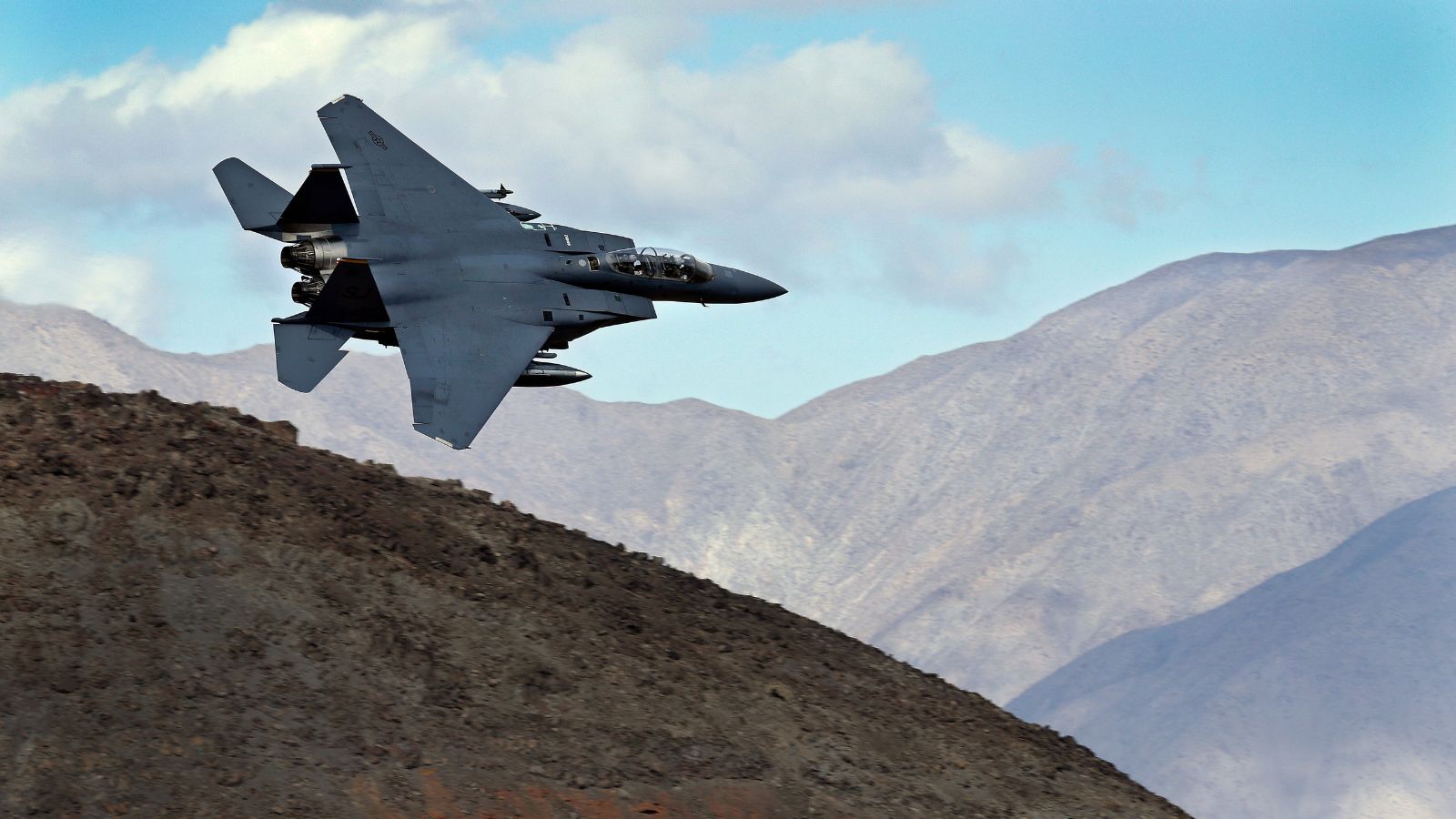
Usually, the package includes HC-130J Combat King II aircraft for refueling and command, A-10 Thunderbolt IIs or F-15E Strike Eagles for close air support, and the primary recovery vehicles: the HH-60W Jolly Green II or the CV-22B Osprey. These assets work in a tight loop. The fixed-wing fighters "sanitize" the area, suppressing enemy air defenses and ensuring the rescue helicopters aren't shot down on approach.
The recovery vehicle itself is a flying fortress. The HH-60W, for instance, is packed with more armor and sensors than a standard Black Hawk. It has to be. These crews fly low, hugging the terrain to avoid radar, often in total darkness using high-definition infrared sensors. They aren't looking for a landing strip; they are looking for a clearing the size of a backyard while taking small-arms fire.
The PJ Factor
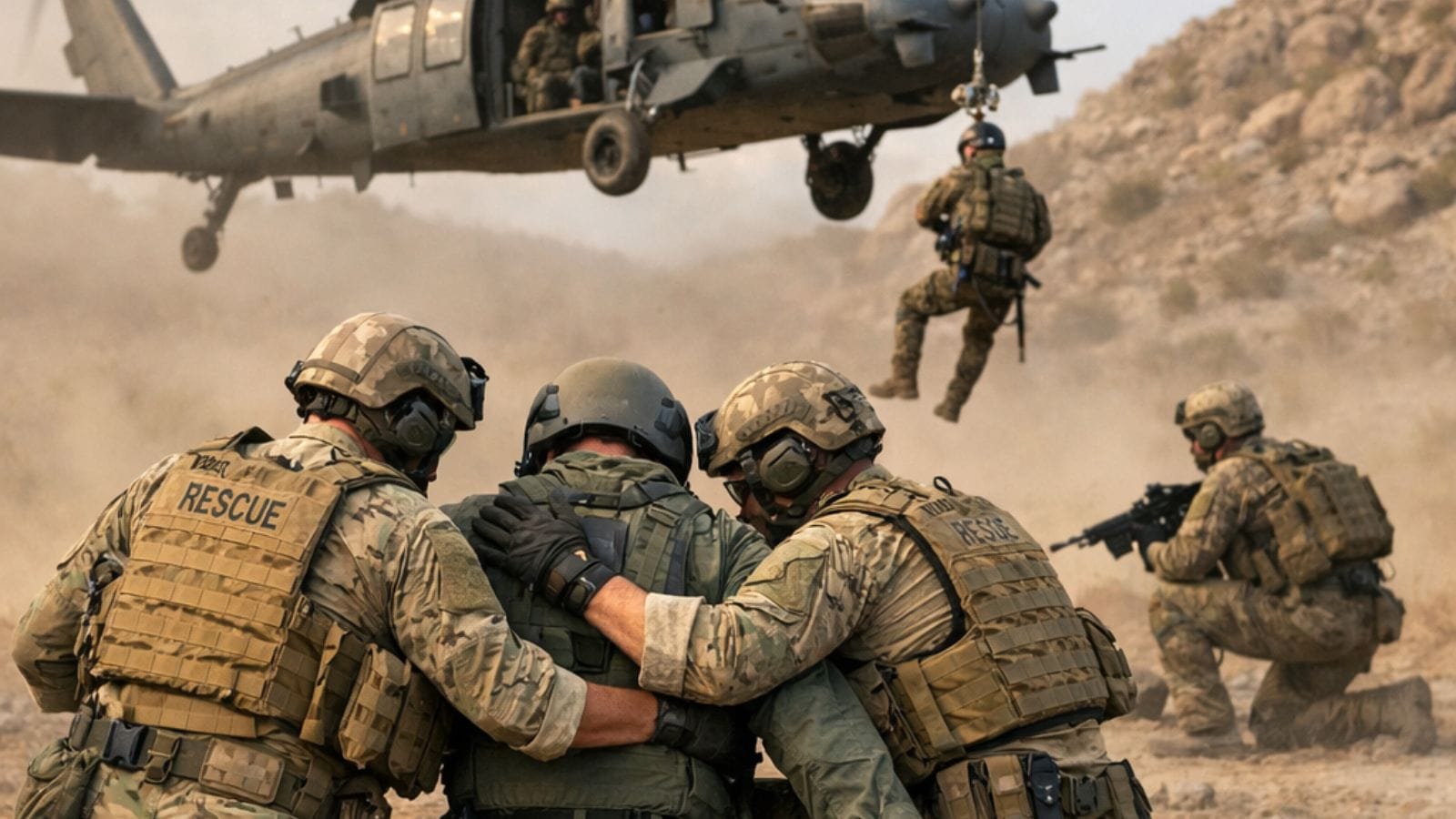
Equipment matters, but the Pararescueman is the soul of the operation. These are some of the most highly trained medical operators on the planet. They are expected to be expert divers, mountain climbers, and skydivers, all while maintaining the skills of a trauma surgeon in the mud.
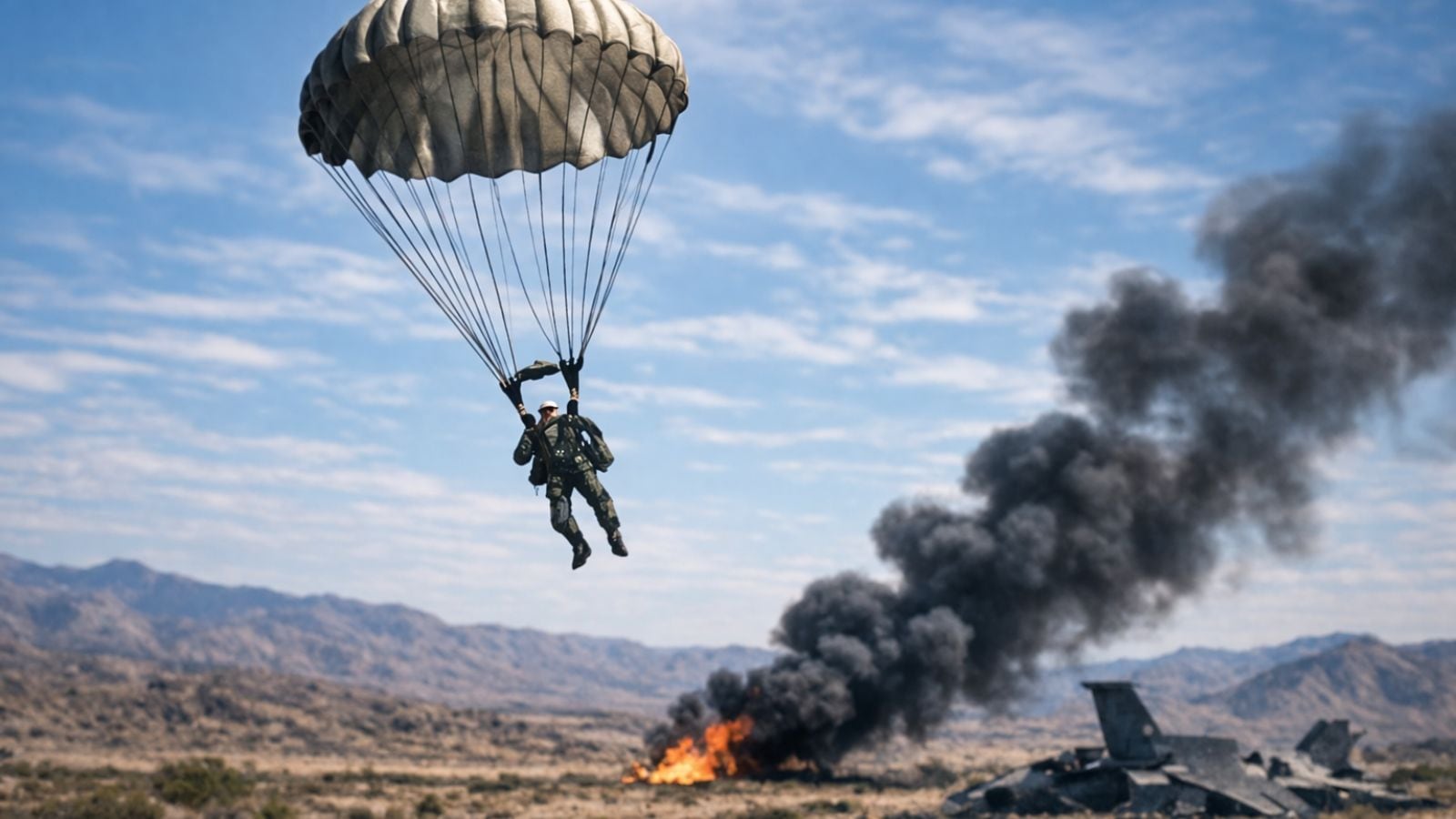
When a pilot is ejected from a cockpit at 500 knots, they aren't usually standing there waiting with a thumb up. They are broken. They have fractured vertebrae, internal bleeding, or severe burns. The PJ's job is to stabilize a dying human being while suppressed by enemy fire, hoist them into a vibrating helicopter, and keep them alive during a high-G flight back to safety. It is a level of multi-tasking that breaks most people.
Why CSAR is the Most Dangerous Game
The inherent danger of CSAR comes from a predictable tactical flaw: the enemy knows exactly where you are going. When a plane goes down, both sides have the same coordinates. The crash site becomes a "honey pot."
Insurgent forces or near-peer adversaries often use the downed pilot as bait. They don't necessarily want to kill the survivor immediately; they want to wait for the rescue helicopters to arrive. By surrounding a crash site with MANPADS (Man-Portable Air-Defense Systems) and heavy machine guns, an enemy can turn a single-pilot rescue into a multi-aircraft disaster.
History is littered with these "rescue the rescuers" nightmares. During the Vietnam War, the attempt to rescue a single navigator, LTJG Batson, resulted in the loss of multiple aircraft and several lives. The math of CSAR is often grim. We are willing to risk twenty lives to save one. This isn't a failure of logic; it is a necessity of morale. If a pilot doesn't believe someone is coming for them, they won't fly the mission.
The Invisible Shield of Electronic Warfare
In a modern conflict against a sophisticated enemy like Russia or China, the "danger" shifts from AK-47s to the electromagnetic spectrum. A downed pilot's survival radio is a beacon, but it is also a signal that can be tracked by the enemy.
Modern CSAR operations now rely heavily on Low Probability of Intercept (LPI) communications. If the enemy can triangulate the pilot’s radio, they get there first. This has forced the evolution of the Combat Survivor Evader Locator (CSEL) system. These handheld devices allow for multi-satellite communication and non-detectable geolocations.
But even with the best tech, the "Golden Hour" remains the standard. If a survivor isn't reached within sixty minutes, their chances of survival or evading capture drop by more than 80%. This pressure forces commanders to make split-second decisions on whether to launch a "Go" or "No-Go" based on incomplete intelligence.
The Shift to Great Power Competition
For the last two decades, CSAR happened in environments where the U.S. had total air superiority. In Iraq or Afghanistan, we owned the sky. That luxury is disappearing.
In a "contested environment," where the enemy has advanced S-400 missile batteries and stealth fighters, the traditional slow-moving helicopter is a sitting duck. This is why the military is pivoting toward high-speed, long-range platforms. The CV-22 Osprey, despite its controversial history, provides a speed advantage that a traditional helicopter cannot match. It can get in and out before the enemy even realizes a rescue is underway.
However, speed isn't a cure-all. A faster aircraft creates a larger thermal signature. It requires more fuel. It is harder to hide. We are entering an era where CSAR may become a "stealth" operation, utilizing unmanned drones to distract the enemy while a specialized recovery craft slips through the cracks.
The Psychological Toll of the "No-Go"
Perhaps the most overlooked aspect of CSAR is the decision to not go. Every veteran commander has a story about a mission they had to scrub because the risk to the task force was too high.
It is a devastating calculation. To leave a comrade in the field is the ultimate sin in military culture, yet the reality of modern anti-access/area-denial (A2/AD) zones means that sometimes, a rescue is a suicide mission. The guilt of these decisions haunts the leadership for decades. This is why the investment in unmanned recovery systems is skyrocketing. If you can send a robot to fetch a human, you remove the catastrophic risk of losing a second aircrew.
The future of CSAR isn't just better helicopters. It is the integration of artificial intelligence that can scan terrain for survivors faster than a human eye, and autonomous "mules" that can navigate a forest floor to bring a wounded soldier to a safe extraction point.
The promise remains: "These things we do, that others may live." It is a beautiful sentiment that masks a terrifying, high-octane reality of blood, oil, and the constant threat of a surface-to-air missile ending the mission in a heartbeat.
The next time you see a headline about a successful rescue, understand that it wasn't just a win. It was a miracle of logistics, bravery, and a massive expenditure of resources that no other nation on earth can replicate.
Stop thinking of it as a rescue. It is a violent retrieval.