The Congolese government has launched a massive, multi-front military offensive aimed at breaking the back of the AFC/M23 rebellion in the eastern highlands. This is not a mere skirmish or a localized patrol gone wrong. By deploying heavy artillery, fighter jets, and thousands of ground troops across North Kivu, President Félix Tshisekedi is signaling that the era of diplomatic patience has officially expired. The immediate goal is to reclaim the strategic towns of Mushaki and Karuba, which serve as the gates to the regional hub of Goma. However, the underlying objective is far more desperate: to prove that the national army, the FARDC, can actually win a war without relying solely on foreign peacekeepers.
The escalation comes at a moment when the United Nations mission, MONUSCO, is packing its bags. For decades, these blue helmets provided a flawed but functional buffer. With their departure, Kinshasa feels the walls closing in. The government has pivoted to a "scorched earth" political strategy, branding the M23 not just as rebels, but as a direct extension of Rwandan foreign policy. While the international community offers tepid calls for de-escalation, the boots on the ground tell a different story. This is a total war for the mineral-rich hills of Masisi and Rutshuru, and the human cost is already staggering.
A Strategy Built on Shifting Sands
Kinshasa’s current military push relies on a volatile cocktail of regular army units, Eastern European mercenaries, and local militias known as the Wazalendo. On paper, this superior numbers game should overwhelm the M23. In reality, the command structure is a nightmare.
The Wazalendo, or "patriots," are a collection of loosely affiliated armed groups that have spent years fighting each other. Now, they are expected to coordinate with the FARDC. This marriage of convenience creates a lethal unpredictability on the front lines. Communication breaks down. Friendly fire is a constant risk. When the government hands out ammunition to these irregulars, they are essentially fueling the next decade of local warlordism just to survive the current week.
The M23, meanwhile, operates with a professionalized discipline that the FARDC struggles to match. They move through the mountains with the ease of ghosts, utilizing high-altitude ridges to rain mortar fire down on government positions. They aren't just fighting for territory; they are fighting for the survival of an ethnic and political identity that feels targeted by the rhetoric coming out of the capital. This isn't a rebellion that will be solved by a few successful airstrikes. It is an entrenched insurgency with deep roots and, as many regional analysts argue, a steady supply line from across the border.
The Rwandan Shadow and the Proxy War Reality
You cannot talk about the fighting in North Kivu without talking about Kigali. The Congolese government has been vocal in its accusations that Rwanda provides direct tactical support, satellite intelligence, and even specialized troops to the M23. Rwanda denies this with practiced indifference, but the evidence on the ground—captured advanced weaponry and sophisticated drone jamming technology—suggests a level of support that far exceeds what a ragtag rebel group could procure on the open market.
This turns the "multi-front attack" into a dangerous geopolitical chess match. If the FARDC pushes too hard and nears the Rwandan border, the risk of a direct interstate conflict skyrockets. We are looking at a regional powder keg where one stray shell could ignite a war between two of Africa’s most significant military powers. The M23 serves as a convenient buffer for Rwanda, ensuring that the FDLR—a remnant of the forces responsible for the 1994 genocide—stays far away from its borders. For Kinshasa, the M23 is a cancer that must be excised to assert true sovereignty. Neither side sees a path to compromise.
The Failure of Traditional Diplomacy
The Nairobi and Luanda processes were supposed to bring peace. They produced handshakes, expensive hotel bills, and little else. The M23 refused to withdraw to the designated areas because they claimed the government failed to protect Tutsi civilians. The government refused to talk to the M23 because they viewed them as terrorists and foreign proxies.
When diplomacy fails, the guns speak. The current offensive is the physical manifestation of that diplomatic collapse. By choosing a military solution, Tshisekedi is betting his presidency on a victory that has eluded every Congolese leader for thirty years. If the offensive stalls, or worse, if the M23 counter-attacks and threatens Goma again, the political fallout in Kinshasa will be catastrophic.
Logistics and the Mercenary Factor
The presence of private military contractors on the front lines is the poorly kept secret of this campaign. These aren't the high-profile firms of the past, but rather smaller, more discreet outfits providing technical expertise for the FARDC’s newly acquired Sukhoi-25 fighter jets and CH-4 combat drones.
While these assets give the government a massive edge in firepower, technology has limits in the dense, fog-covered forests of the East. A drone cannot hold a hill. A jet cannot clear a village of hidden snipers. The heavy lifting still falls to the infantry, who are often underpaid, underfed, and disillusioned.
- Supply Lines: The roads in North Kivu are essentially mud tracks. Moving heavy artillery during the rainy season is a Herculean task that often leaves the FARDC’s best equipment stuck in the muck, ripe for rebel capture.
- Intelligence Gaps: Despite the technology, the government often operates blindly. The M23 uses the local population as a shield, making it nearly impossible to distinguish combatants from civilians without a sophisticated ground-level intelligence network—something the FARDC lacks.
- Morale: The rebels are fighting for what they perceive as their homeland. The government troops are often thousands of miles from their families, fighting in a cold, mountainous climate they aren't adapted to.
The Humanitarian Price of Military Ambition
Behind the maps and the troop movements lies a humanitarian disaster that the world seems content to ignore. Each time the FARDC launches an "offensive," tens of thousands of people are forced to flee. They don't go to well-equipped camps; they sleep in schoolrooms, in fields, or on the side of the road.
The use of heavy weapons in populated areas has become the norm. When the FARDC shells an M23 position near a village, the rebels don't just sit there. They retreat further into the civilian population, drawing fire toward the very people the government claims to be liberating. This creates a cycle of resentment. The "liberators" end up being feared as much as the "occupiers."
Diseases like cholera are now tearing through the displaced person camps surrounding Goma. The healthcare system in the region has essentially collapsed. Doctors and nurses have fled, and the few remaining clinics are overwhelmed by shrapnel wounds and malnutrition. This is the "how" of the war—it is won or lost not just on the battlefield, but in the endurance of the civilian population. If the locals turn entirely against the government, the FARDC will find itself holding territory that is permanently hostile.
The Economic Engine of Conflict
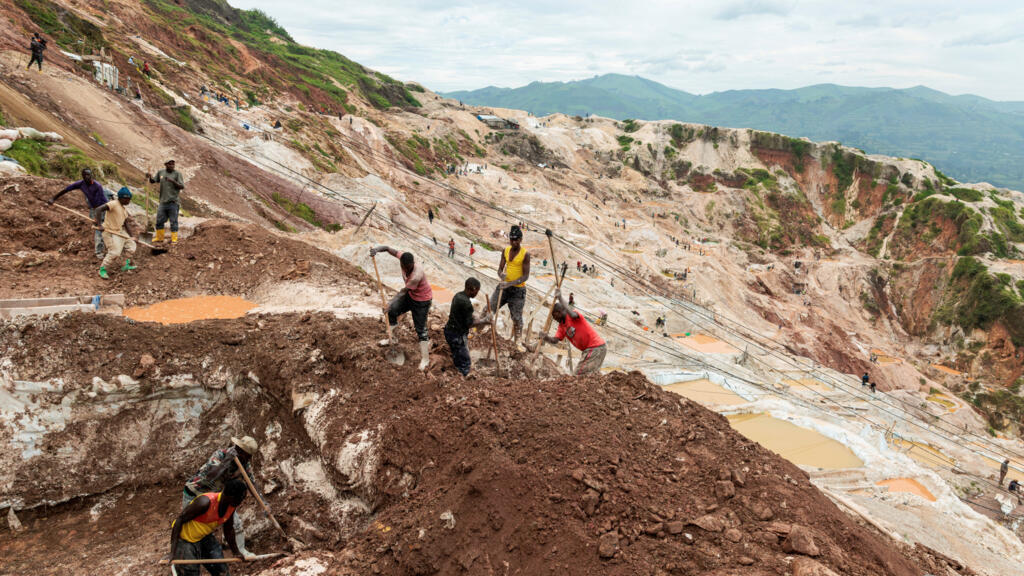
The war is expensive, but for some, it is also profitable. The Kivu provinces sit on some of the world's largest deposits of tantalum, tin, and tungsten. These minerals are essential for global electronics. During periods of heavy fighting, the formal supply chains break down, but the informal ones—the ones controlled by armed groups and corrupt officials—thrive.
The M23 controls key transit routes that allow minerals to flow eastward toward international markets. The government’s offensive is, in many ways, an attempt to seize the "toll booths" of the global tech industry. If the FARDC can control the mines and the roads, they can choke off the rebels' funding. But as long as the demand for these minerals remains high and the oversight remains low, there will always be an incentive for someone to keep the war going.
The irony is bitter. The devices used to report on this conflict are likely powered by the very minerals that are paying for the bullets being fired today. This is not a local tribal feud. It is a modern, resource-driven conflict integrated into the global economy.
The Strategic Miscalculation
The biggest risk Kinshasa faces is the "victory trap." Even if the FARDC manages to push the M23 back to the border, what happens the day after? Without a permanent, disciplined police presence and a functional local government, the vacuum will simply be filled by the next iteration of the rebellion.
Military force is a blunt instrument. It can clear a hill, but it cannot fix a broken social contract. The people of Eastern Congo have been promised security by every administration since Mobutu, and every time, the state has failed them. If this offensive ends in another stalemate or a temporary ceasefire, it will only serve to further radicalize a generation of young men who see the gun as the only tool for advancement.
The FARDC is currently celebrating small tactical wins—a ridge taken here, a village reclaimed there. But the M23 is known for tactical retreats, drawing the government forces deeper into difficult terrain before launching devastating ambushes. The government's multi-front attack might be a masterstroke, or it might be a sprawling overextension that leaves their flanks wide open.
The Southern African Intervention
Adding another layer of complexity is the arrival of the SADC Mission in the DRC (SAMIDRC). Led by South Africa, Malawi, and Tanzania, this force has a much more aggressive mandate than the departing UN troops. They are expected to fight alongside the FARDC.
However, South Africa’s military is overstretched and underfunded. Sending troops into the "green abyss" of Eastern Congo is a massive political gamble for Pretoria. If South African soldiers start coming home in body bags, the domestic pressure to withdraw will be immense. This creates a ticking clock for the Congolese government. They have a small window of time where they have external combat support. If they don't achieve a decisive victory soon, they may find themselves alone once again, facing a battle-hardened rebellion that has outlasted everyone else.
The sheer density of actors on the battlefield—FARDC, M23, Wazalendo, SADC, mercenaries, and remnants of the FDLR—makes the "multiple fronts" of this attack a chaotic blur. There is no clear line of scrimmage. It is a patchwork of shifting loyalties and sudden betrayals.
The world watches the maps, but the reality is in the mud. The Congolese government is betting the future of the nation on a military breakthrough that historical precedent suggests is nearly impossible. To win, they don't just need to defeat the M23; they need to defeat the very geography and corruption that have defined the region for decades. Success requires more than just launching attacks; it requires the ability to govern the morning after the smoke clears. Without that, these multiple fronts are just new graveyards in an already crowded soil.
The FARDC must now decide if they are prepared for a war of attrition that could last years, or if this current offensive is merely a high-priced performance for an upcoming election cycle and a restless public. Every hour the heavy artillery fires, the debt—both financial and human—grows. Kinshasa has gone all-in. Now, they have to hope the rebels don't have an ace up their sleeve.
Demand an accounting of the military expenditures and the real status of the front lines before the next wave of propaganda hits the airwaves.


