He doesn't know the name of the port captain in Shanghai. He has never seen the inside of a semiconductors foundry in Taiwan, nor could he point to the specific lithium mine in the Atacama Desert that birthed the battery in his pocket. Yet, when Elias wakes up in a small flat in Leeds and finds that his favorite brand of coffee has doubled in price—or simply vanished from the shelf—he is feeling the first tremors of a tectonic shift.
Globalization was never just a word in a textbook. It was a promise. It was the silent, efficient machinery that allowed a teenager in Brazil to wear sneakers designed in Oregon and stitched in Vietnam using rubber from Thailand. For thirty years, the world got smaller, faster, and cheaper. We traded resilience for efficiency. We built a world on "just-in-time" delivery, a system so fragile that a single sideways ship in a canal or a flare-up of old geopolitical grudges can send the whole tower toppling.
The tower is shaking now.
The Ghost in the Shipping Container
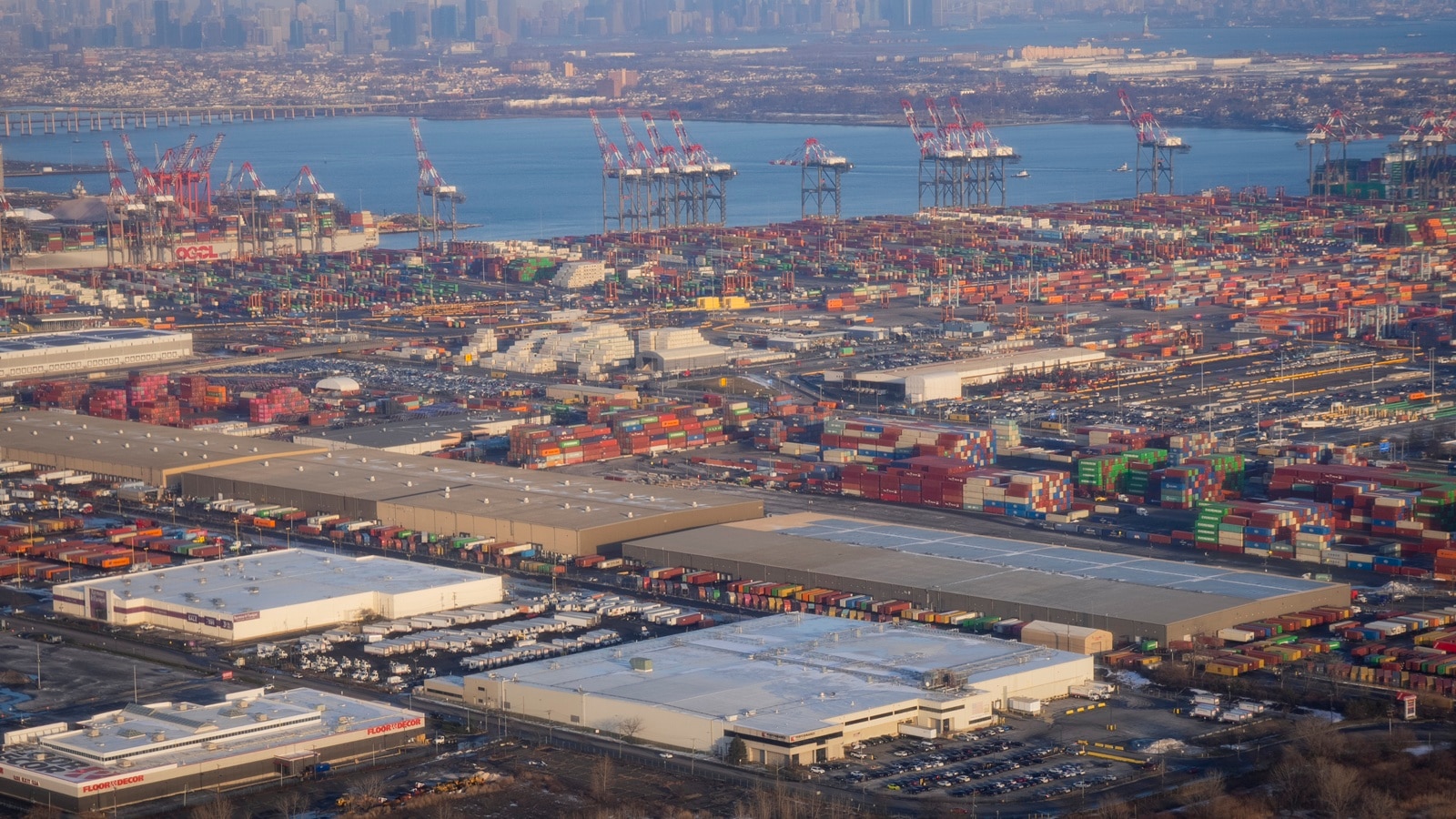
Consider the shipping container. It is a simple steel box. It is also the heartbeat of the modern world. Before the 1950s, loading a ship was a chaotic, labor-intensive puzzle. Today, those boxes move with the precision of a Swiss watch. But that precision relies on a world that stays predictable.
When the pandemic hit, the watch stopped. When the wars in Eastern Europe and the Middle East escalated, the gears began to grind. We are moving from an era of "just-in-time" to a desperate scramble for "just-in-case."
This isn't just about rising prices. It is about the fracturing of a shared reality. For decades, the prevailing logic was that if we traded enough with each other, we wouldn't fight. We thought the golden arches of a burger chain were a shield against tanks. We were wrong. Economic entanglement, it turns out, can be used as a weapon just as easily as it can be used as a bridge.
When a nation realizes that its entire energy grid or its supply of life-saving medicine depends on a neighbor who has suddenly become an adversary, the "global" part of globalization starts to look like a trap.
The Price of a Sovereign Mind
Behind the dry statistics of trade deficits and tariffs lies a very human fear: the loss of agency.
Governments are now looking inward. They call it "friend-shoring" or "de-risking." It sounds clinical. In reality, it is an expensive, messy divorce. Moving a factory from a low-cost region back to a high-cost home base isn't a simple relocation. It involves building new power grids, training a workforce that has forgotten how to manufacture, and, ultimately, passing the bill to the person standing in the grocery aisle.
Elias, our man in Leeds, sees the "Made in Britain" or "Made in America" stickers and feels a flicker of pride. Then he looks at the price tag.
This is the hidden tax of the new world order. We are paying for security. We are paying for the peace of mind that comes with knowing the lights will stay on even if a foreign dictator decides to close a strait. But that security is a luxury. For the billionaire, it’s a rounding error. For the family living paycheck to paycheck, it’s the difference between a full fridge and a debt cycle.
The Great Fragmentation
The world is splitting into blocs. It isn't a clean break. It’s more like a windshield that has been hit by a rock—a thousand tiny fractures spider-webbing out from the center.
On one side, you have the established powers trying to protect their intellectual property and their way of life. On the other, you have emerging giants who feel they have been playing a game where the rules were written by someone else. In the middle are the "swing states"—Vietnam, India, Mexico, Poland—nations that are suddenly the most popular kids at the dance because everyone needs a new place to build their widgets.
But building a factory isn't like downloading an app. It takes years. It takes stable laws. It takes a massive amount of carbon.
Here is the irony: at the exact moment humanity needs to cooperate to solve a global climate crisis, we are retreating into our own corners. Green energy requires minerals that are scattered across the globe. You cannot build a wind turbine or an electric vehicle without a supply chain that crosses a dozen borders. If globalization dies, the planet’s chance at a cool future might die with it.
The Human Scale of the Macro
We often talk about "the markets" as if they are a weather pattern or a vengeful god. They aren't. They are the sum total of billions of individual choices.
When a garment worker in Bangladesh loses her job because a brand moved its sewing to Turkey to be closer to European customers, that is globalization’s crisis. When a farmer in Iowa can’t get the specific microchip he needs for his tractor because of an export ban, that is globalization’s crisis.
We are relearning a hard truth: the shortest distance between two points is rarely a straight line when a border stands in the way.
The era of easy growth is over. The "peace dividend" of the 1990s has been spent. What we are entering now is a period of friction. Everything will be a little harder. Everything will be a little slower. Your phone will stay in your pocket for four years instead of two. The miracle of the $5 t-shirt is fading into a memory of an era we didn't realize was an anomaly.
The Invisible Stakes
What happens to a culture when it stops looking outward?
Globalization didn't just move cargo; it moved ideas. It moved music, cinema, and perspectives. It forced us to acknowledge that someone on the other side of the planet had a life as vivid and complex as our own. As trade routes tighten, so do minds. We risk returning to a tribalism where the "other" is no longer a customer or a provider, but a competitor or a threat.
The crisis of globalization is a crisis of trust. We no longer trust that the ship will arrive. We no longer trust that the contract will be honored. We no longer trust that the person on the other end of the Zoom call shares our values.
Elias stands in his kitchen, waiting for the kettle to boil. The kettle is stainless steel, probably forged with nickel from Indonesia and chrome from South Africa. It works today. But he finds himself wondering, for the first time in his life, if the next one will be there when this one breaks.
He feels a strange, quiet mourning for a world he never appreciated until it started to slip away. He realizes that the bridge wasn't just made of steel and trade agreements. It was made of an invisible, collective confidence that the world would be there for us tomorrow, exactly as it was today.
The bridge hasn't collapsed yet, but the toll to cross it just went up, and the other side is shrouded in a mist we haven't seen in decades.
We are all standing on the span, listening to the cables groan under the weight of a history we thought we had outrun.