A merchant vessel is a city that never sleeps. On the bridge of a massive crude carrier, the air smells of ozone and stale coffee. The rhythmic thrum of the engine vibrates through the soles of your boots, a constant reminder that sixty thousand tons of momentum are beneath you. To the left and right, the horizon is a thin, fragile line.
Everything feels steady until the radio crackles.
The Strait of Hormuz is a geographic choke point, a narrow throat of water through which the world’s lifeblood—oil—is forced. When the news trickles down to the crew that the world’s greatest military alliance is fracturing, that throat feels a lot tighter. It isn't just about geopolitics. It is about whether the man standing watch at 3:00 AM believes a destroyer will show up if a fast-attack craft starts closing the distance.
Trust is the only currency that matters on the high seas. Currently, that currency is being devalued at a terrifying rate.
The Cracks in the Shield
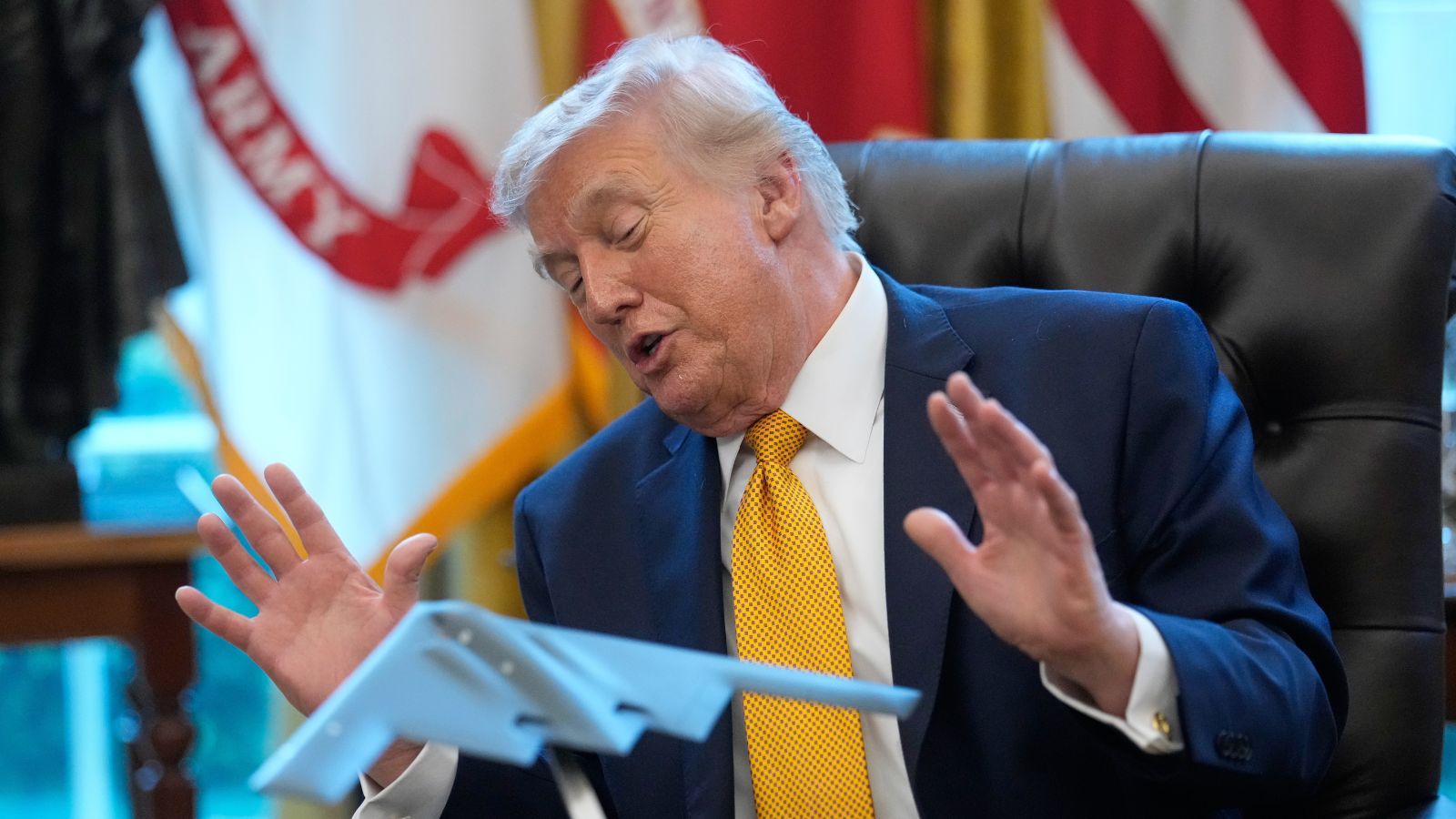
For decades, NATO was the invisible hand that kept the global machinery turning. It wasn’t a perfect system, but it was a predictable one. You pay into the collective security, and in exchange, the world stays open for business. But Donald Trump has never viewed NATO as a shield. He views it as a ledger.
During his most recent rhetoric, the former president didn't just criticize defense spending; he essentially invited aggression against those he deemed "delinquent." To a businessman, this is a negotiation tactic. To a sailor in the Persian Gulf or a factory worker in Bavaria, it feels like the floor is being pulled out from under them.
The logic is simple: if the United States—the backbone of the alliance—indicates that its protection is conditional, the alliance ceases to exist. A "maybe" in a mutual defense pact is effectively a "no."
Consider the sheer scale of the gamble. NATO’s Article 5 is the "one for all" clause. It is the reason why small nations can sleep at night and why global markets remain relatively stable. By threatening to walk away, Trump isn't just targeting European budgets. He is targeting the psychological certainty that underpins the global economy.
A Refusal at the Shore
While the rhetoric blazes in Washington, the response from Europe has been a chillingly polite "no."
The UK and Germany have made it clear: they will not be pulled into a US-led maritime mission in the Strait of Hormuz. On the surface, this looks like a disagreement over naval tactics. Beneath that, it is a profound crisis of confidence.
London and Berlin aren't refusing because they don't care about the oil. They are refusing because they no longer trust the captain of the ship. There is a palpable fear that joining a mission led by an unpredictable administration is a fast track to a conflict they didn't sign up for.
Imagine two neighbors who have shared a fence for seventy years. One neighbor suddenly says they might let a burglar into your house if you don't pay more for the fence repairs. The next day, that same neighbor asks you to help them patrol the street. You wouldn't say yes. You would go inside, lock your doors, and start looking for a new way to protect your family.
That is exactly what we are seeing. The UK is leaning into its own maritime security strategies. Germany is debating the "Europeanization" of its defense. They are preparing for a world where the American umbrella has been folded up and taken home.
The Invisible Toll on Your Daily Life
It is easy to dismiss this as "high-level politics" that doesn't affect the average person. That is a dangerous mistake.
The global supply chain is a delicate web. When the Strait of Hormuz becomes a "grey zone"—an area where safety is not guaranteed—insurance premiums for tankers skyrocket. Those costs don't vanish. They are passed down.
- The price of gas at a pump in Ohio.
- The cost of heating a home in Manchester.
- The price of plastic goods manufactured in Shenzhen.
Every cent of "risk" added to a barrel of oil ripples through the world. If the security of the Strait is left to a disjointed, uncoordinated group of nations rather than a unified alliance, the volatility becomes a permanent feature of our lives. We are talking about a tax on existence, driven by the uncertainty of whether a ship can pass through twenty-one miles of water without being seized.
The Ghost of 1949
To understand why this feels so visceral, we have to remember why NATO was built. It wasn't just to stop tanks. It was to prevent the "beggar-thy-neighbor" policies that led to World War II. It was designed to ensure that no single nation had to stand alone against a bully.
By treating NATO like a protection racket, the current political discourse is resurrecting ghosts we thought were buried. When Trump suggests he would encourage Russia to do "whatever the hell they want" to certain allies, he is undoing seventy-five years of diplomatic architecture in a single sentence.
The response from European leaders hasn't been one of anger, but of a quiet, somber realization. They are looking at their shipyards and their barracks and realizing they are decades behind. Germany’s "Zeitenwende"—its historic shift in defense policy—is a direct result of this fear. But you cannot build a navy overnight. You cannot replace a superpower’s logistics, satellite intelligence, and nuclear deterrent with a few committee meetings in Brussels.
The Human Cost of a Cold Horizon
Think about a young officer in the Estonian Defense Forces. They live in a town where the Russian border is a short drive away. For their entire life, the NATO flag on their shoulder was more than a patch. It was a promise. It meant that a soldier from Kentucky and a soldier from Portugal would stand in that same cold mud if the worst happened.
Now, that soldier has to wonder if their life is worth enough "percent of GDP" to satisfy a politician thousands of miles away.
That doubt is the victory. You don't need to fire a shot to destroy an alliance; you only need to make the members stop believing in each other. Once the belief is gone, the alliance is just a collection of expensive buildings and outdated paperwork.
The refusal of the UK and Germany to join the Hormuz mission is the first symptom of a systemic fever. It is a sign that the allies are already beginning to hedge their bets. They are looking for the exits because they can hear the floorboards creaking.
The Long Night Ahead
We are entering an era of "every nation for itself," and it is a terrifyingly inefficient way to run a planet.
If the US retreats into isolationism, it won't find peace. It will find a world where it no longer sets the rules. The Strait of Hormuz will still be there. The threats to global trade will still be there. But instead of a unified front, there will be a chaotic scramble for influence.
The merchant sailor on that crude carrier doesn't care about campaign slogans. He cares about the radar screen. He cares about whether the silhouette on the horizon is a friend or a predator.
As the sun sets over the Persian Gulf, the water turns a deep, bruised purple. The lights of the coast flick on—the homes of millions of people who rely on the stability of this one narrow passage. That stability is currently being traded for domestic political points, and once it’s gone, no amount of money can buy it back.
The bridge of the ship is quiet. The radio stays silent. But the silence no longer feels like peace. It feels like the breath the world takes right before everything changes.