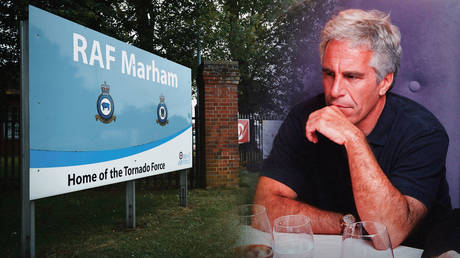
The British Ministry of Defence is currently wrestling with a nightmare of administrative negligence and potential complicity. For years, the private fleet of Jeffrey Epstein utilized Royal Air Force (RAF) infrastructure, specifically RAF Northolt and RAF Brize Norton, to move high-value passengers and minors across international borders. This was not a security breach in the traditional sense. It was a failure of oversight that allowed a convicted sex offender to treat sovereign military soil as a private, high-security terminal. By landing on military tarmac, Epstein avoided the prying eyes of the paparazzi and, more importantly, the rigorous scrutiny of standard Border Force protocols that apply at Heathrow or Gatwick.
This investigation into Epstein’s use of RAF bases is not merely about a few flight logs. It is about how the British state, perhaps unwittingly or through the quiet influence of social proximity, provided the logistics for a global trafficking operation.
The Privilege of the Military Tarmac
RAF Northolt is often described as the "hidden gem" of West London for the ultra-wealthy. While it serves as the home for the 32 (The Royal) Squadron—the unit responsible for transporting the Royal Family and senior government ministers—it also operates a lucrative civil aviation business. For a substantial fee, private jet owners can bypass the chaos of commercial airports.
Epstein exploited this.
When a private Gulfstream lands at a military base, the atmosphere is different. There is a built-in assumption of legitimacy. The flight manifests are handled with a level of discretion that commercial handlers cannot guarantee. For Epstein, this was a critical component of his operational security. If you are transporting young women whose legal status or age might raise a red flag at a standard customs desk, a military base where the staff is trained to prioritize "VVIP" privacy is the ideal gateway.
The Ministry of Defence (MoD) has long defended the commercial use of Northolt as a way to offset the costs of maintaining the airfield. However, the "pay-to-play" model created a massive blind spot. The MoD’s primary concern was whether the landing fees were paid and whether the aircraft met basic safety requirements. They were not, by their own admission, deep-diving into the criminal records of every passenger on a private manifest. This systemic indifference is what Epstein turned into an asset.
The Shadow of the Royal Connection
One cannot analyze Epstein’s access to British military airfields without addressing the presence of Prince Andrew. The Duke of York’s long-standing relationship with Epstein provided the social grease that made these arrangements feel routine rather than suspicious.
In the rigid hierarchy of British military culture, the presence or endorsement of a senior Royal carries immense weight. If a regular visitor to a base is known to be a close associate of the Queen’s second son, the personnel on the ground are less likely to ask uncomfortable questions. They are conditioned to facilitate, not to investigate.
The Question of Manifest Accuracy
The real investigative gold lies in the discrepancy between the official RAF logs and the "black box" logs maintained by Epstein’s pilots. We know that Epstein’s jets, including the infamous "Lolita Express," made numerous trips to the UK.
What remains unclear is how many individuals were "processed" through these bases without ever appearing in a formal Home Office database. On a military base, the handoff between the aircraft and the waiting car happens within a secure perimeter. There is no long walk through a terminal. There are no cameras from the Daily Mail. There is only a quick check of a passport, often performed by officials who are used to seeing the most powerful people in the world and are told to keep it moving.
The British government is now under pressure to release the full unredacted flight manifests from 2000 to 2015. This data would likely reveal a pattern of movement that correlates with Epstein’s residences in London and his visits to various estates across the country.
How the UK Borders Were Bypassed
The British Border Force operates under a set of rules that, while strict for the average traveler, are surprisingly flexible for those with enough capital. For "General Aviation" (private flights), the requirement to see a Border Force officer in person is not always absolute.
Under the existing framework, pilots must submit a General Aviation Report (GAR) 24 hours in advance. This report lists the passengers and crew. At a military base like Northolt, the enforcement of these checks often fell into a grey area between military police and civilian customs officers.
- Pre-Clearance Fallacies: Often, the "checking" of passports was done remotely based on the GAR, with physical inspections being the exception rather than the rule.
- The "VVIP" Buffer: Handling agents at these bases are paid to ensure the passenger spends as little time as possible interacting with officials.
- Internal Security vs. Border Security: The RAF’s priority at Northolt is the physical security of the base. If the plane isn't a terrorist threat, the military's job is largely done. The legality of the passengers’ activities is someone else’s problem.
This created a "security theater" that Epstein navigated with ease. He wasn't breaking into the UK; he was being invited in through the VIP entrance, with the gate held open by an institution that didn't think it was its job to care who he was.
The Financial Loophole in Defense Spending
The commercialization of RAF bases is a direct result of decades of defense budget cuts. The MoD had to find ways to make their assets "work" for them. By opening Northolt to private jets, they tapped into a revenue stream that brought in millions of pounds.
But this business model turned the RAF into a high-end concierge service. When an organization starts prioritizing "customer satisfaction" for billionaires, its role as a guardian of the national border becomes compromised. The "client" in this scenario was Epstein, and as long as his checks cleared and his plane didn't crash on the runway, he was treated with the deference afforded to a head of state.
The investigative focus must now shift to the procurement and commercial offices within the MoD. Who authorized these landing slots? Was there ever a "red flag" system for individuals with known criminal histories?
The reality is likely more mundane and more chilling: there was no system at all.
A Failure of Intelligence and Integration
The most damning aspect of this saga is the lack of communication between the UK’s intelligence services and the military units managing these airfields. By the mid-2000s, Epstein was already a person of interest to various law enforcement agencies. His 2008 conviction in Florida should have made him persona non grata at any government-controlled facility.
Yet, the flights continued.
This suggests a total breakdown in the "joined-up government" that British politicians so frequently laud. The Home Office knew who he was. The Met Police likely had him on their radar. But the RAF Northolt booking office was seemingly operating in a vacuum.
Breaking the "Gentleman's Agreement"
For too long, the UK’s entry points for the wealthy have operated on a "gentleman’s agreement" style of policing. The assumption was that if you can afford a $50 million jet, you are inherently "safe." Epstein shattered that myth, but the infrastructure he used remains largely unchanged.
The current probe needs to look beyond Epstein. It needs to examine the entire "private-military" aviation ecosystem. If Epstein could do it, who else is currently using these bases to move people or illicit goods? The lack of transparency at military airfields makes them the perfect conduit for modern slavery, money laundering, and international smuggling.
The Price of Silence
The victims of Jeffrey Epstein have long spoken about the "invisibility" they felt while being moved from one location to another. They weren't just hidden in private mansions; they were hidden in plain sight, buffered by the prestige of institutions like the RAF.
Every time a victim was driven off a military base in a tinted-window SUV, the British state effectively provided the escort. The trauma of these women is now the catalyst for a long-overdue reckoning within the Ministry of Defence.
The MoD has a habit of burying reports that embarrass the "Great and the Good." They will likely cite "national security" as a reason to keep parts of the Epstein inquiry classified. We must reject that. There is no national security interest in protecting the flight logs of a dead pedophile and his associates.
The investigation must produce a public accounting of every landing, every fee paid, and every official who signed off on the use of these facilities. This isn't about looking back at a scandal; it's about closing the loopholes that still exist today.
The British public deserves to know how a military base meant for the defense of the realm became a logistics hub for a criminal enterprise. The era of the "unquestioned VVIP" must end.
Demand the release of the Northolt General Aviation Reports from 2002 to 2010 to see exactly which "guests" of the state were bypassing our borders while the rest of the country stood in line.