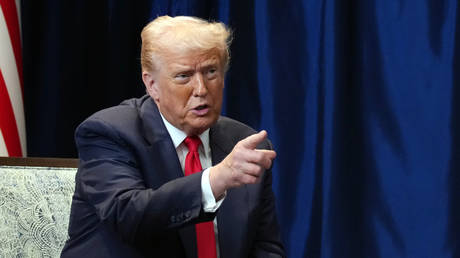
The ultimatum was delivered with the trademark bluntness of a man who views geopolitics as a series of high-stakes real estate closures. Donald Trump, speaking from the South Lawn before a backdrop of intensifying military activity, gave Tehran a window that is rapidly slamming shut. Reach a deal in the next 10 to 15 days, he warned, or face a "very bad day" that would make previous skirmishes look like a misunderstanding. This isn't just the usual rhetoric; it is the culmination of a multi-year squeeze that has brought the Islamic Republic to the edge of a systemic collapse.
By March 2026, the "Maximum Pressure" campaign has evolved into something far more kinetic than mere banking sanctions. Following the devastating Operation Midnight Hammer in June 2025—which neutralized significant portions of Iran’s enrichment infrastructure at Fordow and Natanz—the administration is no longer asking for a return to the 2015 nuclear framework. They are demanding a total strategic surrender.
The current standoff in Geneva isn’t about fine-tuning centrifuge counts. It is about three non-negotiable pillars that the Trump administration has laid out as the price of admission for Iran’s survival.
- Zero Enrichment: The U.S. is no longer accepting "civilian" enrichment levels. The demand is a total cessation of all uranium processing, verified by intrusive, anytime-anywhere inspections.
- Missile Dismantlement: Tehran must scrap its ballistic missile program, which the White House now claims poses a direct threat to the U.S. mainland.
- Regional Decoupling: An immediate end to the funding and arming of the "Axis of Resistance," a network that has already been severely weakened by the fall of the Assad regime in Syria in late 2024.
The Armada in the Arabian Sea
To back these demands, the Pentagon has moved with a speed that has caught regional analysts off guard. The arrival of the USS Gerald R. Ford to join the USS Abraham Lincoln strike group creates a naval concentration not seen in the Persian Gulf for decades. This isn't a "show of force." It is a functional blockade-in-waiting.
The military buildup serves two purposes. First, it provides the immediate capability to execute what officials are calling Operation Epic Fury—a sustained, weeks-long aerial campaign designed to dismantle not just nuclear sites, but the internal security apparatus of the IRGC. Second, it acts as a shield for the massive economic hammer Trump just dropped: an Executive Order imposing secondary tariffs on any nation that continues to trade with Tehran.
This economic maneuver targets the "Shadow Fleet" of tankers that have kept the Iranian economy on life support by shipping oil to East Asian markets. By tying Iran’s trade to global tariff structures, Washington is forcing Beijing and New Delhi to choose between cheap Iranian crude and access to the American consumer market. For most, that isn't a choice; it's a math problem with only one answer.
The Internal Fracture
While Washington squeezes from the outside, the Iranian government is rotting from within. The "January Massacres" of early 2026, where security forces reportedly killed upwards of 30,000 protesters, have stripped the regime of its remaining domestic legitimacy.
Information coming out of Tehran suggests a leadership deeply divided. On one side, the hardliners within the Revolutionary Guard argue that only a "nuclear breakout"—rushing to produce a single viable warhead—can deter a U.S. invasion. On the other, pragmatic elements within the remains of the foreign ministry realize that the country cannot survive another year of total isolation and a collapsing rial.
Trump is leaning into this divide. In his recent State of the Union address, he spoke directly to the Iranian people, telling them "help is on its way." It was a phrase that shifted the goalposts from nuclear containment to overt regime change. By promising that those responsible for the crackdown would "pay a very big price," the President has effectively signaled that a "deal" might now include the exit of the current clerical leadership.
Market Volatility and the Oil Wildcard
The global economy is already pricing in the "very bad day." Crude oil prices have spiked toward $130 a barrel, driven by fears that a conflict would see Iran attempt to choke the Strait of Hormuz.
Energy analysts are mapping out several nightmare scenarios. If Tehran decides it has nothing left to lose, it could deploy its remaining missile inventory and fast-attack craft to strike at Kharg Island or Saudi processing plants. While the U.S. Navy is confident in its ability to keep the lanes open, the insurance premiums for tankers in the region have already tripled in the last 72 hours.
The administration’s gamble is that the threat of a total "Epic Fury" campaign will prevent this retaliation. They are betting that the Iranian military, already degraded by the 2025 strikes, knows that any attempt to close the Strait would result in the immediate and total destruction of their naval and air assets.
The Endgame of Brinkmanship
The next two weeks will determine the map of the Middle East for the next quarter-century. If Iran blinks and accepts the Geneva terms, Trump secures a foreign policy win that dwarfs his previous Abraham Accords. If they hold firm, the "very bad day" becomes an inevitability.
The Pentagon's plans are reportedly "on the desk," and the window for diplomacy is measured in hours, not months. The U.S. has moved beyond the era of incremental sanctions and into a phase of terminal pressure. As the second carrier group moves into strike range, the message from Washington is clear: the time for "tricks and stall tactics" has ended. Tehran can choose a controlled surrender or an uncontrolled collapse.
Would you like me to analyze the specific economic impact these proposed tariffs would have on the global oil supply chain?


