The steel of a transport ship doesn't just hold men; it holds a specific kind of silence. It is the heavy, metallic quiet of four thousand souls collectively holding their breath as the horizon of the Persian Gulf begins to shimmer with the heat of a looming confrontation. For the soldiers aboard the USS Bataan and the USS Carter Hall, the mission isn't just about presence. It is about being the physical manifestation of a line drawn in shifting sands.
To look at a map of the Strait of Hormuz is to look at the jugular of the modern world. Twenty percent of the planet’s oil flows through this narrow strip of blue, a passage so tight that a few well-placed mines or a swarm of fast-attack boats could send global markets into a convulsive seizure. But for the young corporal leaning against a bulkhead, the macroeconomics of crude oil are distant. His reality is the humidity that clings to his skin like a second uniform and the knowledge that, just a few miles away, someone is looking at him through a viewfinder, waiting for a reason to pull a trigger.
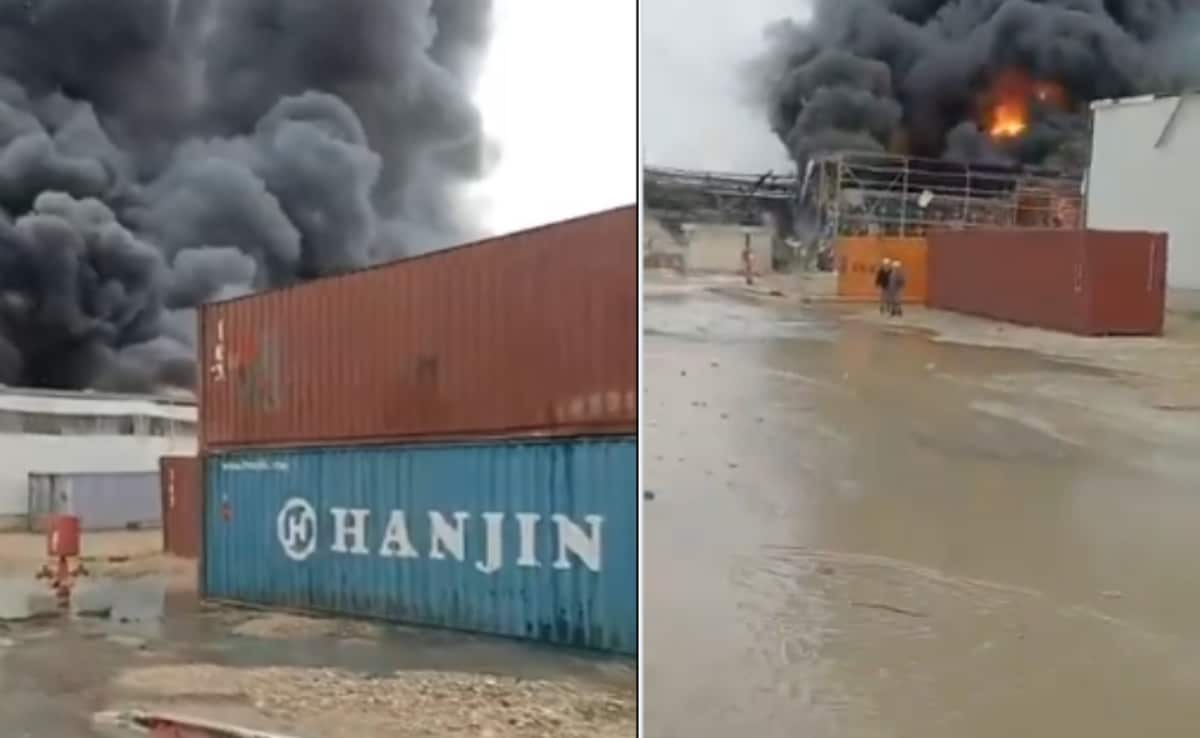
Across that narrow stretch of water, the rhetoric from Tehran has moved past diplomatic posturing into the visceral language of annihilation. The Iranian Revolutionary Guard Corps (IRGC) doesn’t speak in the measured tones of a State Department briefing. They speak of fire. They speak of turning the Gulf into a graveyard for "arrogant powers." When a military commander threatens to "set fire" to thousands of arriving troops, it isn't just a metaphor for war. It is an invitation to a nightmare.
The Mechanics of a Tinderbox
Conflict is rarely a sudden explosion. It is a slow accumulation of friction. In this case, the friction has been building for years, fueled by seized tankers, downed drones, and the ghost of a nuclear deal that everyone seems to remember differently. The United States has responded to this friction with a surge of muscle. Sending thousands of Marines and sailors, backed by F-35s and A-10 Warthogs, is a loud way of saying that the era of "strategic patience" has been replaced by "deterrence through presence."
But deterrence is a psychological game with lethal stakes. If you push a piece across the board to scare your opponent, you have to be prepared for them to stop being scared and start being desperate.
Consider a hypothetical scenario, one that keeps planners in the Pentagon awake at 3:00 AM. A small Iranian patrol boat, manned by a crew more zealous than disciplined, comes within fifty yards of an American destroyer. The American commander has seconds to decide: is this a routine provocation or the lead-in to a suicide strike? One nervous finger on a Gatling gun trigger, one misinterpreted maneuver, and the "fire" Tehran promised becomes a literal, blinding reality. The escalation wouldn't happen in days. It would happen in minutes.
The Human Cost of Geography
We often talk about geopolitics as if it were a game of Risk, played with wooden pieces on a flat board. It’s easier that way. If we keep it abstract, we don't have to think about the letters home that haven't been mailed yet. We don't have to think about the Iranian conscript in Bandar Abbas who has more in common with the American Marine than either would care to admit—both are young, both are tired, and both are caught in a cycle of history they didn't ask to write.
History has a cruel way of repeating its most violent chapters when the actors involved forget the cost of the previous ones. The Gulf has seen this before. In the late 1980s, during the "Tanker War," the waters were thick with the smoke of burning vessels. The USS Stark was struck by missiles; the USS Samuel B. Roberts was nearly broken in half by a mine. Those weren't just "events" in a history book. They were moments of screaming metal and oil-slicked water where men died in the dark.
The current arrival of US forces is meant to prevent a sequel to that era. By putting a massive, undeniable weight on the scale, the US hopes to make the cost of Iranian aggression too high to pay. It is a gamble on rationality. It assumes that the leaders in Tehran, despite their fire-and-brimstone speeches, value their survival more than their pride.
The Invisible Chains of Global Trade
Why does a desert standoff matter to someone buying groceries in a suburban supermarket thousands of miles away? Because the world is stitched together by these precarious sea lanes.
If the IRGC follows through on its threat to ignite the region, the "fire" wouldn't stay in the Gulf. It would travel through the wires of every stock exchange and into the fuel pumps of every gas station. A full-scale conflict in the Strait of Hormuz could cause oil prices to double overnight. This isn't alarmism; it's a cold calculation of supply and demand. When you threaten the jugular, the whole body feels the cold.
The Iranian strategy relies on this vulnerability. They know they cannot win a conventional blue-water navy battle against the United States. They don't have the carriers. They don't have the stealth. What they do have is geography and "asymmetric" tools—mines, drones, and hundreds of small, fast boats that are difficult to track and even harder to stop when they move in a swarm.
They are fighting a different war. To them, "setting fire" to US troops isn't just about a physical battle; it’s about making the cost of the American presence so politically and economically painful that the US eventually decides the juice isn't worth the squeeze.
The Weight of the Watch
Night falls differently on a warship. The darkness is absolute, save for the dim red glow of the instrument panels and the pale moonlight reflecting off the wake. On the bridge, the watch officers scan the horizon with thermal optics. Every heat signature is a question. Is that a fishing dhow? A merchant ship? Or a fast-attack craft testing the perimeter?
There is a profound exhaustion that comes with this kind of tension. It’s the fatigue of waiting for a disaster that might never happen, while knowing that if it does, it will happen all at once. The "fire" Tehran speaks of isn't just the heat of a missile strike; it's the psychological burn of constant vigilance.
The thousands of troops arriving in the region are walking into this furnace of uncertainty. They are the human shield between a fragile global peace and a regional conflagration. They are told they are there to "ensure the free flow of commerce," a phrase that sounds noble in a press release but feels much heavier when you’re the one standing on the deck in the middle of a literal kill zone.
The Echo of the Threat
When the IRGC says they are ready to invasion, they are playing to a domestic audience as much as a global one. They need to project strength to maintain their grip on a restless population at home. Threatening the "Great Satan" is an old script, but it’s one that still plays well in the hardline corridors of power.
The danger is when a leader starts to believe their own script. If the Iranian leadership convinces themselves that they must act on their threats to save face, the logic of the "fire" becomes inescapable. At that point, all the F-35s and Marines in the world move from being a deterrent to being targets.
We live in an age where we think technology has solved the problem of war—that we can manage it with sensors and surgical strikes. But as the thousands of troops settle into their bunks in the Gulf, they know the truth. War is still a human endeavor. It is still about the person on the other side of the water and what they are willing to lose.
The ships continue to cut through the salt water. The planes continue to circle in the high, thin air. And the world waits to see if the threats from the shore are the final echoes of a dying diplomacy or the first sparks of a new, devastating flame.
A single flare, launched by accident or intent, could be the only light anyone sees for a very long time.
Would you like me to analyze the specific naval assets involved in this deployment and how they compare to the Iranian coastal defense systems?