Toronto is a city that usually moves in a predictable, rhythmic grumble. We are defined by the low hum of the Gardiner Expressway, the screech of the 504 King streetcar, and the collective, impatient sigh of a million commuters trying to get home before the sun sets. But that rhythm is about to break.
The World Cup is coming.
When the world arrives, the city doesn’t just open its doors; it rearranges its internal organs. We aren’t talking about a few orange cones and a polite "detour" sign near the Exhibition Grounds. This is a full-scale recalibration of how three million people occupy space. To understand the scale of what is happening, you have to look past the bureaucratic lists of "Road Closures" and see the city as a living, breathing entity that is currently being asked to hold its breath for a very long time.
The Concrete Squeeze
Consider Elena. She is a hypothetical florist whose shop sits just off Liberty Village. Usually, her delivery van follows a path as familiar as a heartbeat. She knows exactly which side streets to take to avoid the midday sludge of traffic. But during the tournament, Elena’s "path" ceases to exist.
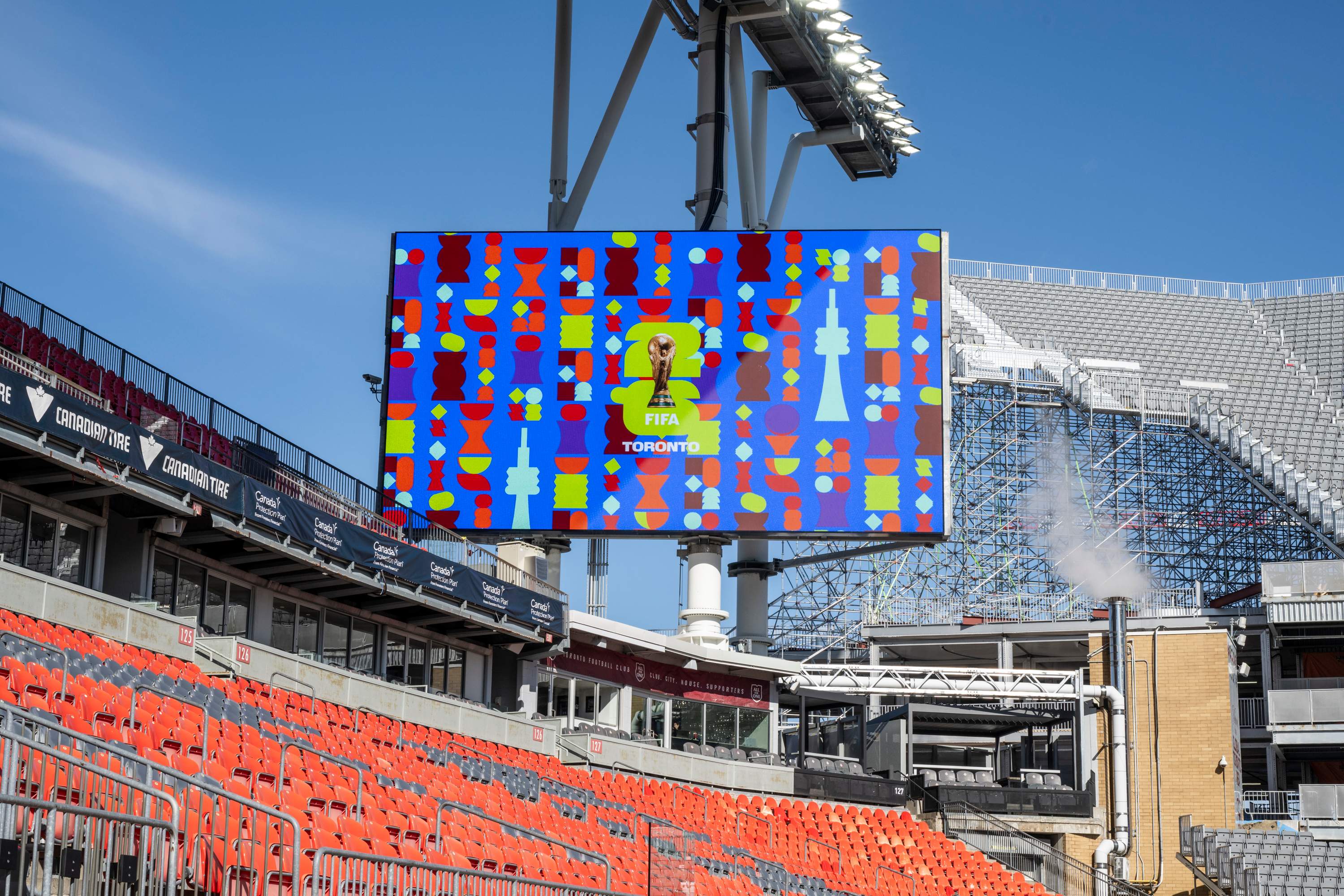
The security perimeters around BMO Field—rechristened Toronto Stadium for the duration—create a dead zone for private vehicles. Bay Street and Bremner Boulevard aren’t just busy; they are effectively deleted from the GPS for anyone without a specific, high-level clearance. For Elena, and for thousands like her, the "road closure" isn't a line on a map. It is a fundamental shift in her business's survival.
The city is implementing a tiered security ring. The innermost circle, the Red Zone, is for the athletes and the officials. Here, the asphalt belongs only to the authorized. The Yellow Zone is a buffer, a space of intense scrutiny where parking is a memory and "standing" in your car for more than thirty seconds will earn you a sharp rap on the window from a police officer.
Logistically, the Gardiner Expressway will remain the spine of the city, but its off-ramps near the downtown core will act like clogged valves. The Spadina and Jameson exits will bear the brunt of the diverted flow. If you are driving into the core, you aren't just navigating traffic; you are entering a funnel that has been narrowed by eighty percent.
The Transit Gamble
We have been told to "take the TTC." It is the mantra of every major event in Toronto’s history. But during the World Cup, the TTC isn't just an alternative; it is the only viable artery left.
The Union Station Bus Terminal and the subway platforms will transform into pressurized chambers. Metrolinx and the TTC are surging capacity, adding extra trains on Line 1 and Line 2, and running the GO Trains with a frequency usually reserved for the peak of Monday morning. But capacity is a fickle thing. A single stalled train at St. Andrew station during a match day creates a literal human bottleneck that can take hours to clear.
Imagine the heat. Imagine forty thousand fans, pulsing with adrenaline, pouring out of the stadium and into the narrow corridors of the Exhibition GO station. This is why the city is imposing "Transit Only" lanes on major corridors like King and Queen Streets. These aren't suggestions. They are the only way to ensure that a bus carrying a nurse to a shift at Toronto General doesn't get swallowed by a sea of fans in jerseys.
Parking, meanwhile, has become a ghost. The city is aggressively stripping away street parking in a five-kilometer radius around the stadium. If you have a permit for your neighborhood, it may not matter. The temporary "No Parking" signs will override your sticker, and the tow trucks—operating with a predatory efficiency—will be clearing streets in minutes. The cost of a day's parking in a private lot downtown is expected to rival the price of a mid-range dinner for two.
The Invisible Stakes
Why do we do this? Why do we let a game dictate the flow of our blood and the movement of our lives?
The stakes aren't just about whether a fan gets to their seat by kickoff. The stakes are about the "Service Gap." When a city shuts down its major veins, emergency services have to find new ones. Paramedics and fire crews have been mapping these closures for months, practicing high-speed navigation through alleyways and secondary routes that the rest of us have forgotten.
Every closure on Lake Shore Boulevard is a calculated risk. For every minute a fire truck is delayed by a diverted crowd, the stakes move from "inconvenience" to "catastrophe." The city’s "Transportation Operations Centre" will be a war room, watching live feeds of every intersection, adjusting light timings in real-time to prevent a total seizure of the grid.
This isn't just about soccer. It is a test of urban resilience. It is an experiment in whether a modern, car-dependent city can function when the car is stripped away.
A New Way of Seeing the Streets
There is a strange beauty in a street without cars. For those who live in the core, the World Cup brings a rare phenomenon: the pedestrianization of the soul. When the roads are closed, the silence that follows is eerie and then, slowly, vibrant.
You will see people walking distances they previously thought required a vehicle. You will see cyclists reclaiming the asphalt of Front Street. The "restrictions" are, in a paradoxical sense, a liberation for the foot traveler. But that liberation comes at the cost of the commuter’s sanity.
If you are planning to navigate Toronto during this window, you must discard your old maps. Your internal clock needs to be reset. A twenty-minute trip is now an hour. A "quick hop" across town is a logistical mission requiring a charged Presto card and a significant amount of patience.
The city is asking us to sacrifice our convenience for a moment of global prestige. We are trading our lanes for a legacy. Whether that trade is worth it depends entirely on whether you are the person in the stadium cheering, or the person in the delivery van three blocks away, watching the minutes tick by while the world moves on without you.
The Survival Logic
To survive the coming weeks, you have to embrace the "Buffer." If you think you need to leave at five, leave at four. Better yet, don't leave at all. Many downtown offices are already pivoting back to remote work for the duration of the matches, recognizing that the "cost of entry" to the office is simply too high.
Check the official City of Toronto "Road Closure Map" daily. It is not static. Closures will shift based on the day's events, the high-profile nature of the teams playing, and the expected fan marches. Use apps that pull real-time data, but don't trust them blindly. An algorithm doesn't know when a thousand fans have decided to turn a street corner into an impromptu celebration.
The city's heartbeat is changing. It's faster, more erratic, and confined to smaller vessels. We are being squeezed into a new shape, one where the sidewalk is king and the steering wheel is a liability.
Late at night, when the matches are over and the fans have drifted back to their hotels, the city will feel different. The empty, barricaded streets will reflect the glow of the streetlights in a way we haven't seen since the quietest days of the pandemic. It is a reminder that the city is not just a collection of roads, but a vessel for experience.
The barricades will eventually come down. The orange cones will be stacked and hauled away. The Gardiner will return to its usual, suffocating crawl. But for a few weeks, Toronto will be a different version of itself—a place where the map is rewritten every morning, and the simple act of getting from A to B becomes a shared, breathless journey.
Would you like me to create a customized "transit survival guide" based on your specific neighborhood and typical commute during the tournament?