The dust in Khost doesn’t just settle. It clings. It finds the creases in your skin and the deep, silent spaces in your lungs until every breath feels like a reminder of the ground you stand on. For the families living along the Durand Line, that ground has become a predator.
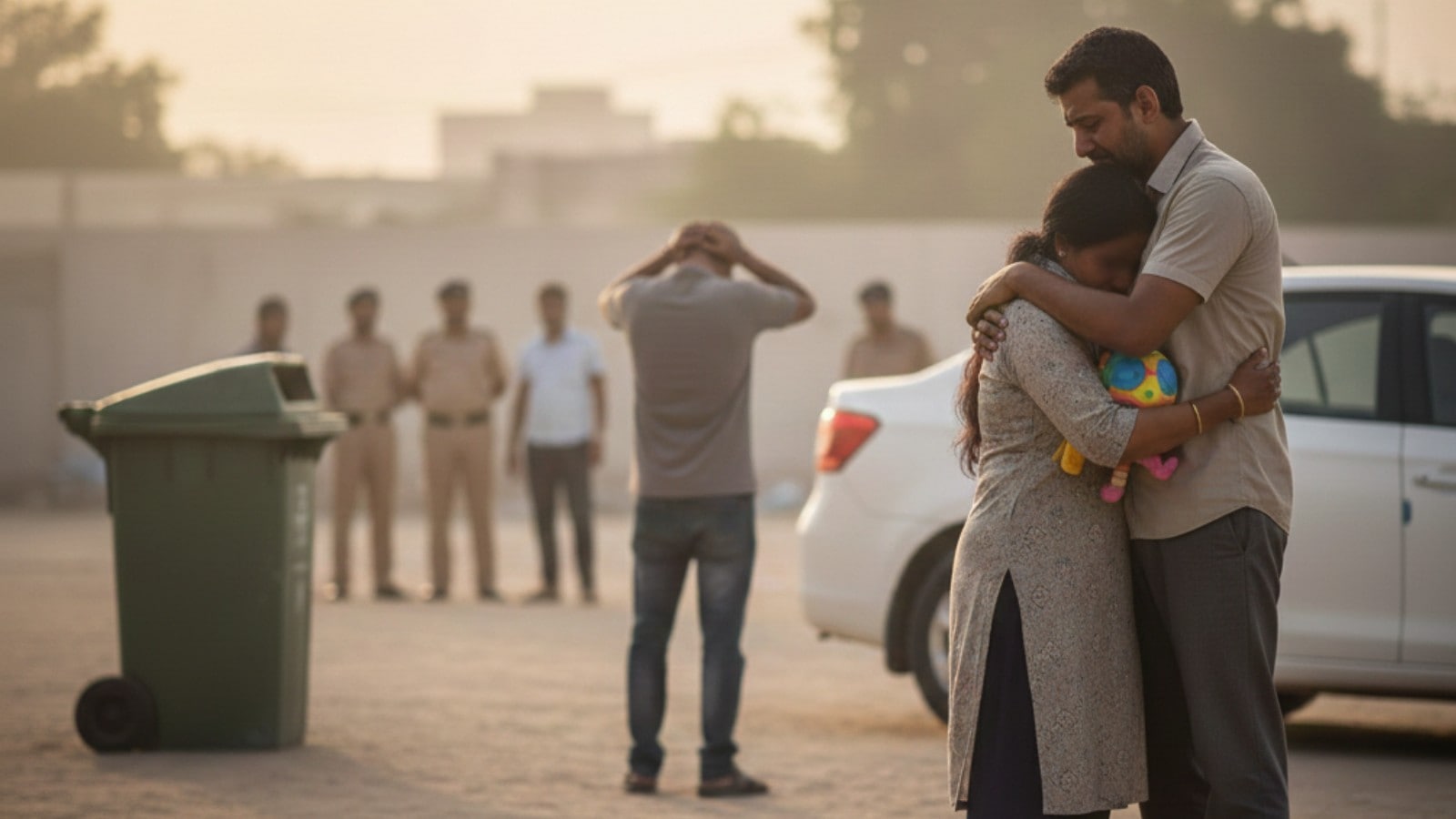
On a recent Monday, the sky over the border provinces of Khost and Paktika didn’t bring the usual heat of the rising sun. It brought steel. Pakistani airstrikes, launched under the shroud of pre-dawn shadows, tore through residential stone houses. By the time the smoke cleared, eight people—all women and children—were dead. They were not soldiers. They were not the "terrorists" cited in official military press releases. They were people sleeping in a borderland that has forgotten how to be quiet.
This is the visceral reality of the escalating conflict between Pakistan and the Taliban-led government of Afghanistan. While diplomats in Islamabad and Kabul trade icy statements and "strongly worded" condemnations, the people in the middle are watching the horizon for the next flash of light.
A Line Drawn in the Sand
To understand why a neighbor would drop bombs on a neighbor, you have to look at a map that doesn't work. The Durand Line, a 1,600-mile stretch of mountain and desert, was carved out by British colonial administrators in 1893. It was meant to be a buffer. Instead, it became a scar.
For over a century, the people living here—mostly ethnic Pashtuns—have treated the border as a suggestion rather than a wall. Families have kitchens in one country and bedrooms in the other. They share weddings, funerals, and trade routes. But for the governments on either side, this porousness is a nightmare.
Pakistan claims that the Tehrik-i-Taliban Pakistan (TTP), a domestic militant group, uses Afghan soil as a sanctuary to launch bloody attacks against Pakistani police and soldiers. The Taliban, now the masters of Kabul, deny this. They say they don't allow anyone to use their land for external strikes.
The math of this denial is getting harder to justify. Following a massive suicide bombing in North Waziristan that killed seven Pakistani soldiers, Islamabad decided its patience had evaporated. The airstrikes were a roar of frustration.
The Ghost in the Machine
Consider a man we will call Dawar. He is a hypothetical shopkeeper in an Afghan border village, but his story is the composite of a thousand real lives. Dawar remembers when the Taliban took Kabul in 2021. He remembers the celebrations in some Pakistani circles, the talk of "strategic depth" and a friendly neighbor to the West.
Now, Dawar watches the sky.
He sees the irony that many analysts are afraid to voice. The very movement Pakistan supported for decades is now the authority presiding over the groups attacking Pakistan. It is a classic case of a fire jumping the firebreak.
The TTP and the Afghan Taliban are not the same organization, but they share an umbilical cord of ideology and history. They fought together against the Americans. They prayed in the same madrasas. When the Pakistani government asks the Afghan Taliban to hand over TTP leaders, they are asking them to betray their brothers-in-arms. In the code of Pashtunwali, and in the rigid logic of jihadist camaraderie, that is a tall order.
So, the cycle continues.
Attack.
Airstrike.
Retaliation.
Shortly after the Pakistani jets returned to their bases, Afghan border forces opened fire with heavy weaponry on Pakistani military outposts. The border wasn't just a line anymore. It was a firing range.
The Economic Noose
Conflict isn't just about bullets. It's about bread.
While the rockets are flying, the gates are closing. The Torkham and Chaman border crossings—the jugular veins of trade for landlocked Afghanistan—are frequently shut down. Imagine a truck driver carrying a load of perishable fruit. Every hour he sits in a miles-long queue at the border, his livelihood rots in the sun.
Pakistan has also begun a massive campaign to deport hundreds of thousands of undocumented Afghan refugees. Many of these people have lived in Pakistan for forty years. They have businesses in Peshawar; they have children who speak Urdu better than Pashto. Now, they are being loaded into trucks and sent back to a country gripped by a humanitarian crisis and a collapsing economy.
It is a leverage game. Islamabad is using the refugees and the trade routes as a pressure point to force the Taliban’s hand on security. But pressure creates heat, and heat creates explosions.
The Invisible Stakes
Why should a reader thousands of miles away care about a dusty ridge in Paktika?
Because the stability of this region is the world's stability. When two nuclear-adjacent powers—or one nuclear power and one battle-hardened insurgent government—start trading blows, the ripples don't stop at the border.
If Pakistan descends into internal chaos due to TTP attacks, the security of its nuclear arsenal becomes a global anxiety. If Afghanistan remains a vacuum where militant groups can operate with impunity, the "forever wars" might just find a new reason to start again.
But the most important reason to care is the human cost that gets buried under the "geopolitical" label.
The eight people killed in those houses weren't pieces on a chessboard. They were the ones who stayed behind when the world moved on from Afghanistan. They were the ones trying to piece together a life after forty years of war, only to find that the peace they were promised was just a different kind of violence.
The Breaking Point
The relationship between Kabul and Islamabad is at its lowest point in years. The rhetoric is sharpening. The Taliban's Ministry of Defense has warned that they are ready to respond to any "aggression." Pakistan has signaled that it will strike again if the TTP isn't reigned in.
There is no easy exit ramp here.
The Taliban cannot easily suppress the TTP without risking an internal rebellion or losing their "pure" Islamic credentials. Pakistan cannot allow its soldiers to be slaughtered in border posts without appearing weak to its own citizens.
They are locked in a grim dance.
The tragedy is that the music for this dance is the sound of artillery. As night falls over the mountains, the families in the border villages don't look at the stars. They listen for the hum of an engine in the clouds. They know that in this part of the world, the border is a living thing, and it is currently hungry for blood.
The mountains remain silent, indifferent to the lines men draw across them, while the dust continues to settle on the graves of the innocent.