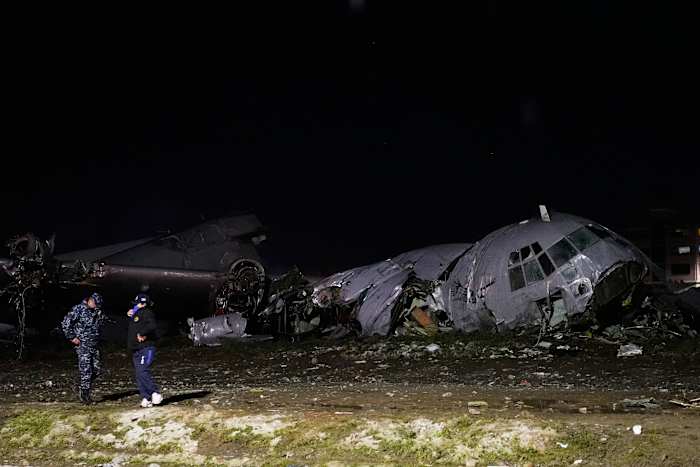
A cargo plane loaded with cash just plummeted from the sky near La Paz. At least 15 people are dead. It's a tragedy that feels like a plot from a high-stakes thriller, but for the families of those on board, it's a grim reality that highlights the terrifying risks of high-altitude aviation in the Andes. When a flight carrying currency goes down, the narrative usually shifts to the money. Everyone wants to know how much was on board or if it’s scattered across the mountainside. But the real story here isn't the cargo. It's the systemic failure that allowed a plane to fall out of the sky in one of the most challenging flying environments on earth.
Bolivian officials confirmed the disaster occurred shortly after the aircraft attempted to navigate the thin air surrounding the capital. The El Alto International Airport sits at over 13,000 feet. It's one of the highest commercial airports in the world. If you've ever flown into La Paz, you know the engines scream differently there. The air is thin. Lift is harder to maintain. There’s almost zero margin for error.
The Brutal Reality of Flying in the Altiplano
Flying in Bolivia isn't like flying over the Midwest. You're dealing with the Altiplano, a high plateau where the physics of flight change. Aircraft performance drops significantly as altitude increases. Takeoff rolls are longer. Landing speeds are higher. Most importantly, the time a pilot has to react to an engine failure or a shift in wind shear is cut in half.
The plane involved was reportedly transporting a significant amount of cash intended for regional bank distribution. While the presence of money adds a layer of intrigue, it also adds weight. In high-altitude aviation, weight is the enemy. We don't know the exact load manifests yet, but investigators will be looking closely at whether the aircraft was over-encumbered for the atmospheric conditions at the time of departure.
Search and Recovery in the Death Zone
First responders faced a nightmare scenario. The crash site is located in rugged terrain that makes traditional rescue efforts nearly impossible. Recovery teams had to battle extreme cold and oxygen-deprived air just to reach the wreckage.
Witnesses described a scene of total devastation. The impact was high-velocity. There was no "soft landing" here. When 15 people die in a cargo crash, it suggests that the aircraft wasn't just carrying a flight crew. It likely held security personnel and bank officials tasked with guarding the shipment. This is standard practice for high-value transfers in South America, where ground transport is often deemed too risky due to the threat of highway robbery.
Ironically, the search for safety in the air led to a far more catastrophic outcome.
Why Cargo Planes Are Falling Behind
We have to talk about the age of the fleet. A lot of the cargo aircraft operating in South America are decades old. They're the workhorses of the industry—planes like the Convair 580 or older Boeing 727s and 737-200s. These machines are built like tanks, but they lack the sophisticated digital flight protection systems found in modern jets.
In a high-stress environment like the Andes, those seconds of automated assistance can be the difference between a close call and a smoking hole in the ground. If this plane suffered a mechanical glitch, the pilot was likely fighting the controls manually in air so thin it barely supported the wings.
The Money Question and the Investigation
People are going to obsess over the cash. Was it recovered? Was it burned? The military has cordoned off the area, ostensibly to protect the site, but also to secure the currency. However, focusing on the "lost millions" is a distraction.
The International Civil Aviation Organization (ICAO) has specific standards for mountainous operations. Bolivia has been under the microscope before regarding its aviation oversight. This crash will force a hard look at how the country manages its "charter" and "special mission" flights. These aren't your standard commercial hops. They often operate under different sets of scrutiny, and sometimes, maintenance logs aren't as pristine as they should be.
What Happens Next for Aviation in Bolivia
This isn't just a local news blip. It's a massive blow to the regional logistics chain. If you can't safely move currency or high-value goods by air, the economy stutters.
Expect the DGAC (Bolivia’s General Directorate of Civil Aeronautics) to face intense pressure from international bodies. They need to prove that their oversight isn't just a rubber stamp. We need to see the black box data. We need to know if the pilots reported an emergency or if the plane simply vanished from radar.
If you're following this story, stop looking for photos of burning dollar bills. Start looking at the tail number. Start looking at the maintenance history of the operator. That's where the answers are.
For now, the focus stays on the recovery of the victims. 15 families are waiting for answers that might take years to fully materialize. In the meantime, the aviation industry needs to address the "Altiplano risk" before another heavy-laden bird falls from the thin Bolivian sky. Check the official DGAC bulletins over the next 48 hours for the preliminary manifest and tail number verification. That data will tell us exactly what kind of tech failed these people.