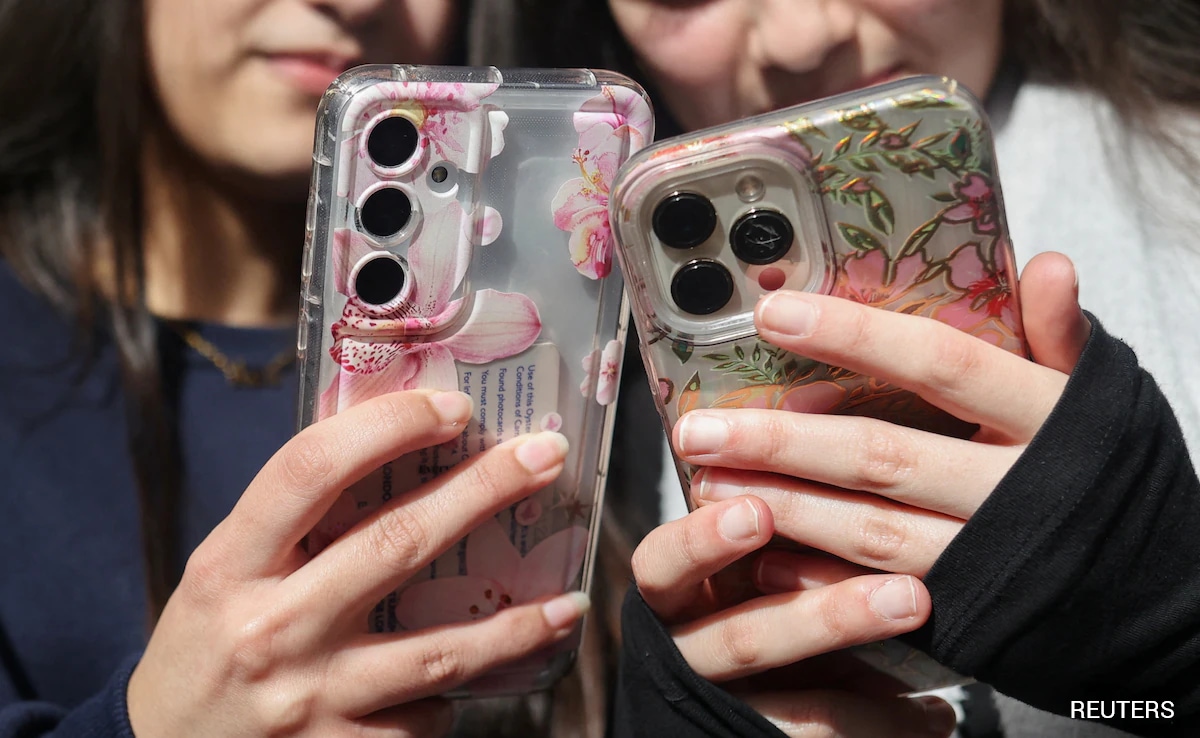
The room is dark, save for a sharp, rectangular glow. It is 2:14 AM. In the corner of a suburban bedroom, a fourteen-year-old girl named Maya—a hypothetical proxy for millions—is not sleeping. She is vibrating. Her thumb moves in a rhythmic, mechanical twitch, scrolling through a curated gallery of lives that seem more vibrant, more polished, and infinitely more successful than her own.
This isn't just about a lost night of rest. It is about a fundamental shift in the architecture of the human spirit.
According to a recent, sobering report from the United Nations, Maya is the face of a quiet global crisis. The data is no longer speculative. It is a digital indictment. Social media is not merely a tool for connection; for the youth of the world, and specifically for young girls, it has become a primary architect of their internal reality. The report highlights a jagged disparity: while boys find their own set of pitfalls in the digital wild, girls are weathering a storm of psychological pressure that is fundamentally different in both scale and frequency.
The Algorithm of Inadequacy
The mechanism of this distress is deceptively simple. Imagine a mirror that doesn't show you who you are, but instead shows you who you failed to be. Every time Maya opens an app, she is bombarded with images that have been filtered, airbrushed, and staged to perfection. Her brain, still under construction, struggles to separate the performance from the reality.
There is a biological tax on this behavior. When we see someone we perceive as more successful or more attractive, our brain's neural pathways for social comparison light up. For girls, these pathways are often more sensitive to social cohesion and peer approval. The UN findings suggest that this "comparison trap" leads to a direct spike in symptoms of depression and anxiety. It is a feedback loop where the cure for loneliness—the screen—is actually the pathogen.
Consider the biological cost. The blue light from the device suppresses melatonin, the hormone that signals to our bodies that it is time to sleep. But the psychological "blue light" is even more damaging. It is the persistent, nagging feeling of being watched, judged, and found wanting. Maya isn't just looking at photos; she is participating in a high-stakes popularity contest that never has a closing ceremony.
The Gendered Digital Divide
The report pulls no punches regarding the gender gap. Why are girls hit harder? The answer lies in the nature of the content. Boys often gravitate toward gaming or hobby-centric communities, which, while not without risks like aggression or radicalization, offer a degree of "doing" rather than just "being."
For girls, the digital experience is often rooted in the "selfie culture." It is an economy of appearance. The stakes are physical. The UN data points to a harrowing rise in body dysmorphia and eating disorders tied directly to the frequency of social media use. When your social currency is tied to a "Like" button, your self-worth becomes a fluctuating commodity traded on an unstable market.
The invisible stakes are found in the loss of "liminal space." This is the quiet time between activities—the walk to school, the wait for a bus, the moments before falling asleep. Traditionally, these were the times when a young mind processed the day, built resilience, and engaged in daydreaming. Now, those spaces are filled with the noise of three billion other voices. There is no longer a "private" self. There is only the "public" self and the "shameful" self that doesn't meet the public standard.
The Illusion of Connection
We were told these platforms would bring us together. Instead, they have created a paradoxical form of isolation. You can have five thousand "friends" and still feel completely unseen.
The UN report emphasizes that high social media usage is correlated with a decrease in face-to-face social skills. This is a terrifying prospect. We are raising a generation that is expert at digital broadcasting but struggling with the nuances of a human gaze. They can navigate a complex interface but find a physical conversation during a family dinner to be an agonizing ordeal.
The logic is simple: social media rewards the extreme. It rewards the loudest, the prettiest, the most outraged. It does not reward the contemplative, the average, or the quiet. For a young girl trying to find her place in the world, the message is clear: if you are not exceptional, you are invisible.
The Architecture of the Trap
But who is to blame? It is easy to point at the teenagers, to call them "addicted" or "weak." That is a convenient lie.
The reality is that these platforms are designed by the world's most brilliant engineers to be "sticky." They use variable rewards—the same psychological mechanism that makes slot machines so devastating—to keep users scrolling. The "infinite scroll" is not a design choice; it is a psychological cage. There is no bottom. There is no natural stopping point.
Maya isn't "addicted" because she lacks willpower. She is a biological entity being outmaneuvered by a supercomputer.
The UN calls for a radical shift in how we approach digital literacy and regulation. It suggests that the burden should not fall solely on the parents or the children, but on the creators of the ecosystems. We need a "safety by design" philosophy. Imagine a world where an app detects that a user has been scrolling for three hours and slowly fades the interface to gray, or where the algorithm intentionally de-prioritizes body-focused content in favor of substantive engagement.
The Cost of Silence
If we continue to ignore the emotional core of this data, we are consenting to a generational heist. We are allowing the childhood of millions to be traded for advertising revenue.
The report isn't just a collection of numbers; it is a warning cry. It tells us that the "mental health crisis" is not a mysterious plague. It is a predictable outcome of an unregulated digital environment. We are conducting a massive, uncontrolled experiment on the human psyche, and the early results are in. They are heartbreaking.
The girl in the dark room, the one with the glowing face and the tired eyes, isn't looking for a meme or a video. She is looking for a sense of belonging that the screen is physically incapable of providing. She is looking for a reflection that says, "You are enough exactly as you are."
Maya finally puts the phone down. It is 3:45 AM. The blue light disappears, leaving the room in a heavy, sudden blackness. She closes her eyes, but the images remain, burned into the back of her eyelids like ghosts. She is exhausted, yet her mind is racing, comparing her messy, dark room to the sun-drenched, filtered bedrooms of the influencers she just spent hours watching.
The phone sits on the nightstand, a silent, cold object of glass and silicon, waiting for the sun to rise so the race can begin all over again.