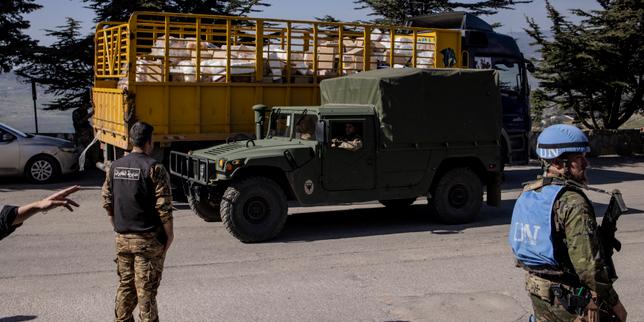
The dust in Southern Lebanon has a specific weight. It is fine, chalky, and tastes of ancient limestone and modern cordite. When a shell impacts the earth, this dust does not merely settle; it hangs in the air like a shroud, clinging to the sweat-soaked fabric of a blue vest.
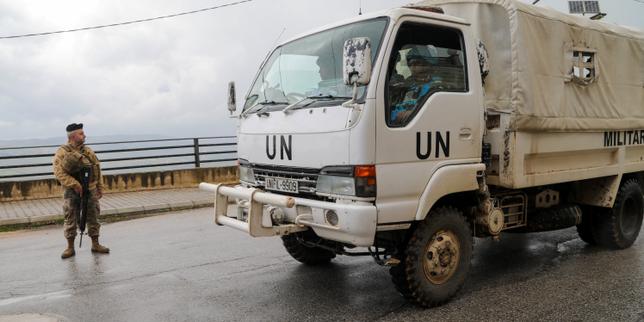
We often talk about peacekeeping in the abstract. We view it as a diplomatic line item, a series of acronyms—UNIFIL, blue zones, deconfliction—that pulse on a digital map in a quiet room in New York. But on the ground, between the Litani River and the Blue Line, peacekeeping is a matter of acoustics. It is the sound of a diesel engine idling in a tense silence. It is the sharp, metallic click of a radio handset. And lately, it is the deafening roar of a world that has forgotten how to stop screaming.
Two men who wore those blue helmets are not coming home. They didn't fall in a grand charge or a cinematic struggle. They died because the geography of war has become indifferent to the colors of neutrality.
The Geometry of the Crossfire
Imagine standing in a garden while two neighbors throw stones at one another. You are there to ensure neither crosses the fence, but the stones have grown into missiles, and the fence has been pulverized into rubble. You cannot leave, because your presence is the only thing preventing the entire neighborhood from catching fire. Yet, you cannot fight back, because your weapon is a symbol, not a tool of conquest.
This is the impossible physics of the United Nations Interim Force in Lebanon.
The recent loss of two peacekeepers in the south isn't just a statistic to be buried in the third paragraph of a news wire. It is a rupture. These individuals came from worlds far removed from the cedar-lined hills of Lebanon. They stepped into a landscape where the history of grievances goes back centuries, and the modern weaponry ensures those grievances are settled in milliseconds.
Southern Lebanon is a labyrinth of olive groves and limestone ridges. It is beautiful, until the sky begins to whistle. For months, the tension here has been a physical weight. The "Blue Line"—the border that isn't quite a border—has become a blurred smear of fire. When the UNIFIL headquarters or their remote outposts are struck, it isn't just an accident of trajectory. It is a message that the sanctuary of international law is fraying at the edges.
The Human Cost of Neutrality
To understand why this matters, we have to look past the political posturing. Consider a young soldier from Indonesia, Ireland, or France. They are thousands of miles from their families, stationed in a concrete bunker that smells of stale coffee and anxiety. Their job is to watch. They document the flashes in the night. They report the drones that buzz like angry wasps overhead.
They are the eyes of the world, and right now, the world is being blinded.
When a peacekeeper dies, the ripple effect is different than that of a combatant. A soldier falls in battle as part of a strategic gamble. A peacekeeper falls while standing still, holding a shield for people they have never met. Their death is a failure of the collective imagination—a sign that we have reached a point where even the observers are seen as targets.
The two lives lost recently represent more than just a tragic headline. They represent the collapse of the "buffer." In military theory, a buffer is a space designed to absorb shock. In reality, that space is filled with human beings. When the buffer fails, the shock travels directly into the heart of the civilian populations on both sides of the line.
The Language of the Unseen
We speak of "surgical strikes" and "targeted operations" as if war were a clinical procedure. It isn't. It is messy, loud, and profoundly stupid. It ignores the white flag. It ignores the blue helmet.
The invisible stakes here aren't just about territory. They are about the precedent of protection. If the international community accepts the deaths of those it sends to maintain peace as "collateral damage," then the very concept of international intervention becomes a ghost. If the blue helmet offers no more protection than a baseball cap, who will stand in the gap next time?
The families of these two fallen peacekeepers will receive a folded flag and a letter of condolence. They will be told their loved ones died in the service of peace. But in the quiet villages of Southern Lebanon, where the smoke from the latest strike mingles with the evening mist, the service of peace feels increasingly like a suicide mission.
Peacekeeping isn't about stopping a war once it has started; it's about holding the door shut so the monster can't get back in. In the south, that door has been kicked off its hinges. The men and women remaining in those outposts aren't just soldiers; they are the last witnesses to a vanishing order.
A Choice Between Silences
The rhetoric from the capitals—Beirut, Jerusalem, New York—is always the same. There are expressions of "deep concern." There are calls for "restraint." These words have been used so often they have lost their edges. They are smooth, round pebbles that skip across the surface of the blood without sinking in.
The reality is found in the silence that follows an explosion. It is the silence of a mother in a border village waiting to see if the roof holds. It is the silence of a commander looking at an empty bunk in a UN barracks.
We are currently witnessing the dismantling of the invisible guardrails that kept a regional skirmish from becoming a global catastrophe. Every time a UN post is hit, every time a peacekeeper is buried, a thread of the global safety net is snipped. We are falling, and we are pretending that we are still flying.
The two who died in the south were not politicians. They were not architects of the conflict. They were the ones we asked to stand in the middle of the storm and tell us which way the wind was blowing. Now, the wind has taken them.
There is no "strategic victory" in the death of a peacekeeper. There is only the grim realization that when we stop respecting the people we sent to keep the peace, we have already decided that we prefer the war. The limestone dust will eventually settle over the craters in the south, but the memory of those blue helmets, cracked and discarded in the dirt, will remain as a testament to what happens when we decide that some lives are simply in the way.
The sun sets over the Mediterranean, casting long, bloody shadows across the hills of Lebanon. The radios crackle. The reports are filed. The world moves on to the next notification on its screen. But in a small room somewhere, two chairs stay empty, and the silence they leave behind is louder than any bomb.