The air inside Pauley Pavilion doesn’t smell like a typical sports arena. There is no stale scent of spilled beer or the greasy heaviness of industrial nacho cheese. Instead, it smells like hairspray, athletic tape, and a specific, electric brand of anticipation that vibrates in the back of your teeth.
Most people see gymnastics as a four-year obsession, a fleeting fever dream that captures the national consciousness during the Olympics before receding back into the shadows of "niche" athletics. But for a certain collective in Los Angeles, the calendar doesn't revolve around the Summer Games. It revolves around Friday nights in the winter. It revolves around the specific, percussive thwack of a hand hitting a vault table.
To understand the UCLA gymnastics phenomenon, you have to stop looking at the scoreboard. You have to look at the front row.
The Front Row Prophets
There is a woman who has sat in the same seat for twenty years. Let’s call her Diane. She isn’t a former gymnast. She didn't graduate from UCLA. She is a retired actuary who found herself at a meet two decades ago on a whim and never truly left. Diane knows the deductions for a flexed foot on a double layout better than some regional judges. She knows which sophomore is struggling with a nagging ankle sprain and which freshman is finally finding her confidence on the beam.
For Diane and the hundreds like her, this isn't a hobby. It’s a lifeline.
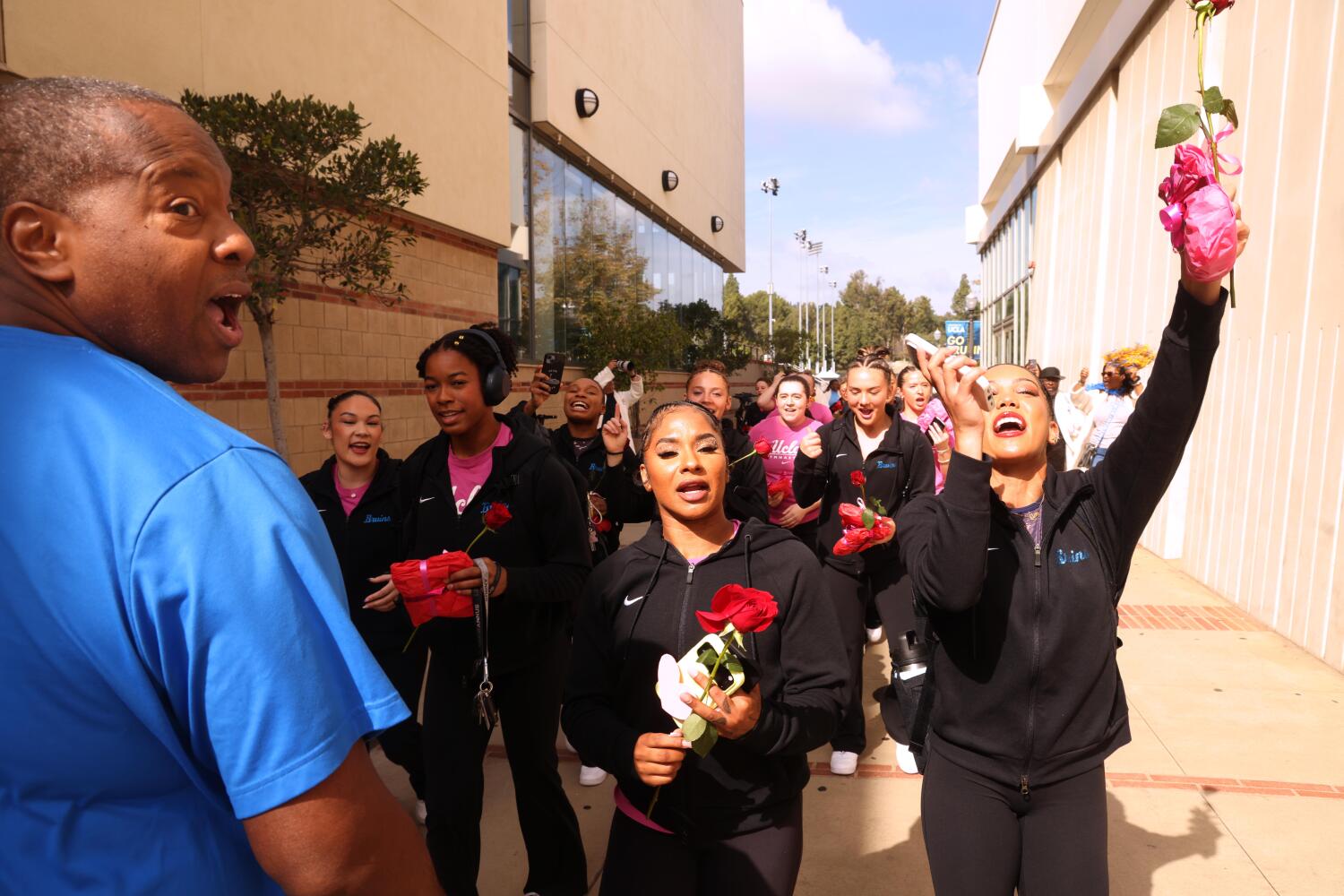
The bond between the Bruins and their "super fans" is a strange, symbiotic ecosystem. In most sports, the athlete is a distant gladiator, separated from the masses by plexiglass, soaring salaries, and a fortress of PR agents. In NCAA gymnastics—and specifically at UCLA—that wall is porous. The fans aren't just spectators; they are the atmospheric pressure that allows the gymnasts to fly.
The Geometry of Grace
Why this team? Why this school?
The answer lies in the shift from technical rigidity to radical expression. For years, gymnastics was a sport of subtraction. You started with a perfect 10.0 and spent ninety seconds watching a panel of stone-faced adults chip away at your soul for every microscopic error. A separated finger. A hop on a landing. A wobbling chin.
UCLA changed the math. Under the legendary tenure of Miss Val and continuing into the modern era, the program leaned into the "floor exercise" as a piece of performance art. They stopped trying to be robots and started trying to be rock stars. When a Bruin steps onto the blue mat, the routine isn't just a series of tumbling passes. It’s a narrative. It’s hip-hop, it’s Broadway, it’s a political statement, and it’s a celebration of joy.
Consider the physics of a beam routine. The apparatus is four inches wide. It stands nearly four feet off the ground. A gymnast is asked to perform a series of back flips and aerials on a surface narrower than the average smartphone.
When the gymnast wobbles, the crowd doesn't gasp in judgment. They lean. Collectively, three thousand people shift their weight to the left as if their own center of gravity could somehow stabilize the girl in the leotard. It is a physical manifestation of empathy. When she sticks the landing, the explosion of sound isn't just a cheer for a high score. It’s a collective exhale of a thousand people who were holding their breath with her.
The Invisible Stakes
We live in a world that feels increasingly fragmented. We are siloed by algorithms and separated by screens. The "super fan" isn't just someone who likes sports; they are someone who craves a communal pulse.
There is a group of season ticket holders who meet for dinner before every home meet. They have a group chat that stays active during the off-season. They celebrate each other’s birthdays and mourn each other’s losses. The gymnastics team is the gravity that pulls these disparate lives into a single orbit.
One fan, a man in his sixties who worked in high-stress corporate law, once remarked that Pauley Pavilion was the only place he felt he could be "soft." In the boardroom, he was a shark. In the stands, he was a man who cried when a walk-on senior finally nailed her collegiate debut after three years of injuries.
The stakes are invisible because they aren't about trophies. The Bruins have plenty of those. The stakes are about the validation of effort. In a society obsessed with the "finished product," these fans are obsessed with the process. They see the ice buckets. They see the tears in the corral after a fall. They see the grueling, repetitive labor that goes into a performance that lasts less than two minutes.
The Viral Spark and the Human Cost
In recent years, UCLA gymnastics has become a viral juggernaut. Katelyn Ohashi’s perfect ten—a routine that combined world-class athleticism with infectious, moonwalking joy—garnered millions of views across the globe. Nia Dennis brought the house down with a celebration of Black culture that redefined what "collegiate" looked like.
But virality is cheap. It’s a fleeting hit of dopamine on a Sunday afternoon.
The super fans are the ones who stay after the cameras are packed away. They are the ones who understand that behind every viral moment is a human being who might be terrified of failing. The relationship is built on a quiet promise: We will show up for you, even when you don't go viral.
This loyalty creates a pressure cooker of a different kind. For the gymnasts, looking into the stands and seeing familiar faces—the man with the glittered sign, the family that travels to every away meet in Utah or Washington—is a double-edged sword. It is a safety net, but it’s also a responsibility. They aren't just competing for themselves or their coaches. They are competing for the people who have invested their emotional lives into the program.
Beyond the Mat
The brilliance of this connection is how it transcends the sport. The fans often talk about the "Bruin bubble," a temporary utopia where the only thing that matters is how well you support the person next to you.
Imagine a young girl sitting in the rafters. She’s eight years old, wearing a replica leotard that’s a little too big in the shoulders. She isn't watching the scoreboard. She’s watching the way the older girls on the team surround a teammate who just fell. She’s watching the "stick crown" being placed on a head. She’s watching a community that prioritizes the person over the performance.
That girl is the next generation of super fan. Or perhaps she’s the next All-American.
The difference is negligible.
The sport of gymnastics is a brutal teacher. It teaches you that gravity is an undefeated opponent. It teaches you that no matter how hard you work, you will eventually hit the ground. But the culture at UCLA, fueled by the relentless devotion of its fans, offers a counter-lesson: hitting the ground doesn't matter if there are three thousand people waiting to help you back up.
The lights eventually dim. The floor mat is rolled away. The chalk dust settles into the floorboards, invisible until the next time the sun hits it just right. The fans file out into the cool Los Angeles night, moving toward the parking structures in a sea of blue and gold.
They aren't talking about the scores. They are talking about the way the light caught a certain leap, or how a certain senior looked like she was finally having fun again. They are carrying the energy of the arena out into the world, a small, stubborn ember of shared humanity kept alive by the simple act of showing up.
In a world of cold metrics and transactional relationships, there is something revolutionary about loving a stranger’s success as if it were your own.
The blue mat is just a stage. The real performance is the way we choose to watch.