The intersection of high-velocity physical impact and pharmacological impairment creates a compounding risk profile that transcends simple legal non-compliance. When analyzing the 2017 arrest of Tiger Woods in Jupiter, Florida, the narrative often collapses into a singular focus on "DUI." However, a rigorous deconstruction reveals a complex failure chain involving post-surgical pain management, sleep-cycle disruption, and the catastrophic erosion of a high-value personal brand’s stability. The event serves as a primary case study in how "perceived control" in elite performers can mask systemic physiological collapse.
The Mechanism of Pharmacological Compounding
The arrest report and subsequent toxicology reveal a sophisticated interaction between multiple substances. Unlike a standard alcohol-related DUI, Woods’ impairment was the result of a "cocktail effect"—the synergistic interaction of Vicodin (hydrocodone/acetaminophen), Dilaudid (hydromorphone), Xanax (alprazolam), Soma (carisoprodol), and Vantol (zolpidem).
The pharmacological failure can be categorized into three distinct physiological stressors:
- Central Nervous System (CNS) Depressant Synergy: The combination of opioids (Vicodin, Dilaudid) and benzodiazepines (Xanax) creates a non-linear increase in respiratory depression and cognitive deceleration. In clinical terms, $1+1 \neq 2$; the sedative effect is exponential. This explains the "asleep at the wheel" state found by officers, characterized by profound disorientation rather than the aggressive motor impairment typically seen with ethanol.
- The Insomnia-Recovery Paradox: Woods was recovering from a fourth back surgery (spinal fusion). The use of Vantol (a sedative-hypnotic) suggests a failure in the circadian rhythm—a common side effect of chronic pain. When the body cannot reach REM sleep due to pain, the cognitive "debt" accumulates, leading to the fugue state witnessed during the roadside interaction.
- Metabolic Half-Life Overlap: The presence of five distinct substances suggests a failure in managing the clearance rates of medication. If the liver and kidneys cannot process the previous dose before the subsequent one is administered, the plasma concentration reaches toxic levels.
Structural Vulnerabilities in High-Stakes Recovery
The incident highlights a critical flaw in the "Elite Athlete Recovery Model." Typically, this model assumes that access to top-tier medical professionals ensures safety. However, the data suggests that fragmented care—where different specialists prescribe for different symptoms (pain, sleep, anxiety)—creates a "silo effect."
The Silo Effect in Professional Sports Medicine
- Pain Management (Opioids): Focuses on immediate nerve suppression to allow for physical therapy.
- Psychological Maintenance (Benzodiazepines): Focuses on managing the high-cortisol environment of professional competition and public scrutiny.
- Sleep Science (Hypnotics): Attempts to force recovery windows in a body chemically stimulated by the previous two categories.
When these three silos are not integrated by a single oversight authority, the patient becomes a walking experiment in polypharmacy. In Woods’ case, the Mercedes-Benz S65 AMG became the unintended laboratory for this chemical saturation. The damage to the vehicle—flat tires and rim damage on the driver’s side—indicates a total loss of spatial awareness, a direct result of the vestibular system being compromised by the carisoprodol (muscle relaxant).
Brand Equity and the Volatility Coefficient
From a consultancy perspective, Tiger Woods is not just an athlete; he is a diversified asset class. The 2017 incident represented a "tail risk" event—an outlier with massive negative consequences. To quantify the impact, one must look at the Brand Volatility Coefficient (BVC).
The Three Pillars of Brand Erosion
The arrest attacked the three core components that sustained Woods’ market value post-2009:
- Competence: The ability to remain the master of his environment. Seeing the world’s most disciplined athlete unable to walk a straight line or recite the alphabet backwards fundamentally broke the "Mastery" narrative.
- Reliability: For sponsors like Nike, Bridgestone, and Monster Energy, the arrest signaled a transition from "recovering champion" to "liability risk." The cost of a "Morals Clause" invocation becomes a real line item in quarterly earnings reports.
- Aspiration: The delta between the fan's life and the athlete's life narrowed. The arrest mugshot—disheveled, heavy-lidded, and aged—removed the protective veneer of celebrity, humanizing him in a way that was commercially detrimental.
The financial fallout of such an event is rarely immediate. Instead, it manifests in the Renewal Discount. When contracts come up for renegotiation, the "Risk Premium" is baked into the new numbers. A brand that was once "unpriceable" suddenly has a quantified downside.
The Physics of the "Rollover" Misconception
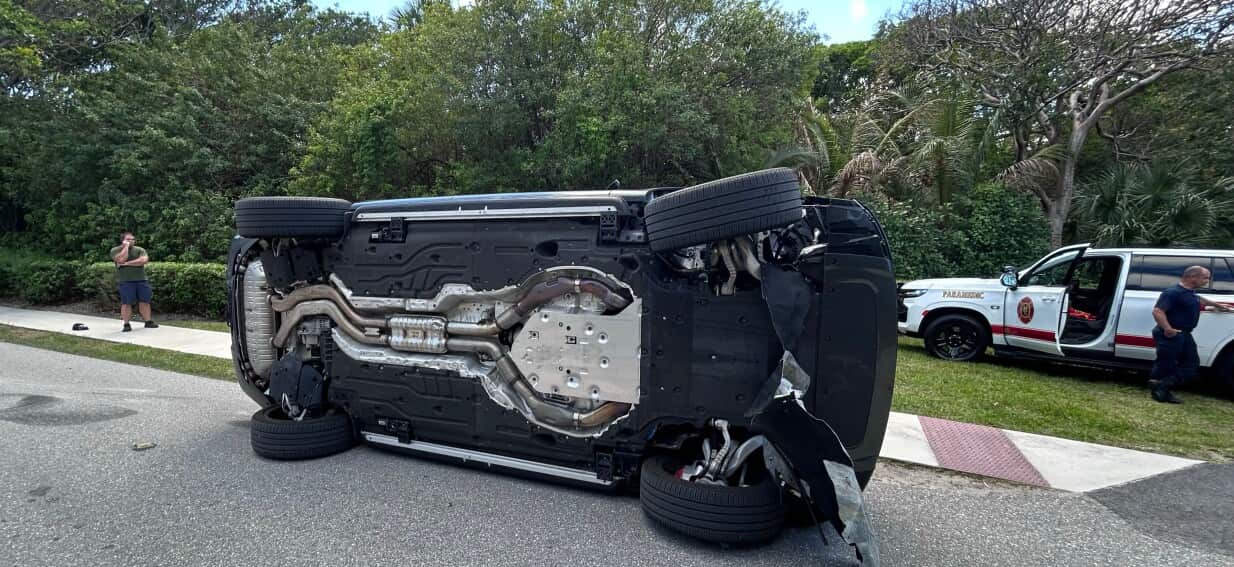
It is vital to distinguish between the 2017 DUI arrest and the 2021 rollover crash in Rolling Hills Estates, as they represent different failure modes. The 2017 event was a failure of internal systems (chemistry/judgment), while the 2021 event was a failure of external physics (velocity/infrastructure).
In the 2021 crash, the Genesis GV80 traveled at speeds estimated between 84 and 87 mph in a 45 mph zone. The kinetic energy ($KE$) of a vehicle is calculated as $KE = \frac{1}{2}mv^2$. Because velocity is squared, doubling the speed from 40 to 80 mph quadruples the impact force.
The structural integrity of the vehicle's "safety cage" saved his life, but the mechanical trauma to his lower extremities (comminuted open fractures) created a permanent ceiling on his athletic output. The "Tiger Era" did not end because he lost his swing; it ended because the skeletal structure of his right leg could no longer support the torque required for a 120-mph clubhead speed.
Strategic Pivot: The Recovery Narrative as a Product
The only logical path forward for an entity like Woods after such a public systemic failure is the "Phoenix Pivot." This involves a 180-degree shift from Excellence to Resilience.
- Step 1: Radical Transparency. The 2017 plea to reckless driving and the subsequent entry into an intensive program for medication management was a necessary "write-down" of his public debt.
- Step 2: Redefining Success. Success was moved from "Winning Majors" to "Walking Again" and "Competing with his Son." This lowers the bar for "winning" in the public eye, allowing every minor milestone to be framed as a Herculean feat.
- Step 3: Leveraging Technical Expertise. Woods transitioned into course design (TGR Design) and high-level strategy (PGA Tour Policy Board). By moving from the "Operator" to the "Architect," he removed the physical body as the primary source of value.
The data indicates that the public is highly forgiving of physiological struggles if they are framed as a byproduct of a "warrior's pursuit" of greatness. The 2019 Masters victory was the ultimate "ROI" on this recovery strategy, but the 2017 arrest remains the baseline against which all subsequent stability must be measured.
The final strategic move for the Woods brand is the formalization of the "Elder Statesman" role. By institutionalizing his influence through the TGL (tech-infused golf league) and the PGA Tour's structural evolution, Woods de-risks his personal life. If the "Asset" is no longer required to drive a car or swing a club to generate revenue, the volatility of his personal health becomes a secondary concern to the robustness of his corporate holdings.