The illegal extraction of East African ant species for Asian and European markets is not a random surge in poaching; it is a sophisticated bio-arbitrage operation driven by extreme price-to-weight ratios and the digitization of niche enthusiast markets. While traditional wildlife trafficking focuses on charismatic megafauna or medicinal derivatives, the ant trade leverages a "low-risk, high-frequency" logistical model that exploits specific regulatory voids in international biosecurity frameworks.
Understanding this phenomenon requires deconstructing the trade into three distinct operational layers: the biological value proposition, the logistical friction-reduction strategy, and the market-driven incentive structure.
The Biological Value Proposition: Why East Africa
The trade focuses heavily on specific genera—primarily Camponotus (carpenter ants) and Polyrhachis (weaver ants)—native to the diverse ecosystems of Kenya, Tanzania, and Ethiopia. Collectors in China and Europe are not seeking common household pests; they are investing in "founding queens" capable of establishing captive colonies.
The value of these specimens is derived from three non-negotiable biological traits:
- Polymorphism and Size: Larger species with distinct worker castes (majors and minors) command a premium because they provide higher visual utility for hobbyists using macro-photography and formicariums.
- Exotic Coloration: Many East African species exhibit metallic sheens or vibrant ochre hues absent in temperate European or East Asian varieties.
- Colony Longevity: A fertilized queen of certain Camponotus species can live for over 20 years, making her a long-term appreciating asset for a collector rather than a disposable pet.
The Economic Engine: Price-to-Volume Disparity
The incentive for smugglers is found in the extreme delta between local acquisition costs and terminal market prices. In rural East Africa, a local "collector" (often a laborer or farmer) might be paid $1 to $5 for a single mated queen. Once that specimen reaches a specialized online storefront in Shanghai or Berlin, the price fluctuates between $150 and $600 depending on the rarity and the health of the initial brood.
This represents a markup of 3,000% to 12,000%. Unlike ivory or rhino horn, which require heavy weaponry and high-risk transport, thousands of ants can be moved in a single checked suitcase or through standard international courier services with minimal detection.
The Cost Function of Smuggling Operations
Smugglers optimize their operations by minimizing three specific variables:
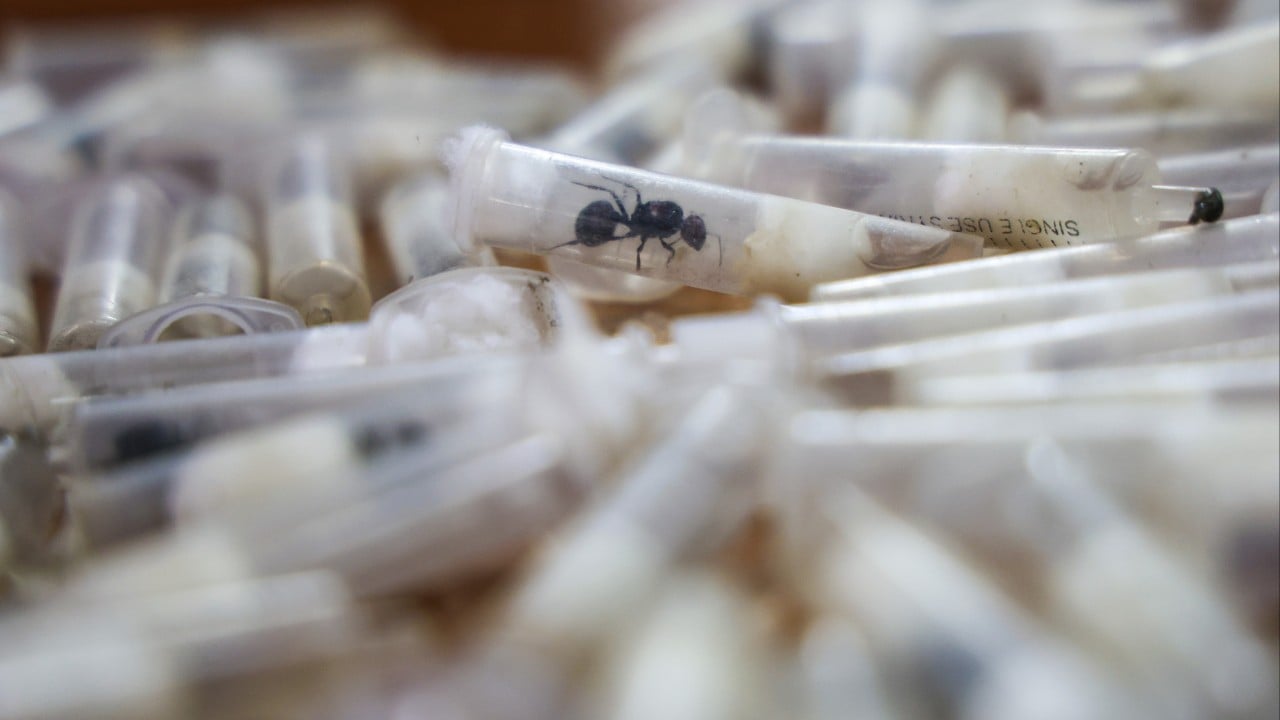
- Detection Probability: Ants are cold-blooded and emit no heat signature. They do not trigger standard X-ray density alarms used for organic explosives or large animal parts. When packed in plastic test tubes with a damp cotton plug, they are indistinguishable from common household liquids or medical samples.
- Perishability Overhead: Unlike reptiles or birds, ants have low metabolic requirements. A mated queen can survive for weeks in a darkened tube without supplementary feeding, relying on her metabolizing wing muscles (claustral behavior) to sustain herself and her first generation of larvae.
- Legal Recourse: In many jurisdictions, the "theft" of insects is not categorized under high-level wildlife protection acts. Smugglers caught with ants often face simple "misdeclaration of goods" fines rather than the felony-level imprisonment associated with CITES Appendix I species.
The Digital Marketplace and Social Proof
The explosion in demand is inextricably linked to the rise of specialized social media ecosystems. Platforms like Douyin, YouTube, and niche Discord servers have transformed myrmecology from a scientific pursuit into a high-status lifestyle hobby.
This digital shift creates a feedback loop. High-definition "unboxing" videos of rare African queens generate "FOMO" (fear of missing out) among hobbyists, which stabilizes high price points. The market is currently shifted from a "collector's market" to a "speculator's market," where individuals buy rare queens with the intent of rearing the first batch of workers and flipping the colony for a 200% profit within six months.
Biosecurity Risks and Ecological Externalities
The focus of the competitor narrative often rests on the cruelty of the trade, but the true systemic risk is ecological destabilization. The movement of East African ants into China and Europe presents a two-pronged threat:
1. The Pathogen Bridge
Ants are vectors for various fungi, mites, and viruses. Because these insects bypass official quarantine protocols, they introduce pathogens into local ecosystems that have no evolved immunity. A single mite-infested queen from the Kenyan highlands can collapse local ant populations if she escapes or if her waste is disposed of improperly.
2. Invasive Dominance
Species that are "stable" in East Africa due to local predators and competition can become "invasive" when introduced to a new environment. If a highly prolific African Camponotus species establishes a feral colony in a temperate or sub-tropical region of China, it can outcompete native species for nesting sites and food sources, leading to a cascade failure in local pollination and soil aeration cycles.
Structural Failures in Global Monitoring
The primary reason smugglers are "swarming" East Africa is the lack of a centralized, digitized database for insect exports. Most East African nations have robust laws protecting large mammals, but their entomological regulations are often archaic or non-existent.
- The Identification Gap: Customs officials are trained to identify ivory, sandalwood, or pangolin scales. They are rarely trained to distinguish between a common local ant and a high-value protected species.
- Jurisdictional Arbitrage: Smugglers often move insects across porous land borders (e.g., from Kenya to Uganda) before flying them out of an airport with weaker export controls. This "laundering" of the origin point makes it difficult for destination countries to prove the specimen was illegally sourced.
Strategic Pivot: Moving Toward Biometric and Forensic Entomology
To disrupt this trade, the focus must shift from physical interdiction to digital and chemical forensics. Relying on luggage searches is a failing strategy given the scale of global e-commerce.
A more effective framework requires:
- Stable Isotope Analysis: Law enforcement can use isotope testing to determine the geographic origin of an ant's chitin. If a seller claims a queen was "captive-bred" in Europe, but the chemical signature matches the soil and water profiles of the Rift Valley, the illegality is quantified and prosecutable.
- Digital Platform Accountability: Regulating the sale of live animals on major e-commerce platforms. By mandating that any "Exotic" category listing include a verified CITES-equivalent permit or a domestic breeding certificate, the "easy" retail market for smuggled ants would evaporate.
- The "Incentive Alignment" Model: Developing legal, sustainable export channels where local communities are paid to breed and export ants under scientific supervision. By legitimizing a portion of the trade, the "black market premium" is reduced, and local populations become stewards of the resource rather than participants in its extraction.
The "ant rush" in East Africa is a symptom of a broader trend where micro-biodiversity is being liquidated for macro-profits. Without a shift in how we value and monitor the smallest members of the ecosystem, the bio-arbitrage of the 21st century will continue to hollow out East African biodiversity, one test tube at a time.