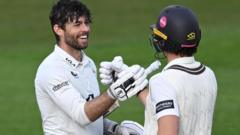
Surrey arrived at Edgbaston facing a crisis that would have broken lesser squads, yet they walked away with their reputation as the benchmark of County Championship cricket firmly intact. While the scoreboard reflects a recovery, the reality was a surgical dismantling of Warwickshire’s early momentum by Ben Foakes. This was not a lucky escape. It was a masterclass in situational awareness and technical discipline from a player who remains, pound for pound, the most composed wicketkeeper-batsman in the English game.
When the top order collapsed under the weight of a moving ball and a hostile opening spell, the match seemed destined for a premature end. Surrey were reeling. The pitch was offering just enough nibble to keep the seamers interested, and the Edgbaston atmosphere was beginning to turn predatory. Enter Foakes. His subsequent innings was a reminder that while modern cricket prizes strike rates and explosive power, the ability to anchor an innings under extreme pressure is still the rarest and most valuable currency in the long-form game.
The Anatomy of the Surrey Collapse
To understand the scale of the recovery, one must first look at the wreckage of the first session. Surrey’s vaunted batting lineup, usually a picture of stability, looked uncharacteristically fragile. The ball was nipping back sharply, and the Warwickshire attack sensed blood. It was the kind of morning where every edge seemed to find a fielder and every play-and-miss felt like a stay of execution.
The dismissal of the openers left the middle order exposed far earlier than the coaching staff would have liked. There is a specific type of pressure that mounts when the scoreboard reads like a phone number. It breeds hesitation. Batters start playing for their survival rather than for the team's total, leading to a static, defensive mindset that eventually invites an inevitable delivery with "out" written all over it.
Why the Warwickshire Attack Faltered
Warwickshire’s bowlers will look back at the middle session with a sense of missed opportunity. They had Surrey on the ropes. The initial burst was exemplary, hitting the right lengths and forcing the batters into uncomfortable positions. However, as the ball lost its initial shine and the sun began to bake the surface, their discipline wavered.
They fell into the trap of over-attacking. Instead of maintaining the relentless line and length that earned them early wickets, they began searching for the spectacular. They tried to blast out the lower-middle order with short-pitched aggression that ultimately proved counterproductive on a pitch that started to flatten out. This tactical shift gave Foakes the breathing room he needed to establish his rhythm.
The Foakes Method of Resistance
Ben Foakes does not play like a man in a hurry. His game is built on a foundation of impeccable balance and a refusal to be drawn into traps set by the opposition. At Edgbaston, his footwork was a lesson in economy. He stayed incredibly late on the ball, playing it directly under his eyes, which nullified the late swing that had troubled his teammates.
He didn't just survive; he accumulated. By rotating the strike and finding the boundary with low-risk strokes, he shifted the pressure back onto the bowlers. It was a psychological pivot point. When a bowling side realizes that their best deliveries are being defended with ease, their collective energy begins to drain. Foakes squeezed the life out of the Warwickshire resurgence by simply refusing to give them an inch.
The Support Cast and the Tail
No recovery is a solo effort. While Foakes was the architect, the contributions from the lower order were the bricks and mortar of the Surrey total. There is a grit within this Surrey squad that often goes overlooked because of their perceived "glamour" status in the county circuit.
The partnerships built during the afternoon session were not necessarily high-scoring, but they were high-impact. They forced the Warwickshire captain into defensive fields, spreading the ring and allowing Foakes to manipulate the strike. This is where Surrey excels. They understand the "drudge work" of cricket—the ugly runs, the bruised ribs, and the thirty-over blocks where the goal is simply to be there at the end of the hour.
The Technical Breakdown of the Edgbaston Surface
Edgbaston remains one of the most complex venues in the country for a visiting captain. It is a ground that can transition from a green seamer to a slow, spinning track within the space of four sessions. On this particular day, the moisture trapped under the covers created a frantic first ninety minutes.
As the game progressed, the surface began to hold. The bounce became more predictable. This transition is where experienced players like Foakes separate themselves from the rest. They recognize the exact moment when the risk-reward ratio shifts in favor of the batter. A lesser player would have remained stuck in a survival mindset, but Foakes recognized the pitch was becoming "true" and adjusted his shot selection accordingly.
Dealing with the Reversing Ball
Later in the day, Warwickshire attempted to find swing through conventional and unconventional means. The dry outfield helped scuff one side of the ball, leading to occasional glimpses of reverse swing. Foakes handled this by narrowing his stance and playing more frequently in the "V." By limiting his horizontal bat shots, he reduced the margin for error against the ball tailing back into the pads.
- Front-foot commitment: Stepping deep into the pitch to smother the movement.
- Late adjustment: Using soft hands to ensure edges didn't carry to the slips.
- Mental stamina: Blocking out the vocal Edgbaston crowd during the crucial third session.
Surrey and the Psychological Edge
There is a reason Surrey consistently finds themselves at the top of the table, and it isn't just their budget. It is a collective belief that no game is truly lost until the final wicket falls. This comeback at Edgbaston sends a clear message to the rest of the Division One contenders: you can hurt Surrey, but you have to kill them off, or they will find a way to punish you.
The recovery changed the entire complexion of the match. What looked like a potential three-day defeat turned into a competitive scrap where Surrey held the psychological high ground. By the time the players walked off for tea, the momentum had shifted so violently that it was Warwickshire who looked like the side searching for answers.
The Role of Captaincy Under Fire
Rory Burns deserves credit for his handling of the situation from the dressing room. There was no panic. The messaging during the intervals remained focused on incremental gains. In high-stakes county cricket, the mood of the captain often dictates the performance of the middle order. Burns’ stoic presence allowed Foakes and the tail to bat without the added weight of an anxious balcony.
The Broader Implications for England Selection
The "Foakes vs. Brook/Bairstow/Smith" debate is a permanent fixture of English cricket discourse. Every time Foakes plays an innings like this, he makes the selectors’ lives more difficult. His glovework is undisputed as the best in the country, but critics often point to his scoring rate as a reason to look elsewhere for the national side’s "Bazball" era.
However, the Edgbaston recovery highlights exactly why Foakes is a vital insurance policy. There are days when the sun isn't shining and the ball is moving. On those days, you don't need a hitter; you need a technician. You need someone who can weather a storm for three hours without blinking. If England finds themselves 30-4 in a crucial Test match, there isn't a person in the country who wouldn't want Ben Foakes walking out to the middle.
The Evolution of the Wicketkeeper-Batter
The role has changed significantly over the last decade. It is no longer enough to be a specialist with the gloves; you must be a top-six caliber batter. Foakes is the rare example of someone who fulfills both criteria at an elite level. His innings at Edgbaston wasn't a fluke; it was the result of a refined process that prioritizes wicket preservation over ego.
He doesn't get drawn into verbal spats with the opposition. He doesn't play the "big" shots for the cameras. He simply plays the ball on its merits. In an era of increasing specialization and T20-influenced techniques, his approach feels like a throwback, but its effectiveness is modern and undeniable.
Warwickshire’s Path to Redemption
For the home side, the post-match analysis will be uncomfortable. They had the champions in a corner and let them out. The lack of a "plan B" once the initial movement disappeared is a concern for a team with aspirations of challenging for the title.
They relied too heavily on the conditions doing the work for them. When the pitch flattened, their bowlers failed to adjust their lengths, often bowling too short and allowing the Surrey batters to sit back and pick their spots. To beat a side of Surrey’s quality, you have to be prepared to bowl "boring" lines for hours on end, waiting for the batter to make a mistake. Warwickshire ran out of patience before Foakes did.
Tactical Errors in Field Placement
The field settings during the Foakes-Jordan partnership were particularly puzzling. There was a period where the boundaries were easy to come by because the infield was squeezed too tight, looking for a wicket that wasn't there. By the time they spread the field, the batters were already "in" and comfortable.
- Failure to utilize spin: The reluctance to bring on the slower bowlers earlier allowed the seamers to fatigue.
- Lack of a clear short-ball plan: The bouncer barrage was predictable and easily ducked.
- Wasted new ball: The second new ball was squandered with wide deliveries that didn't challenge the stumps.
The Grit Factor
Sport at this level is often decided by who can endure discomfort the longest. Surrey showed a higher threshold for pain at Edgbaston. They absorbed the body blows, took the hits, and waited for their window to strike.
The recovery wasn't just about runs; it was about reclaiming the narrative of the match. By the end of the day, the conversation wasn't about Surrey’s collapse, but about their resilience. This shift in perception is worth more than the points on the table. It builds a sense of invincibility that follows a team throughout a grueling season.
Ben Foakes didn't just save a game at Edgbaston. He reminded the cricketing world that class is permanent, and that in the face of a genuine crisis, technique and temperament will always trump raw aggression. Surrey’s fightback is a blueprint for how to handle adversity: stay calm, trust the process, and let the scoreboard eventually do the talking.
The match now sits on a knife-edge, but the momentum is firmly in the hands of the visitors. Warwickshire will have to find a new gear if they want to reclaim the advantage they squandered. Surrey, meanwhile, will look at this day as another brick in the wall of their championship defense.
The lesson is simple. Never count Surrey out, especially when Ben Foakes has a bat in his hand and a point to prove. The recovery is complete, the battle continues, and the standard has been set. There are no easy days in Division One, but some players make them look a lot easier than they are.