The historical post-mortem of Operation Praying Mantis is rotting. Every few years, a recycled narrative emerges from the depths of military "analysis" claiming that the United States blinked in 1988 because it was terrified of Iranian teenagers on speedboats. This is the "Warning from 1988" trope—the idea that the Pentagon scrapped plans to seize the Strait of Hormuz islands because the "Basij" were too formidable to handle.
It is a comfortable lie for Tehran and a convenient excuse for desk-bound theorists who love a good David vs. Goliath story. But it ignores the cold, mechanical reality of 20th-century power projection. The U.S. didn't back down because of a "suicide boat" threat. It stopped because it had already achieved its objective: the systematic castration of the Iranian Navy in a single afternoon.
If you believe the U.S. Navy was deterred by the prospect of a few thousand irregulars on Abu Musa, you don't understand how carrier strike groups actually operate.
The Logistics of a Ghost Threat
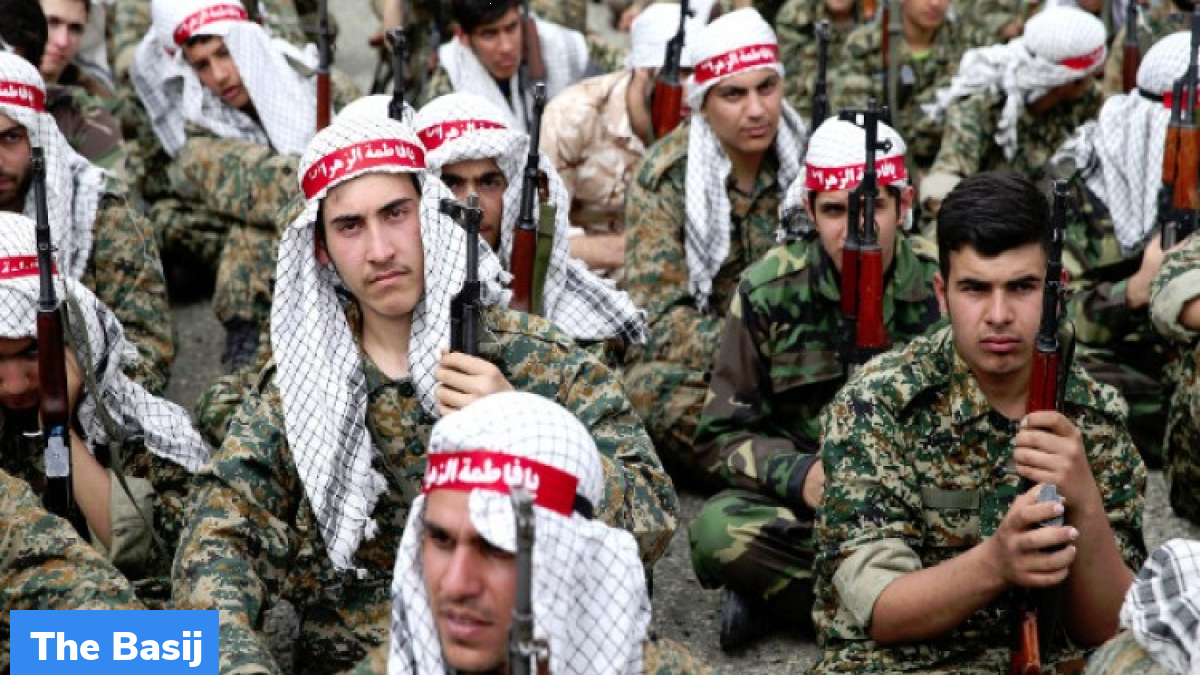
The prevailing myth suggests that the Basij—the volunteer paramilitary force—represented an asymmetric wall that the U.S. couldn't scale. Critics point to the decision to skip the invasion of Sirri and Abu Musa islands as proof of American hesitation.
Let’s look at the math.
In 1988, the U.S. Navy was at the peak of its Cold War lethality. We weren't talking about "proportional response" in the way modern bureaucrats define it. We were talking about a force that had just deleted the Sahand and the Joshan from the water with surgical indifference.
The decision not to occupy the islands wasn't born of fear; it was born of a brutal, pragmatic calculation of strategic utility. To occupy an island, you have to feed it. You have to defend it. You have to turn it into an unsinkable aircraft carrier that you don't actually need because you already have five real ones floating nearby.
The "Basij threat" was a tactical nuisance, not a strategic deterrent. A swarm of small boats is a nightmare for a lone merchant tanker. For a Phalanx CIWS (Close-In Weapon System) and a squadron of A-6 Intruders, it’s target practice.
The Asymmetric Fallacy
The industry "insiders" who push the Basij narrative suffer from the Asymmetric Fallacy. This is the belief that because a cheap weapon can damage an expensive one, the expensive one is suddenly obsolete.
I’ve seen military planners lose their minds over this. They see a video of a speed-boat hitting a hull and suddenly they’re ready to scrap the entire surface fleet. It’s reactionary. It’s lazy.
The Basij were effective as a psychological tool. They created friction. But friction isn't a wall. In 1988, the Reagan administration realized that seizing the islands would force the U.S. into a permanent, ground-based occupation of Iranian sovereign territory. That moves the needle from "securing shipping lanes" to "regime change."
The Pentagon didn’t fear the Basij; they feared the mission creep.
Understanding the Kill Chain of 1988
To understand why the "scrapped plan" wasn't a retreat, you have to understand what the U.S. actually did.
- Information Dominance: The U.S. had already cracked the Iranian code of operations. We knew where the mines were being laid.
- Kinetic Decimation: In a few hours, Iran lost half of its operational fleet.
- The Message: The goal was to prove that the "Tanker War" was over.
If the U.S. had landed Marines on Abu Musa, it would have validated the Iranian narrative that this was a war of religious survival. By staying at sea and merely destroying everything that moved against the flow of oil, the U.S. maintained the high ground of "international stabilizer."
It was a masterclass in restraint as a power move, not restraint as a weakness.
Why the "Small Boat" Nightmare is Overblown
Today’s analysts love to draw a straight line from 1988 to the current tensions in the Red Sea and the Persian Gulf. They claim that the swarm tactics of the IRGC (Islamic Revolutionary Guard Corps) are the evolution of the Basij spirit, and that the U.S. is still "scared."
This ignores the advent of the Distributed Lethality doctrine.
In 1988, hitting a small, fast-moving boat required a human eye and a lot of luck. Today, we have Hellfire missiles launched from drones, APKWS (Advanced Precision Kill Weapon System) rockets that turn "dumb" 70mm projectiles into laser-guided snipers, and integrated sensors that can track a hundred "swarming" targets simultaneously.
The Basij advantage was always anonymity and chaos. Once you remove the chaos with modern ISR (Intelligence, Surveillance, and Reconnaissance), they are just men in fiberglass boats.
The Real Warning from 1988
The real lesson isn't that the U.S. is vulnerable to irregulars. The real lesson is that Western political will is the only true bottleneck.
The U.S. didn't fail to seize the islands because it couldn't. It didn't seize them because the American public has no stomach for "forever rocks." We saw this in the decades that followed. The military can win any engagement in 20 minutes, but the politicians can't figure out what to do with the victory in 20 years.
If you are a defense contractor or a policy maker reading the "Eurasian Times" version of history, you are being sold a narrative of American decline that is based on a misunderstanding of naval geography.
- Fact: The Strait of Hormuz is a choke point, but it is also a shooting gallery.
- Fact: The Iranian strategy relies on the perception of being unbeatable via "martyrdom."
- Fact: Martyrdom is not a defense against a Mark 48 torpedo or a Harpoon missile.
The Status Quo is a Lie
Stop asking "Could the U.S. handle a Basij swarm today?"
Start asking "Why does the U.S. allow the threat of a swarm to dictate global oil prices?"
The premise of the question is flawed. We treat the Iranian capability as a static, looming monster. In reality, it is a fragile system of bluffing. The 1988 "withdrawal" from the island-seizure plan was the smartest thing the Navy did. It avoided a land war that would have lasted thirty years, while still proving that the Iranian Navy was a paper tiger.
I have spoken with veterans who were on the decks during Praying Mantis. They weren't looking over their shoulders for Basij "suicide" squads. They were looking at their screens, waiting for the next target to blink.
The Basij didn't save those islands. American pragmatism did.
Stop Preparing for the Last War
The obsession with 1988's "missed opportunity" feeds into a broader, dangerous trend in defense circles: The Veneration of the Underdog. We have become so obsessed with the idea of "asymmetric threats" that we have forgotten how to use "symmetric" power. If the U.S. wanted the Strait of Hormuz islands tomorrow, it would take them in forty-eight hours. The "threat" of irregular forces is only a threat if you play by their rules of engagement.
If you stop trying to "occupy" and start "neutralizing," the Basij become irrelevant.
The Basij are a ghost story we tell ourselves to justify bloated budgets or to explain away diplomatic hesitation. It’s time to stop reading the ghost stories and start looking at the wreckage on the bottom of the Gulf. That’s where the real history is written.
Do not mistake a tactical choice for a strategic defeat. The U.S. Navy didn't blink in 1988. It just realized that owning the water is better than owning the sand.
Stop looking for "warnings" in 1988 and start looking at the map. The water is still blue. The ships are still moving. And the Basij are still sitting on a rock, watching the horizon, waiting for a fight that the U.S. is too smart to give them on their terms.