On a quiet night in Bahrain, the sky didn't just light up; it shook the foundations of regional security. When a Patriot missile battery—the gold standard of Western air defense—was involved in a catastrophic malfunction and subsequent blast, the official narrative remained predictably vague. However, the debris tells a different story. This wasn't just a mechanical hiccup. It was a loud, expensive signal that the multi-billion-dollar shield protecting the Arabian Peninsula has holes that no amount of funding can currently plug.
The incident in Bahrain involves a US-made MIM-104 Patriot system. While initial reports often point toward "technical anomalies," the reality on the ground suggests a missile that likely suffered a guidance failure shortly after launch, leading to a self-destruct or a crash-impact that ignited its high-explosive warhead. This matters because Bahrain sits at the heart of the U.S. Navy’s 5th Fleet operations. If a Patriot cannot function reliably in a controlled, high-readiness environment, the implications for actual combat are grim. Read more on a connected subject: this related article.
The Myth of the Perfect Intercept
For decades, the Patriot system has been sold as an impenetrable wall. The marketing suggests a "hit-to-kill" reliability that makes incoming threats vanish. The truth is far messier. Air defense is a game of probabilities, not certainties. When a missile is launched, it relies on a complex sequence of radar handoffs, computer-processed flight corrections, and physical actuator movements.
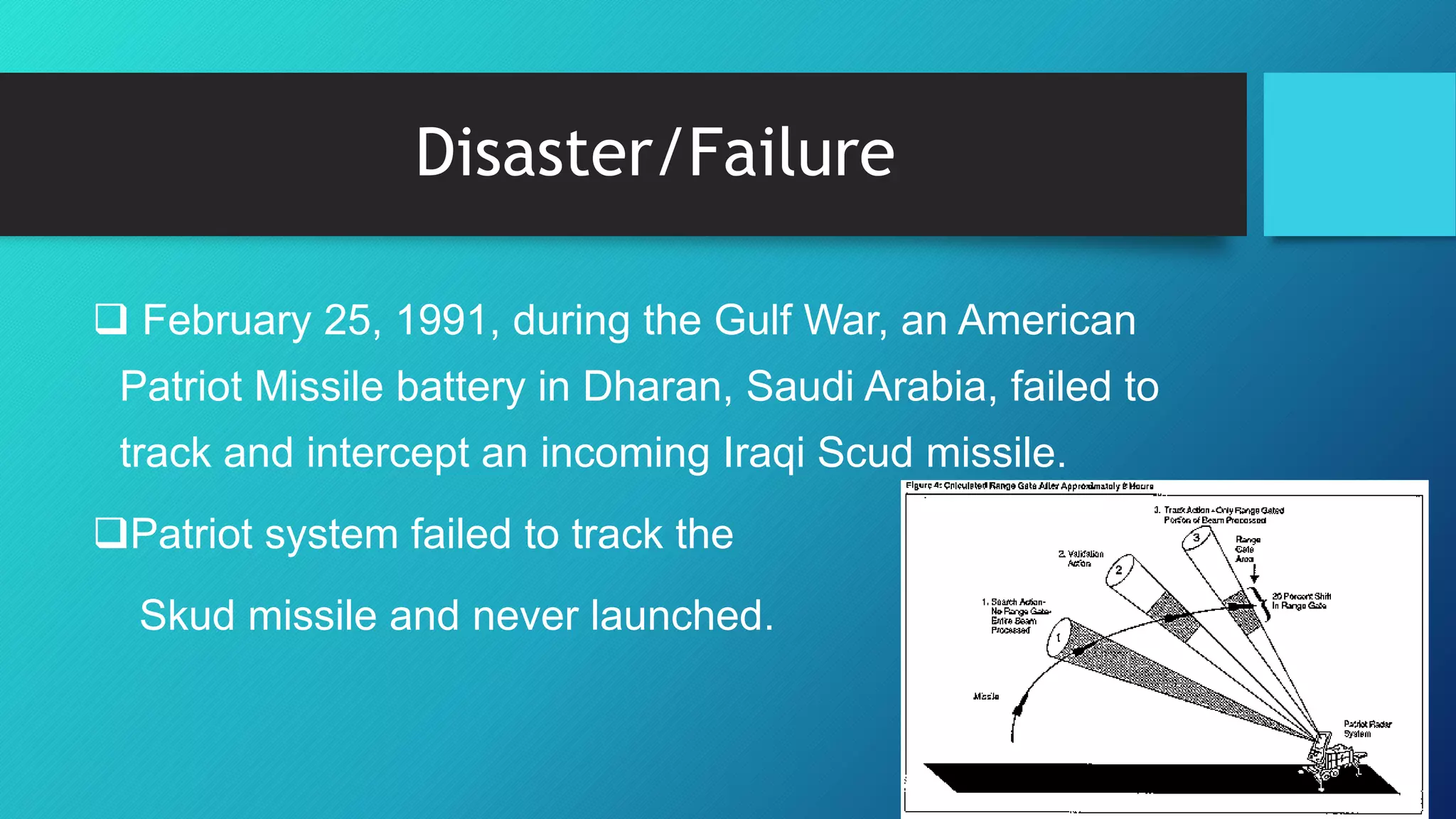
In the Bahrain incident, the failure likely occurred in the post-launch guidance phase. This is the critical window where the missile transitions from its canisters to active tracking. If the radar loses the lock or the missile’s onboard computer receives conflicting data, the interceptor effectively becomes a blind, supersonic rocket. In a densely populated or highly sensitive military zone, a "rogue" interceptor is often more dangerous than the target it was meant to destroy. Further analysis by The Guardian highlights comparable views on the subject.
We have seen this before. During the Gulf War, the Patriot's reputation was inflated by PR machines, only for later scientific reviews to show a much lower success rate against Scud missiles. The Bahrain blast is a modern echo of that era. It highlights that despite the software updates and the "PAC-3" designations, the physics of intercepting a moving target at several times the speed of sound remains a fragile science.
Sovereignty and the Secretive Hand of US Operators
One of the most sensitive aspects of the Bahrain blast is the question of who was at the controls. While Bahrain owns the hardware, the U.S. military maintains a persistent footprint in the kingdom. The Patriot systems are rarely "turnkey" solutions. They require constant maintenance, software calibration, and often, American contractors or active-duty personnel to oversee the more complex battery operations.
Analysis of the site and the response time suggests a level of operational integration that points directly to U.S. involvement. This creates a diplomatic minefield. If a U.S.-operated system fails and causes damage on foreign soil, it isn't just a maintenance issue; it is a liability for the Department of Defense. It raises uncomfortable questions for host nations about whether they are buying protection or simply leasing space for American experiments that might occasionally go boom in the wrong direction.
The Rising Cost of Complexity
The Patriot system is a victim of its own sophistication. Each interceptor costs roughly $4 million. The radar arrays and command stations cost hundreds of millions more. As we pack more technology into these units, we increase the number of "points of failure."
Consider the solid-fuel motor. If there is even a microscopic crack in the propellant due to heat cycles in the harsh Middle Eastern climate, the pressure during launch can cause the casing to rupture. In the Bahrain heat, equipment is pushed to its absolute thermal limit. We are seeing a trend where the environmental reality of the desert is winning against the delicate electronics of Silicon Valley and the heavy steel of New England defense plants.
- Thermal stress: Rapid expansion and contraction of components.
- Sensor degradation: Fine sand infiltrating supposedly sealed housings.
- Software latency: The sheer volume of data in modern electronic warfare environments can overwhelm older processors still in use in some battery configurations.
These aren't just guesses. These are the engineering hurdles that the Pentagon discusses in closed-door sessions while publicly maintaining that the "capability remains high."
Chinks in the Regional Armor
The blast in Bahrain doesn't exist in a vacuum. It happens at a time when regional adversaries are moving away from expensive, high-altitude ballistic missiles toward cheap, low-flying drones and cruise missiles. The Patriot was designed to hit the former, not the latter.
When a Patriot fails, it exposes a psychological gap. If the most advanced system in the world can't manage its own launch sequence in Bahrain, how can it be expected to filter out a swarm of fifty "suicide" drones approaching at low altitude? The Bahrain incident suggests that the current strategy of "throwing expensive missiles at cheap problems" is not only economically unsustainable but technically suspect.
The defense industry is currently obsessed with "multi-layered defense," but layers are useless if the foundation layer—the Patriot—is prone to self-destruction. This isn't about one bad missile. It is about a systemic reliance on a Cold War legacy system that is being asked to do too much in a climate it wasn't built for, under operational pressures that are mounting by the day.
The Accountability Vacuum
Following the blast, the silence from both Manama and Washington was deafening. This is standard procedure for the arms industry. Admitting a failure hurts share prices for contractors and weakens the perceived "deterrence" of the host nation. But for the people living near these batteries, the lack of transparency is a direct threat.
If these systems are "likely US-operated," then the US taxpayers and the Bahraini public deserve a technical post-mortem that isn't redacted into oblivion. We are currently in an arms race where the hardware is outstripping our ability to safely manage it. The Bahrain explosion is a warning shot. It tells us that the shield is cracked, and the people behind the curtain are struggling to find the glue.
Governments must now decide if the prestige of owning a Patriot battery outweighs the physical risk of a system that might decide to terminate its flight over a civilian neighborhood or a critical port. The "technical analysis" will continue, but the charred remains in the Bahraini sand have already provided the most honest answer we are likely to get. Stop looking at the brochures and start looking at the flight logs.