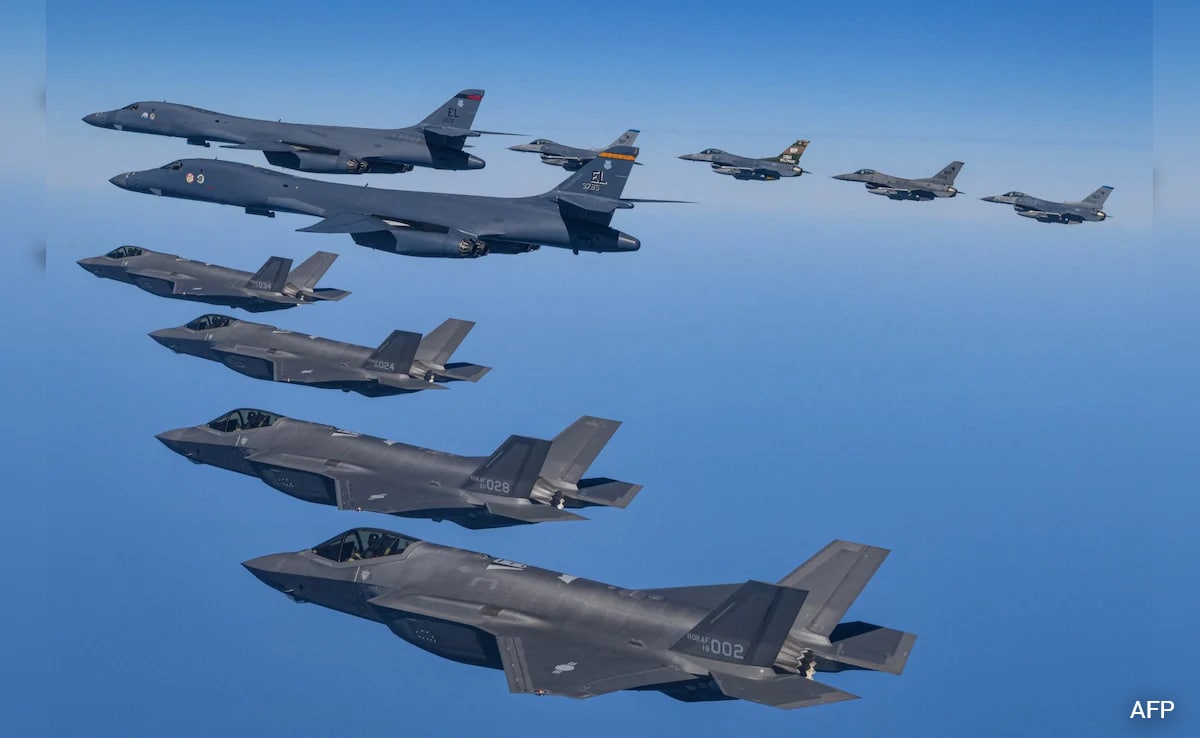
The headlines are screaming about the B-1B Lancer's "devastating" power in recent Middle East strikes. They cite the 34,000 kg payload and the Mach 1.2 speed like these numbers actually matter in a 2026 skirmish. They don't. While the general public swoons over "The Bone" and its variable-sweep wings, military analysts with dirt under their fingernails see a platform that is more of a logistical nightmare than a strategic asset.
The B-1B is a Ferrari being used to deliver mail in a suburban neighborhood. It's expensive, temperamental, and frankly, overkill for the targets it is currently hitting. If you think a supersonic heavy bomber is the "backbone" of modern surgical strikes, you’ve been sold a bill of goods by defense contractors.
The Payload Fallacy
The press loves to obsess over the 75,000-pound internal payload capacity. It sounds terrifying. But here is the reality of modern engagement: we aren't carpet-bombing industrial centers in the Ruhr Valley anymore. We are hitting individual mobile launchers, command centers, and munitions depots.
Precision has rendered mass irrelevant.
When you can put a single GBU-31 through a specific window from a drone or a multi-role fighter, carrying thirty tons of explosives is just expensive vanity. The B-1B is often flying with a fraction of its capacity because the mission doesn't require more. You are paying for the fuel, maintenance, and crew of a heavy bomber to do the job of a Reaper drone.
Furthermore, the "34,000 kg" figure is often cited without mentioning the sheer difficulty of keeping those rotary launchers functional. I’ve seen ground crews spend thirty-six straight hours wrestling with hydraulic leaks on a B-1B just to get it mission-ready for a flight that could have been handled by two F-15Es. The complexity-to-utility ratio is broken.
Speed Is a Ghost of the 1980s
The competitor articles mention the 1,450 kmph (Mach 1.2) top speed as if the B-1B is outrunning missiles. It’s not. In the era of the S-400 and high-altitude interceptors, a non-stealthy bomber—even one with a reduced radar cross-section—is a massive target.
The B-1B was designed for low-level, high-speed penetration of Soviet airspace. It was meant to hug the terrain at 200 feet to stay under radar. We don't fly it like that anymore. Why? Because the airframes are brittle. Decades of flying these "swing-wing" beauties have resulted in massive structural fatigue.
The wings stay swept back mostly for show and high-altitude transit. In actual combat zones like Yemen or Iraq, they are orbiting at high altitudes, loitering for hours. Speed is useless in a loiter. Efficiency is what matters, and the B-1B’s four General Electric F101-GE-102 engines drink fuel like a dying man in a desert.
The Maintenance Debt No One Talks About
The Air Force’s own mission-capable rates tell the story the Pentagon tries to hide. For years, the B-1B has struggled to keep even half the fleet airworthy at any given time. It is a "hangar queen."
- Variable Geometry Wings: The very thing that makes it look cool is its greatest weakness. The pivot mechanisms are mechanical nightmares that require constant inspections and specialized lubrication.
- Engine Fragility: The F101 engines are powerful but sensitive to the sandy, harsh environments of the Middle East.
- Obsolescence: We are cannibalizing parts from "The Boneyard" in Arizona just to keep the current fleet flying.
When you see a B-1B in a headline, you aren't seeing a symbol of strength. You are seeing a desperate attempt to get a return on investment for a platform that should have been retired a decade ago. We are flying the wings off these planes because the B-21 Raider isn't ready in volume yet, and the B-2 is too precious to risk.
Stop Asking if It’s Effective
People always ask: "But didn't it hit the targets?"
Yes, it hit the targets. A sledgehammer can kill a fly, but that doesn't make it the right tool for the job. The real question is: "What did it cost to hit those targets?"
When you factor in the hourly flight cost—roughly $60,000 to $70,000 per hour—plus the massive support tail of tankers and escort jammer aircraft, the cost per target becomes astronomical. We are using a billion-dollar ecosystem to destroy $50,000 pickup trucks and $100,000 radar sites. This is not sustainable warfare. It is economic attrition against ourselves.
The Stealth Myth
The B-1B has a radar cross-section (RCS) about one-fiftieth that of a B-52. That sounds impressive until you realize that one-fiftieth of a "flying barn" is still a "flying garage door."
It is not a stealth aircraft. It relies on its Integrated Defensive Avionics Suite (ALQ-161) to jam and deceive. But modern electronic warfare has evolved. Against a peer adversary with sophisticated A2/AD (Anti-Access/Area Denial) capabilities, the B-1B would be a liability. It thrives in "permissive" environments—places where the enemy doesn't have a real air force or advanced surface-to-air missiles.
Using it in the Middle East is low-stakes theater. It’s a way for the US to signal "resolve" without actually risking the truly advanced tech.
The Logistics of the Swing-Wing Trap
The "swing-wing" design was the pinnacle of 1970s engineering. It allowed for short takeoff rolls and high-speed dashes. But today, we have better ways to achieve those goals. Modern composites and fly-by-wire systems allow fixed-wing aircraft to have incredible performance envelopes without the literal "moving parts" that fail on the B-1B.
Every time those wings sweep, you are stressing a central carry-through structure that is the literal spine of the aircraft. If that spine cracks, the plane is scrap metal. We’ve seen these cracks. We’ve grounded the fleet for them.
Rethink the Strategic Bomber
The status quo says we need the "Big Three": the B-52 (the eternal), the B-1B (the fast), and the B-2 (the ghost).
The truth? The B-52 is actually more useful than the B-1B. It’s cheaper to fly, easier to fix, and can carry the same standoff missiles. The B-1B exists in a middle ground that no longer has a purpose. It’s too vulnerable to be a penetrator and too expensive to be a truck.
We are currently witnessing the sunset of a legend. Enjoy the photos of the afterburners lighting up the night sky over the desert. They make for great recruitment posters. But don't mistake the pyrotechnics for efficiency.
The B-1B Lancer is a monument to an era when we thought we could out-engineer every problem with raw power and complex mechanics. Today, it is a reminder that in war, the most complex solution is rarely the most effective one.
Stop looking at the payload stats. Start looking at the maintenance logs. That’s where the real war is being lost.