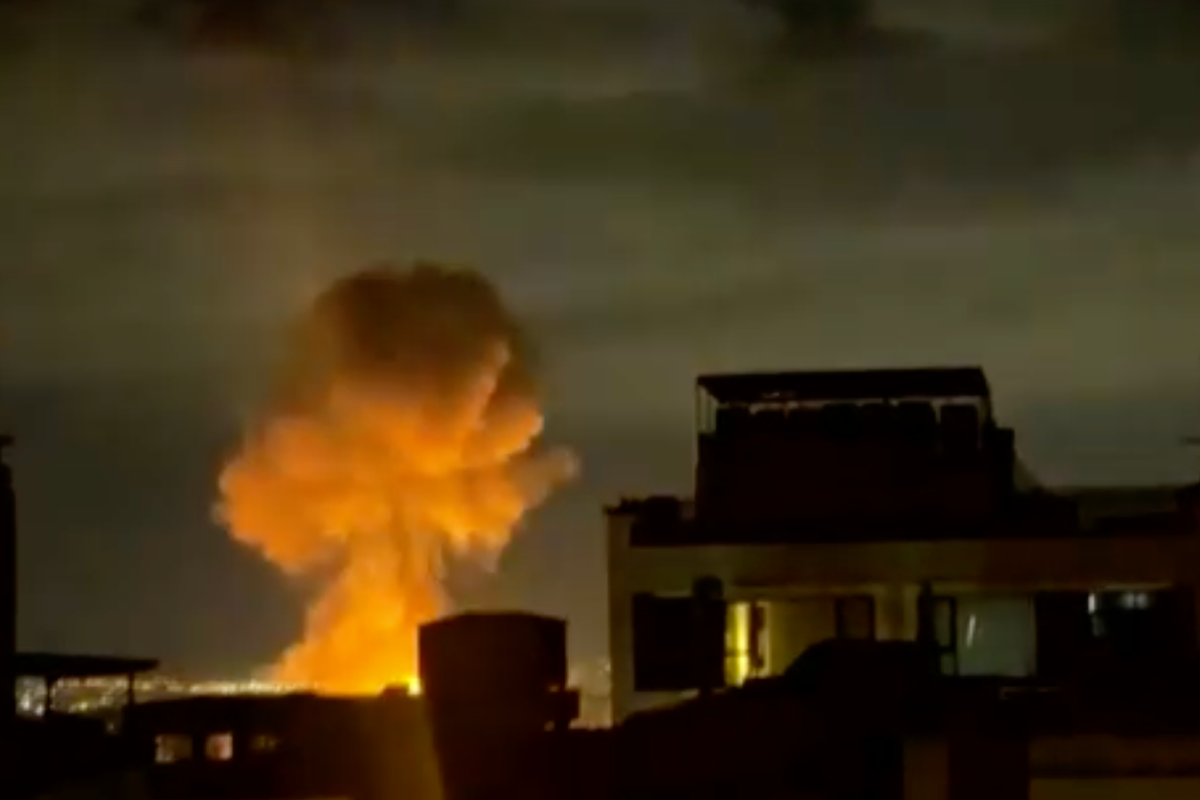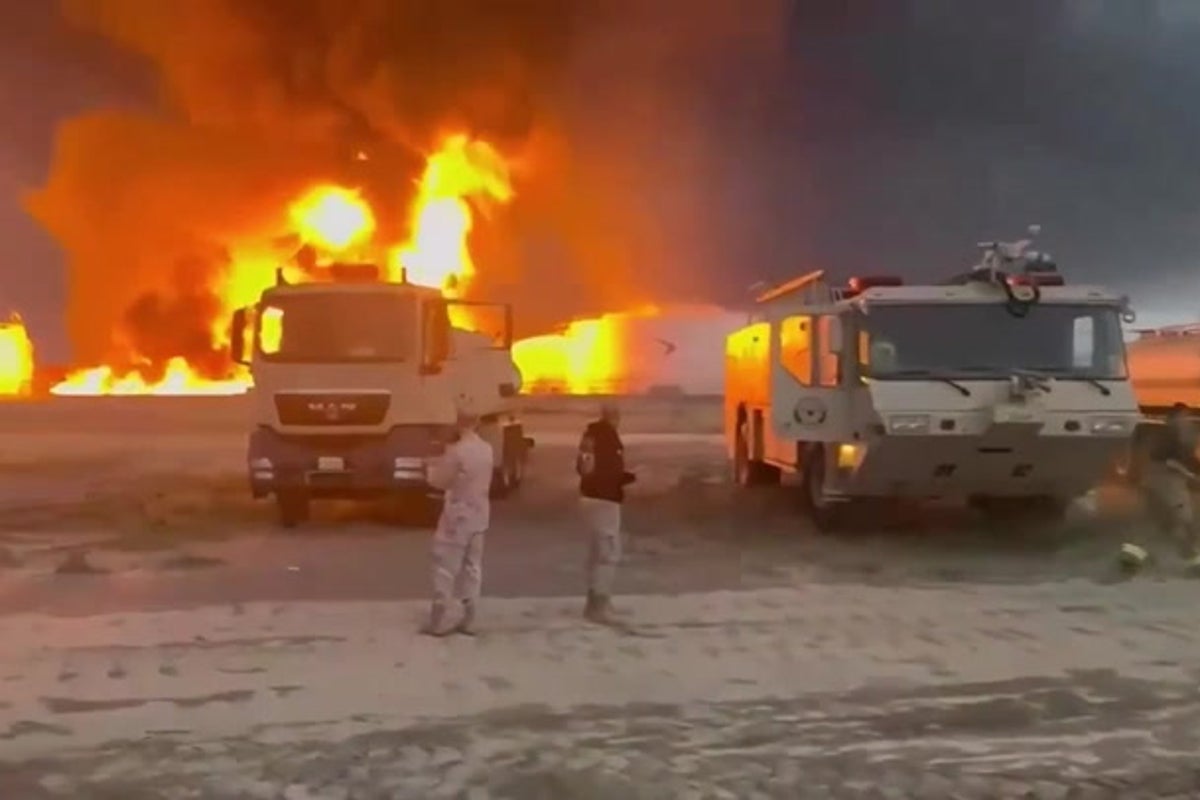
The recent kinetic engagement involving unmanned aerial systems (UAS) at Kuwait International Airport (KWI) represents a critical failure in the multi-layered defensive posture of regional civil aviation infrastructure. This incident is not an isolated tactical anomaly; it is a manifestation of the widening gap between traditional radar-based detection systems and the proliferation of low-cost, high-autonomy loitering munitions. To understand the operational impact of such a strike, one must move beyond the visual spectacle of the resulting blaze and analyze the disruption through the lens of Systemic Fragility and Asymmetric Economic Attrition.
The Mechanics of Defensive Penetration
Current airport security architectures are primarily designed to mitigate threats from manned aircraft, ballistic projectiles, or ground-based unauthorized entry. The intrusion of small-scale drones into the restricted airspace of a major hub like KWI exposes three specific vulnerabilities in the standard defensive "kill chain."
- Detection Latency and Signature Masking: Standard Primary Surveillance Radar (PSR) often filters out small, slow-moving objects to prevent "clutter" from birds or weather phenomena. A drone’s Radar Cross Section (RCS) is frequently too small to trigger automated alerts until the platform is within the terminal phase of its flight path.
- Electronic Countermeasure (ECM) Gaps: While many facilities utilize signal jamming, the transition toward inertial navigation and pre-programmed GPS-independent flight paths renders traditional frequency jamming obsolete. If the drone does not require a continuous data link to an operator, the "soft kill" window effectively disappears.
- Kinetic Risk in High-Density Zones: Deploying physical interceptors or projectile-based "hard kill" solutions over an active airfield carries a high risk of collateral damage. The debris from a successful mid-air interception can be as damaging to grounded airframes and fuel infrastructure as the threat itself.
The Three Pillars of Infrastructure Disruption
An attack on a primary aviation hub functions as a force multiplier by targeting the intersection of physical assets, human psychology, and global logistics. The strike at Kuwait Airport can be categorized by its impact on these distinct pillars.
The Thermal and Structural Load
The "blaze" reported is rarely the primary objective of a sophisticated actor; rather, it is a tool for Thermal Denial. Jet fuel (Jet A-1) burns at temperatures between $800°C$ and $1500°C$ depending on oxygen availability. Even if a strike misses a high-value airframe, a fire near taxiways or support hangers causes structural fatigue in reinforced concrete and asphalt. The heat alone can warp sensitive avionics in nearby aircraft, necessitating expensive, time-consuming inspections and grounding entire fleets regardless of direct impact.
Operational Cascade Failures
A single drone sighting triggers a mandatory "Stop Move" order. The logic follows a rigid causal chain:
- Immediate Ground Stop: All departures are halted to prevent engine ingestion of debris or secondary drones.
- Diversion Pressure: Inbound flights are rerouted to alternate hubs (e.g., Doha or Dubai). This creates a secondary crisis of fuel management and crew timing (Duty Period Limitations).
- Gate Congestion: As diverted flights fail to vacate gates, the airport’s "Turnaround Efficiency" drops to zero, creating a backlog that takes 48 to 72 hours to clear.
The Cost-Exchange Ratio
This is the most brutal metric of the KWI incident. A drone costing approximately $5,000 to $20,000 can successfully neutralize a terminal housing billions of dollars in assets and disrupting millions in daily commerce. When the cost of the defense (Patriot missiles or high-end Electronic Warfare suites) exceeds the cost of the threat by a factor of 1,000, the defender is participating in a losing economic game.
Quantifying the "Blaze" as a Tactical Variable
In the context of the KWI strike, the fire serves a specific function in the attacker's logic: Atmospheric Saturation. Beyond the physical destruction, smoke serves as a low-tech countermeasure against optical sensors and certain laser-based defense systems.
- Obscuration: Thick black smoke from fuel or rubber fires limits the effectiveness of visual-spectrum security cameras, making it difficult for ground security to identify follow-on threats or secondary breach points.
- Resource Fixation: Emergency Response Teams (ERT) are diverted from security and observation duties to firefighting. This "swarming" of first responders toward a visible fire creates a "security vacuum" in other sectors of the airport perimeter.
Logistical Bottlenecks and the Kuwaiti Context
Kuwait International serves as a vital node for both civilian transit and regional military logistics. The airport’s proximity to major oil refining infrastructure adds a layer of Proximity Risk. A fire at KWI is not just a transport issue; it is a signal to the global energy market. The "Fear Premium" in oil pricing often fluctuates based on the perceived stability of Kuwaiti airspace.
The failure to prevent the strike suggests a breakdown in the Integrated Air Defense System (IADS). In many regional contexts, there is a lack of "sensor fusion"—where data from military-grade radar is not shared in real-time with civilian air traffic control. This creates a "seam" in the airspace that agile, low-altitude threats are designed to exploit.
Limitations of Current Counter-UAS (C-UAS) Strategies
The industry is currently searching for a "silver bullet" that does not exist. Current limitations include:
- Geofencing Bypass: Commercial drones often have software-based "no-fly zone" restrictions, but these are easily overridden by modified firmware or custom-built flight controllers.
- The Swarm Problem: Most current defense systems are designed to track and engage one to five targets. If an attack utilizes a coordinated swarm of 20 or more units, the "Probability of Kill" ($P_k$) for the defense system drops exponentially as sensors become overwhelmed.
- Legal and Kinetic Constraints: In a civilian environment, the use of high-energy lasers or microwave weapons is restricted by safety protocols, as these can cause permanent eye damage to passengers or interfere with the avionics of uninvolved aircraft.
The Shift Toward "Passive Resilience"
Since total prevention is currently statistically improbable given the cost-exchange ratio, the strategy must shift toward minimizing the "Recovery Time Objective" (RTO).
- Hardened Fuel Topography: Moving fuel lines further underground and utilizing automated shut-off valves triggered by seismic or thermal sensors to prevent a small strike from becoming a catastrophic blaze.
- Distributed Command and Control: Ensuring that a strike on the main tower or a specific terminal does not paralyze the entire airport’s communication network.
- Automated Damage Assessment: Deploying "internal" drones—tethered security UAS—to immediately overfly the strike zone and provide high-resolution thermal mapping to firefighters, reducing the time spent in the "Assessment Phase" of the crisis.
The strike at Kuwait Airport is a definitive signal that the "Perimeter Model" of security is dead. Security can no longer be viewed as a fence line or a radar dome; it must be a dynamic, deep-layered system capable of absorbing a hit and maintaining operational continuity.
The strategic priority for regional authorities must be the immediate transition to Directed Energy Deposition and Automated Net-Capture Systems for short-range defense, coupled with a radical overhaul of civilian-military intelligence sharing. The objective is not just to stop the drone, but to decouple the airport’s operational viability from the success of a single kinetic impact. The current state of vulnerability ensures that until the cost of the attack is made to exceed the cost of the disruption, these assets will remain high-priority targets for asymmetric actors.
.png?width=1200&auto=webp&trim=0%2C0%2C0%2C0)