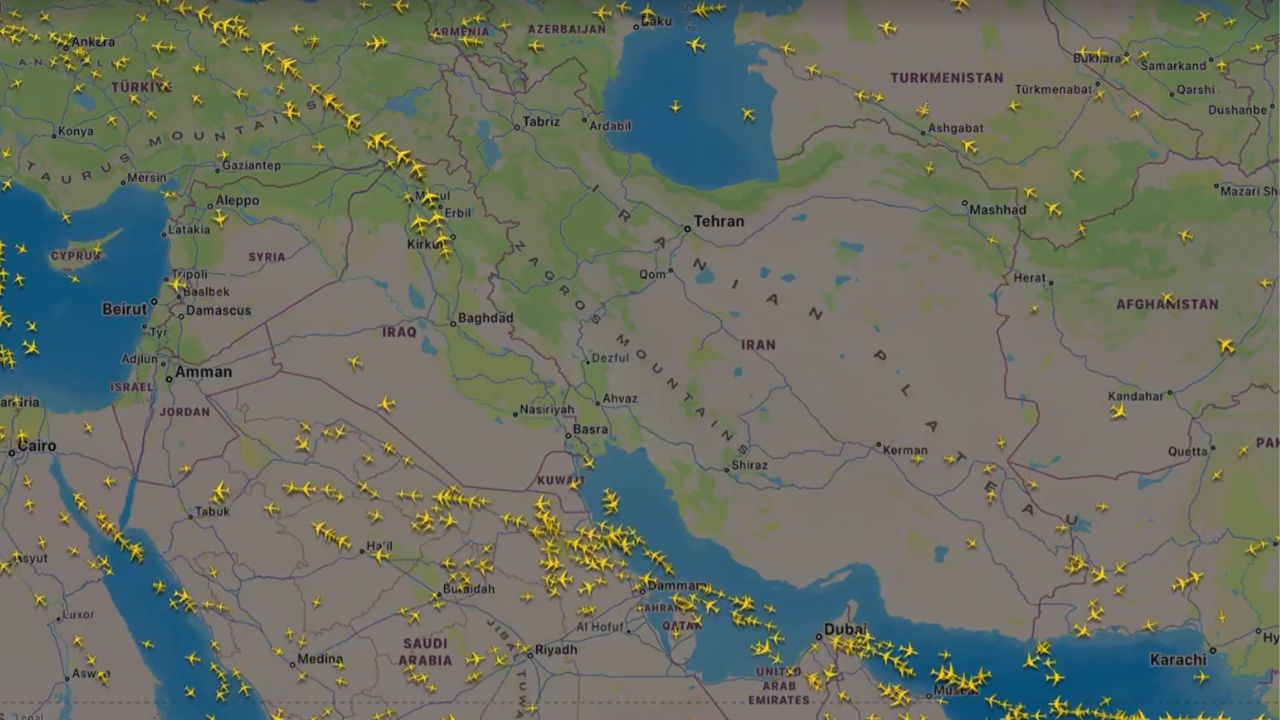
Mass flight cancellations are rarely isolated events; they are the visible symptoms of a hyper-optimized, low-margin system reaching a point of kinetic exhaustion. When a major carrier axes hundreds of flights, the public narrative focuses on "bad weather" or "IT glitches," but the underlying reality is a failure of structural elasticity. Modern airline operations rely on a tightly coupled architecture where crew rotations, airframe maintenance cycles, and hub-and-socket synchronization must align within razor-thin temporal windows. A 60-minute delay in a primary hub like Atlanta or Dubai does not merely affect one aircraft; it triggers a recursive degradation of the entire network’s schedule.
The Triad of Operational Failure
The collapse of a flight schedule typically stems from one of three distinct systemic pressures. Each operates on a different timeline and requires a different mitigation strategy. Read more on a connected subject: this related article.
1. The Temporal Bottleneck (Weather and Air Traffic Control)
Meteorological events are the most frequent triggers for cancellations, but the weather itself is seldom the sole cause. The actual mechanism of failure is the Airport Acceptance Rate (AAR). When visibility drops or crosswinds exceed safety thresholds, the number of aircraft an airport can safely land per hour decreases.
If an airport’s capacity drops from 60 arrivals per hour to 30, but the scheduled demand remains at 60, a queue forms. Because flight crews have strict legal "duty day" limits—often governed by FAA Part 117 or EASA equivalents—a four-hour ground delay can push a pilot into an illegal status. Once a crew "times out," the airline cannot simply find a replacement. The cancellation occurs because the human component of the machine has reached its regulatory expiration. Further analysis by AFAR explores related perspectives on the subject.
2. The Information Asymmetry (IT and Software Infrastructure)
Airlines operate on a stack of legacy software often layered over 1970s-era Global Distribution Systems (GDS). A failure in a centralized crew-scheduling module or a synchronization error in the passenger service system (PSS) creates an immediate information vacuum. Without real-time data on where crews are located or which aircraft are airworthy, the "recovery solver" algorithms used by operations centers fail.
In these instances, airlines cancel flights not because they lack planes or pilots, but because they have lost the ability to match them. This is a state of operational blindness. Recovering from this requires a full system reset, often necessitating the cancellation of an entire morning’s "bank" of flights to re-position assets for the afternoon.
3. The Resource Deficit (Labor and Hardware Scarcity)
Since 2021, the aviation sector has faced a structural shortage of qualified captains and maintenance technicians. This creates a zero-reserve environment. In a healthy system, an airline maintains a "hot spare" (a backup aircraft and crew) at major hubs. In a resource-depleted system, every available asset is scheduled to maximize revenue. When a bird strike or a mechanical fault takes one plane out of service, there is no buffer. The cancellation of Flight A leads to the cancellation of Flights B, C, and D because the physical hull is missing from the next "leg" of its journey.
Quantifying the Cost of Recovery
The decision to cancel a flight is a mathematical trade-off between immediate loss and long-term network stability. Airline Operations Control Centers (AOCC) utilize a cost function to determine which flights to sacrifice. This function considers:
- Passenger Re-accommodation Cost: The price of rebooking 200 passengers on rival carriers or providing hotel vouchers.
- Downstream Impact: The number of subsequent flights assigned to that specific aircraft and crew.
- Slot Risk: At capacity-constrained airports like London Heathrow or New York JFK, failing to operate a certain percentage of flights can lead to the permanent loss of valuable takeoff and landing slots.
- Cargo Commitments: High-value, time-sensitive freight often carries higher penalty clauses than individual passenger tickets.
If a flight from a minor "spoke" airport to a "hub" is canceled, the damage is localized. If a hub-to-hub flight is canceled, the disruption scales exponentially, as that flight likely carries hundreds of passengers connecting to dozens of different destinations.
The Mechanics of Re-positioning
A common misconception is that a canceled flight is "deleted" from the system. In reality, it creates a discontinuity in the tail-routing. Aircraft follow specific "lines of fly" that might span three days and fifteen cities.
- Tail 402 is scheduled: JFK -> LAX -> SFO -> ORD.
- If JFK -> LAX is canceled, the aircraft is physically in New York when it needs to be in Los Angeles to start the LAX -> SFO leg.
To fix this, the airline must perform a "ferry flight" (flying an empty plane) or "swap tails" with another route. These maneuvers are invisible to the public but represent a massive logistical lift. The failure to execute these swaps is why cancellations often persist for days after a storm has passed or a computer system has been restored. The network is physically "out of place," and moving the pieces back into position consumes fuel, crew hours, and gate space without generating a cent of revenue.
Regulatory and Economic Constraints
Governments have attempted to mitigate these failures through consumer protection mandates, such as EU261 in Europe or the recently updated DOT rules in the United States. These regulations force airlines to internalize the cost of cancellations by requiring automatic cash refunds and compensation for controllable delays.
However, these mandates can inadvertently increase the rate of preemptive cancellations. If an airline knows a storm is coming and anticipates a 70% chance of a system-wide meltdown, it is often cheaper to cancel 500 flights 24 hours in advance than to wait and trigger the massive compensation payouts required for "at-the-airport" disruptions. This shift toward "proactive cancellation" protects the airline’s balance sheet but pushes the logistical burden onto the traveler.
The Fragility of Low-Cost Carriers vs. Legacy Hub Models
The impact of cancellations varies significantly based on the airline's business architecture.
Legacy Carriers (Delta, Lufthansa, Emirates): These airlines use hub-and-spoke models. They have higher overhead but more "re-routing" options. If a passenger misses a connection, there are usually four more flights to the same destination later that day.
Low-Cost Carriers (Ryanair, Southwest, Spirit): These airlines often use point-to-point models. Their utilization rates are significantly higher, with planes spending less than 40 minutes on the ground between flights. They have no "buffer." A single delay in the morning cascades through the entire day with no opportunity to "catch up." Furthermore, if they only fly a route once a day, a cancellation leaves passengers stranded for 24 hours or more, as there is no alternative seat capacity in the network.
Strategic Mitigation for the High-Frequency Traveler
Understanding the mechanics of aviation failure allows for a more clinical approach to risk management. The probability of a cancellation is not distributed evenly across the schedule.
- Prioritize the First Out (The 6:00 AM Rule): The first flights of the day are the least likely to be canceled because the aircraft and crew are usually already on-site from the previous night. These flights have the highest "buffer" before they hit crew duty limits.
- Analyze Hub Health: Before traveling, monitor the weather and ATC status of the hub airport, not just your departure or arrival city. If a hub is experiencing a "Ground Delay Program," the likelihood of your flight being "sacrificed" to save the schedule increases.
- Identify Non-Stop Redundancy: Avoid itineraries that rely on the last connection of the day. If that leg fails, the airline has zero tactical options for re-accommodation until the following morning.
- Monitor the Inbound Aircraft: Use tracking tools to identify the physical location of the aircraft assigned to your flight (the "inbound"). If the plane is still two states away and its departure is delayed, your flight is mathematically guaranteed to be delayed or canceled, regardless of what the gate agent or the app says.
The current global aviation landscape is characterized by a "Just-in-Time" delivery model applied to human transport. This creates a system that is highly efficient when conditions are perfect but lacks the structural dampeners required to absorb shocks. Until airlines reinvest in "redundant capacity"—meaning more planes and crews sitting idle—the cycle of mass cancellations will remain an inherent feature of modern travel rather than an anomaly.
Maximize your "optionality" by booking through hubs with high frequency and choosing morning departures to ensure you are at the front of the queue when the system inevitably begins its next contraction. Avoid routes with "thin" frequency where the loss of a single hull results in a 48-hour recovery window. If the carrier offers a proactive waiver to change your flight due to an incoming "event," accept it immediately; the first people to move are the only ones who secure the dwindling remaining seats before the mass-cancelation logic takes hold.
Would you like me to analyze the specific cancellation metrics of a particular airline or region to identify which routes currently have the highest structural risk?