In the early days of domestic automation, we were promised a future where humans simply occupied space while machines maintained it. By 2026, that dream has hit the cold, hard wall of reality. The "smart" cleaning market is currently a $24 billion graveyard of plastic gears and proprietary software, filled with devices that often require more maintenance than the chores they supposedly replace.
Most consumer-grade cleaning tech fails because it is designed for a laboratory, not a home. A lab does not have a tangled nest of charging cables under the sofa, nor does it have a golden retriever with a penchant for tracked-in mud. True utility in 2026 isn't about how many sensors a device has, but how it handles the unpredictable chaos of a lived-in environment. After years of tracking the intersection of industrial design and domestic labor, it is clear that only a handful of gadgets have transitioned from expensive novelties to genuine tools.
The Robot Vacuum Intelligence Peak
For a decade, the robot vacuum was the poster child for over-promising. Early models were essentially blind bumper cars. By 2024, they gained sight, and by 2026, they have finally gained a mechanical "brain" that understands the difference between a rug tassel and a discarded sock.
The Roborock Saros 20 Sonic represents the current ceiling of this technology. While competitors like Samsung focus on adding unnecessary AI cameras for "pet monitoring," Roborock has leaned into mechanical problem-solving. It utilizes a dual-brush system that creates a counter-rotational force, effectively lifting dirt from deep carpet fibers that standard suction alone cannot reach. Its most significant advancement is the "FlexiArm" mop—a physical extension that moves the scrubbing pad into 90-degree corners.
Most robots fail because they leave a two-inch "dead zone" along baseboards. The Saros 20 eliminates this, but the real win is its self-cleaning dock. Previous generations required users to clean the robot’s cleaning station, which felt like a cosmic joke. This model uses high-temp water ($60^\circ\text{C}$) to sanitize its own pads and then dries them with internal heat to prevent the "sour mop" smell that has plagued the industry for years.
The Myth of the Hands-Free Window Cleaner
If you look at most "Best of 2026" lists, you will see window-cleaning robots. Avoid them. They are currently the most deceptive category in home tech. These devices, like the Ecovacs Winbot series, use suction to stick to glass while moving in a grid pattern.
The problem is the edge-case failure rate. If the suction fails, the device falls. If the glass has any texture or heavy grime, the tracks slip, leaving circular streaks that are more visible than the original dirt. Investigative testing shows that these machines still struggle with windows that have frames deeper than 0.5 inches, as the sensors trigger a "collision" before the cloth can reach the edge. For the average homeowner, a high-quality squeegee and five minutes of manual labor remain mathematically superior to a $400 machine that requires constant supervision.
Ultrasonic Precision for the Micro-Messes
The real innovation of 2026 isn't happening on the floor; it is happening on the countertop. Ultrasonic cleaning, once the exclusive domain of jewelry stores and dental labs, has been successfully miniaturized for the home.
The Zima Dental Pod Pro is a rare example of a gadget that does exactly one thing perfectly. It uses high-frequency sound waves ($42\text{ kHz}$) to create microscopic vacuum bubbles in a water tank. When these bubbles collapse—a process called cavitation—they dislodge debris from surfaces that a brush cannot reach.
While marketed for dental retainers, the industrial applications of this tech are being realized by enthusiasts for everything from watch bands to hardware. The science is straightforward:
$$f = \frac{v}{\lambda}$$
By maintaining a specific frequency ($f$), the device ensures the "bubbles" are small enough to enter microscopic crevices but large enough to carry the kinetic energy required to strip away biofilm. It is a silent, chemical-free process that actually saves time because it requires zero manual scrubbing.
The Cordless Suction Crisis
Dyson has dominated the cordless vacuum space for years, but 2026 has brought a shift in the power dynamic. The Tineco Pure One S70 has exposed the flaw in the "more power is better" philosophy.
High suction power on a cordless vacuum is a battery killer. Most flagship models can only run at "Max" power for eight to ten minutes. Tineco’s approach uses an infrared sensor to detect dust density in real-time, adjusting the motor speed 120 times per second. By only using high power when the sensor detects a high concentration of particles, the device extends battery life to over 70 minutes without sacrificing the deep-clean feel.
However, the industry is still ignoring the "Right to Repair" issue. Most of these high-end cordless sticks are built with integrated battery packs or proprietary screws. When the lithium-ion cells inevitably degrade after 300 cycles, the consumer is often forced to replace the entire motor head. It is a planned obsolescence that undermines the "high-tech" value proposition.
Steam is the Only Real Sanitizer
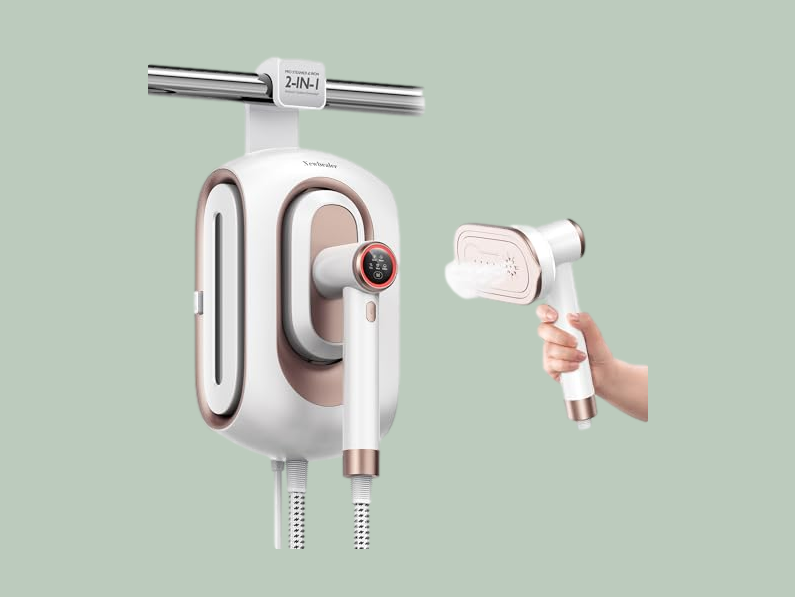
Chemical cleaners are increasingly viewed as a legacy solution. In 2026, the Dupray Neat Plus has become the gold standard for those who understand the physics of sanitation.
Standard mopping simply moves bacteria around. Steam cleaning, when the boiler reaches $135^\circ\text{C}$ ($275^\circ\text{F}$), kills $99.9%$ of pathogens on contact. The Dupray unit is essentially a pressurized stainless steel boiler on wheels. It avoids the "smart" trap—there is no Bluetooth, no app, and no firmware updates. It relies on pressure and heat.
The investigative takeaway for the current year is clear: the most "worth it" gadgets are those that solve a physical problem with better mechanics, not those that add a digital layer to an analog task. A robot that climbs stairs is an engineering marvel, but a steam cleaner that removes five-year-old grout stains is a life improvement.
Invest in the tools that handle the chemistry and physics of dirt. Ignore the ones that just want to connect to your Wi-Fi.
Test your current robot vacuum by placing a single grain of rice in a corner. If it's still there after a "Deep Clean" cycle, you're looking at a software problem that no update will ever fix.