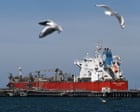
Six shipments. Out of eighty-one.
Energy Minister Chris Bowen stands at a podium and offers these numbers like a sedative, hoping the Australian public will mistake a low cancellation rate for a functional supply chain. It is a classic political shell game. By focusing on the "minimal" disruption caused by the conflict in the Middle East, the federal government is successfully diverting attention from a far more uncomfortable truth: Australia’s energy security is not being threatened by Houthi rebels or Iranian tankers. It is being strangled by an internal refusal to build a sovereign, high-density energy backbone.
We are obsessed with the wrong math. We track the movement of ships across the Indian Ocean as if we are still living in 1974, clinging to a maritime-dependent model that is fundamentally incompatible with the 2026 economy. The real story isn't that six ships didn't show up. The real story is that we are still a nation that panics if a handful of diesel tankers get delayed by a week.
The Myth of Global Supply Resilience
The "eighty-one shipments" metric is a vanity stat. It suggests a system with deep buffers and reliable flow. In reality, Australia operates on a "just-in-time" delivery model for liquid fuels that would make a lean-manufacturing consultant sweat. We have some of the lowest domestic fuel reserves in the OECD. When the Minister says "only six" shipments were cancelled, he is playing a game of Russian Roulette with three empty chambers and calling it safety.
I have spent a decade watching boards of directors prioritize quarterly OPEX savings over long-term strategic redundancy. They love the "six out of eighty-one" narrative because it justifies doing nothing. It allows them to avoid the massive capital expenditure required to build genuine domestic storage or, more importantly, to accelerate the transition to a grid that doesn't rely on the whims of a Strait of Hormuz blockade.
The "lazy consensus" here is that as long as the ships keep coming, the system is working. That is a lie. A system that depends on a 12,000-kilometer umbilical cord for its basic mobility is already broken. It’s just waiting for a bigger disruption than a regional skirmish to prove it.
Tropical Cyclones and the Infrastructure Theater
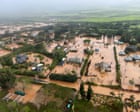
While Bowen talks about fuel, Tropical Cyclone Narelle is slamming into the Northern Territory coast as a Category 3 system. The media treats these as two separate stories: a geopolitical energy crunch and a natural disaster. They are the same story.
Both events expose the fragile, thin-ribbon nature of Australian infrastructure. We build "efficient" networks that have zero tolerance for "tail-risk" events. Whether it’s a storm surge in Darwin or a cancelled tanker in the Persian Gulf, the result is the same: price spikes, supply rationing, and a frantic government trying to manage the optics of a crisis they refused to prevent.
The standard response to Narelle will be "recovery and resilience" grants. We will spend millions to put things back exactly how they were before the wind started blowing. We refuse to acknowledge that our current distribution of energy and resources is geographically illiterate. We keep building vulnerable, centralized hubs in the path of predictable atmospheric hammers, then act shocked when the lights go out.
The Wrong Questions About "Energy Security"
If you look at "People Also Ask" snippets or standard news commentary, the questions are always: "Will fuel prices go up?" or "Are we running out of petrol?"
These are the wrong questions. The right question is: "Why are we still using an energy architecture that makes us a hostage to global volatility?"
The contrarian take isn't that we need more ships. It's that we need to stop caring about the ships. True energy security in 2026 isn't about securing a trade route; it's about eliminating the need for the route entirely. This isn't just about "renewables"—that's another oversimplified trope. This is about Energy Density and Local Autonomy.
- The Diesel Fallacy: We treat diesel as a commodity. It’s actually a vulnerability. Every tractor, truck, and emergency generator in this country is a ticking clock that stops when the ships stop.
- The Grid Illusion: Our current grid is a sprawling, Victorian-era relic designed for a world that no longer exists. It’s a series of long, lonely wires that a single falling tree—or a single cyber-attack—can cripple.
- The Storage Gap: We talk about "batteries" as if they are a silver bullet. They aren't. They are a short-term balancing tool. We lack long-duration energy storage that can survive a three-week weather event or a three-month shipping blockade.
Why the "Transition" is Failing the Stress Test
The current push for a green transition is being handled with the same bureaucratic incompetence as our fuel security. We are swapping one form of dependency for another. Instead of being dependent on Middle Eastern oil, we are becoming dependent on a global supply chain for rare earth minerals and specialized components that are just as easily disrupted as a Suez Canal transit.
I’ve seen energy firms dump half a billion into solar farms without a single thought for how that power gets to a heavy industrial site when a Category 3 cyclone rips through the transmission corridor. It’s "spreadsheet sustainability." It looks great in an annual report, but it’s useless in a crisis.
We need to stop incentivizing "capacity" and start rewarding "islanding." An islanded system is one that can function entirely independently of the national grid or global shipping for thirty days. Currently, almost zero percent of Australian critical infrastructure can do this.
The Brutal Reality of the "Six Ships"
Let’s look at those six cancelled shipments. Bowen implies they are a footnote. In a high-stakes logistics environment, six shipments represent a massive loss of "float" in the system. When you lose that volume, you lose the ability to handle the next unexpected event—like a refinery glitch or a sudden surge in demand due to a natural disaster.
The math of failure is non-linear. You don't lose 7% of your functionality when you lose 7% of your supply. You lose 100% of your functionality the moment the last drop in a specific region is gone. Supply chains don't "stretch"; they snap.
Stop Trying to "Secure" the Old World
The government’s obsession with monitoring fuel shipments is a sign of a leadership class that is fundamentally reactive. They are managing the decline of a 20th-century model instead of building a 21st-century fortress.
If we want to survive the next decade of geopolitical fragmentation and climate volatility, we have to burn the current playbook.
- Mandate Sovereign Reserves: Not in a "strategic reserve" that sits in a salt cavern in the US, but in physical tanks on Australian soil that are owned and managed by the state.
- Microgrid Every Regional Hub: Every town in the path of a cyclone like Narelle should be able to disconnect from the state grid and run its own essential services indefinitely.
- Hardened Logistics: We need a rail and road network that isn't severed by a single flood or a single fuel shortage. That means a massive shift toward heavy-vehicle electrification and hydrogen, fueled by local production.
The downside to this? It's expensive. It’s "inefficient" by the standards of modern neoliberal economics. It requires a level of state intervention and capital expenditure that makes politicians jumpy. But the alternative is what we see today: a Minister standing at a podium, bragging that "only" 7% of our lifeblood failed to show up this month.
We are patting ourselves on the back for surviving a paper cut while we have stage four lung cancer.
Stop watching the ships. Start building the walls.