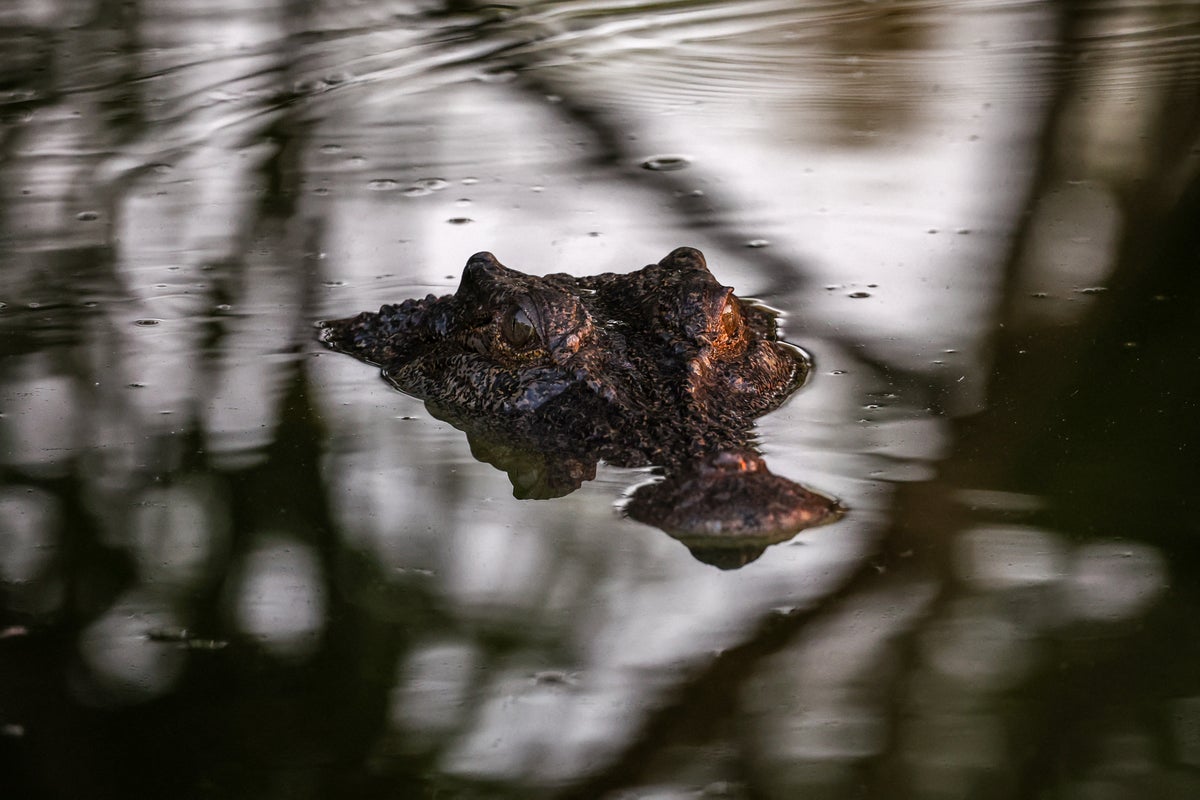
You’ve seen the photos. A three-meter saltwater crocodile cruising down a suburban street in Katherine or a "freshie" perched on someone’s front porch in Townsville. When the heavens open and northern Australia turns into an inland sea, the headlines scream that we’re being overrun. It feels like every puddle is a death trap. But if you’re worried that crocodile populations are suddenly skyrocketing because of a bit of rain, you’re looking at the wrong map.
The truth is, the crocs were already there. They didn't just spawn out of the clouds. Australia’s saltwater crocodile population has been on a massive recovery arc since hunting was banned in the 1970s. We’ve gone from roughly 3,000 animals to well over 100,000 in the Northern Territory alone. Floods don't create more crocodiles; they just move the ones we have into your backyard.
The Flooding Highway Effect
When a river like the Katherine or the Ord breaks its banks, it creates a massive, temporary highway. Crocodiles are efficient travelers. They don't want to fight a raging main current if they don't have to. Instead, they use the rising water to scout new territory, find mates, or hunt feral pigs that have been pushed to the water's edge.
During these events, the "crocs are everywhere" warning from local police isn't hyperbole. It's a literal description of the landscape. In March 2026, authorities in the Northern Territory reported sightings in areas that hadn't seen a croc in decades. Why? Because the water connected their usual haunt to a brand-new drainage ditch or a flooded park.
Why Sightings Spike
- Visibility: It's hard to miss a prehistoric apex predator when it’s sitting on a bitumen road.
- Displacement: Juvenile crocs get pushed out of prime territory by bigger bulls. Floods give them a chance to find a "home" of their own.
- Prey Movement: Everything moves when it floods. If the wallabies and pigs are heading to higher ground, the crocs are right behind them.
Cracking the Population Myth
Don't confuse "more sightings" with "more crocodiles." The Northern Territory population has actually started to level off in some areas. Scientists call this an "asymptote"—basically, the environment has reached its carrying capacity. There are only so many spots for a five-meter male to live without killing his neighbors.
In Queensland, the numbers are much lower—roughly 20,000 to 30,000 animals. While the NT population is dense and stable, Queensland's crocs are still slowly recovering, growing at about 2% a year. If you see a croc in a North Queensland flood, it's likely a traveler, not a sign of a local population explosion.
The Real Danger of Dirty Water
The biggest mistake people make during a flood isn't underestimating the number of crocodiles. It's underestimating the water itself. Floodwater is opaque. It’s full of silt, debris, and runoff. A crocodile doesn't need a deep lake to hide; it only needs about 30 centimeters of murky water to become completely invisible.
I’ve spoken with rangers who’ve seen large salties remain perfectly still in shallow gutters while people walked less than two meters away. They aren't always looking to attack, but they are opportunistic. If you splash around in brown water, you're sending out a dinner bell vibration that they can feel from a long way off.
Survival Reality Check
- Forget the "Freshies": While freshwater crocodiles are all over the place, they rarely bother humans unless provoked. It’s the Estuarine (saltwater) crocs you need to worry about.
- The 5-Meter Rule: If you're within five meters of the water's edge in the Top End, you're in the strike zone. During a flood, the "edge" is now your driveway.
- Don't Trust Fences: Crocs can go over, under, or straight through most residential fencing if they’re motivated by rising water.
Managing the Risk in 2026
State governments aren't just sitting back. The Northern Territory’s 2024-2034 Management Program is specifically designed to handle the "problem" animals that show up in urban areas after big rains. In the first week of 2026 alone, rangers pulled half a dozen massive crocs out of populated zones near Darwin.
Queensland has also stepped up its game with the "Active Removal Zones." If a croc shows up in a designated swimming hole or a busy boat ramp, it’s gone. No questions asked. This isn't about culling the species; it's about drawing a hard line between wildlife habitat and human space.
What You Should Actually Do
If you’re living through a wet season or visiting the North during a flood, stop treating the water like a playground.
- Report sightings immediately: Use the QWildlife app in Queensland or call the croc hotline in the NT.
- Stay out of the water: It sounds simple, but every year someone thinks they can wade through a flooded crossing. They can't.
- Secure your pets: Dogs are high-protein snacks for crocodiles. Keep them on a lead and well away from any flood debris.
The floods will eventually recede, and most of these animals will follow the water back to the main river channels. They aren't invading; they're just passing through. Respect the fact that you’re living in one of the few places on Earth where the prehistoric world still bites back.
If you're planning a trip to the Top End or currently watching the rain lash your windows, check the latest "Be Crocwise" updates for your specific local government area. The maps are updated weekly during the wet season to show exactly where "problem" animals have been spotted or trapped.


