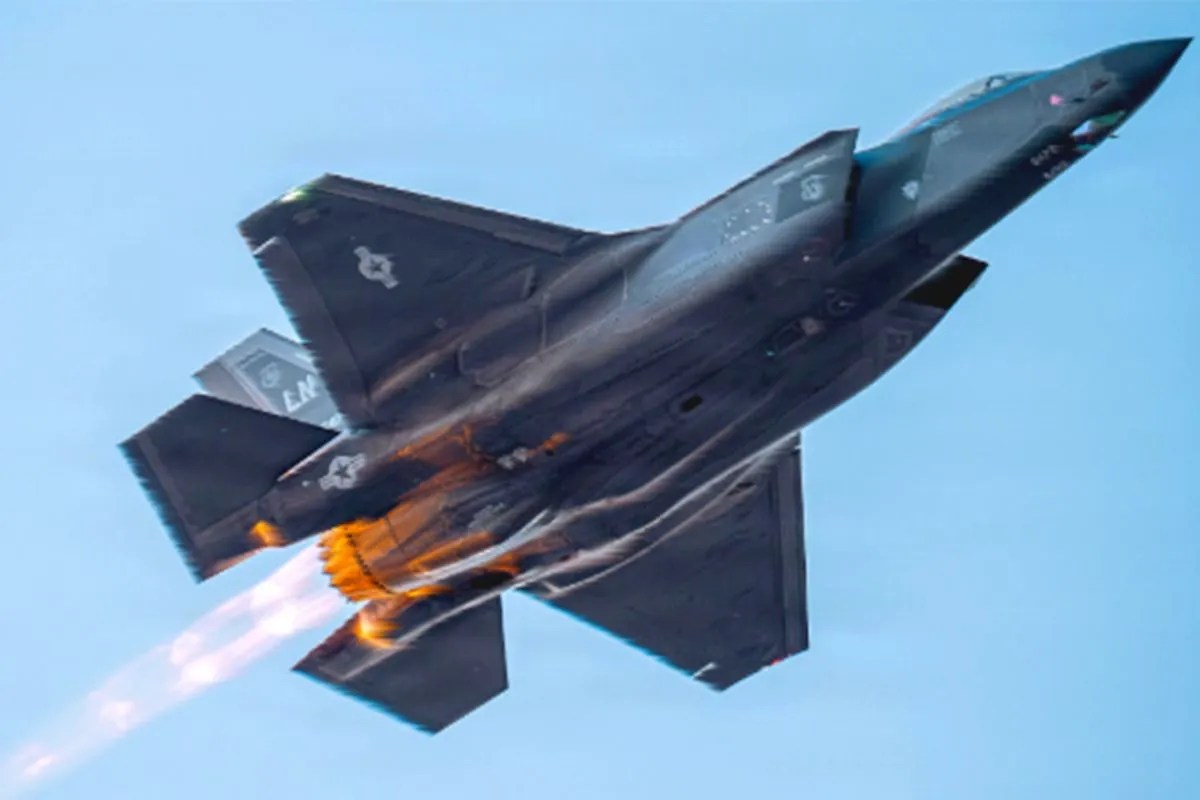
Claims regarding the downing of a Lockheed Martin F-35 Lightning II by Iranian air defense systems represent more than a localized propaganda skirmish; they serve as a stress test for the perceived invincibility of Low Observable (LO) technology in contested environments. To evaluate the validity of such claims, one must move beyond sensationalist headlines and dissect the intersection of radar cross-section (RCS) physics, Integrated Air Defense Systems (IADS), and the geopolitical utility of "kinetic proof." If an F-35 were neutralized, the global defense market would face a fundamental recalibration of stealth as a primary survival mechanism.
The Physics of Detection vs. The Logic of Interception
The narrative that an F-35 can be "shot down" often ignores the distinction between detection, tracking, and a successful fire-control lock. Stealth does not render an aircraft invisible; it reduces the detection range of specific radar frequencies.
The Frequency Gap
Most modern IADS, including the Iranian Bavar-373 or the Russian-made S-300PMU2, utilize a multi-layered sensor approach.
- VHF and UHF Radars: These long-wavelength systems are capable of detecting the physical presence of a stealth aircraft because the wavelengths are comparable to the size of the aircraft's features (Mie scattering). However, these systems lack the precision required to guide a missile to a target.
- X-Band and Ku-Band Radars: These are the high-frequency systems used for precision tracking and missile guidance. The F-35’s geometry and radar-absorbent material (RAM) are specifically optimized to scatter these frequencies.
A claim of "downing" an F-35 requires the transition from a "vague blob" on a VHF screen to a high-fidelity track on an X-band engagement radar. Without physical wreckage or multispectral sensor data, a claim remains a speculative exercise in electronic warfare posturing.
The Three Pillars of Stealth Vulnerability
To understand how a peer or near-peer adversary might realistically threaten a 5th-generation platform, we must categorize the potential failure points into three distinct pillars.
1. The Maintenance and Material Degradation Loop
The efficacy of an F-35 is tied to its skin. The Radar Absorbent Material is sensitive to environmental stressors, heat, and high-G maneuvers. If the surface integrity is compromised—even by minor abrasions or improper fastener seating—the RCS increases exponentially. In a sustained conflict, the "mission capable" rate often drops because the specialized hangars and climate-controlled environments required to maintain stealth coatings are targets themselves. An aircraft flying with a "degraded" stealth signature is no longer a ghost; it is a high-value target with limited kinetic maneuverability.
2. The Electronic Emission Signature
The F-35 is a "sensor fusion" node. While its radar (AN/APG-81) uses Low Probability of Intercept (LPI) technology—hopping frequencies and varying power levels to avoid detection—it still emits energy. A sophisticated adversary employing Passive Coherent Location (PCL) systems does not need to "ping" the F-35. Instead, PCL monitors ambient electromagnetic energy (radio, TV, cellular signals) and looks for the "shadow" or disturbance caused by an aircraft moving through that soup of radiation. If Iran or its allies have effectively networked their passive sensors, the F-35's active emissions become a secondary concern to its physical displacement of local radio waves.
3. The Kinetic Bottleneck
Even if an F-35 is detected, it must be engaged. Modern surface-to-air missiles (SAMs) utilize "home-on-jam" or infrared (IR) seekers in the terminal phase. The F-35’s engine, the Pratt & Whitney F135, produces immense heat. While the aircraft uses sophisticated heat-sink technology and fuel-cooling, it cannot completely mask its thermal signature from high-end Infrared Search and Track (IRST) systems at close ranges.
The Geopolitical Cost Function of "The Claim"
In the absence of a tail number or a crash site, the claim that an F-35 was intercepted serves a psychological and economic function.
The Devaluation of Western Defense Exports
The F-35 is the backbone of the "Global Fleet." By projecting the narrative that this $100 million asset can be defeated by indigenous or older-generation Russian systems, Iran effectively lowers the perceived value of the platform for regional neighbors like Israel and the UAE. This is an exercise in Asymmetric Signal Intelligence: the goal isn't necessarily to kill the jet, but to kill the utility of the jet as a deterrent.
The Defensive Response Loop
Every time a claim of a stealth breach is made, the US and its allies are forced to adjust their Electronic Warfare (EW) profiles. This creates a "cat and mouse" game where the defender (Iran) attempts to bait the F-35 into using its most advanced jamming suites, thereby "recording" the waveforms for future countermeasure development.
The Data Gap: Why Proof is Absent
The primary reason to remain skeptical of "sensational claims" regarding downed F-35s is the lack of optical evidence. In the era of ubiquitous smartphone cameras and commercial satellite imagery, the disappearance of a 5th-generation fighter would be impossible to hide for more than 24 hours.
- Search and Rescue (SAR) Activity: A downed pilot triggers a massive, highly visible recovery operation. No such spike in localized military activity has been verified by independent SIGINT (Signal Intelligence) monitors.
- The Debris Field: A high-speed intercept results in a debris field spanning kilometers. To date, no verified imagery of F-135 engine components or specialized composite skin has emerged in the public domain.
Strategic Forecast for Contested Airspace
The era of uncontested stealth supremacy is ending, but not because the F-35 is obsolete. Rather, the "cost per kill" for air defense is dropping faster than the "cost per flight hour" for stealth platforms.
Future operations will likely shift from relying on the "lone wolf" stealth penetrator to a distributed "Loyal Wingman" model. In this framework, the F-35 acts as a high-altitude quarterback, remaining outside the immediate engagement zone of high-end IADS, while expendable drones (UAVs) draw fire, map radar nodes, and perform the kinetic strikes.
If Iran possesses the capability to track an F-35, it is likely through a combination of multi-static radar arrays and Russian-provided ELINT (Electronic Intelligence) support. However, tracking is not killing. The strategic pivot for Western forces will not be to build "more stealth," but to build more "disposable mass" to overwhelm the decision-making cycles of these advanced IADS.
The immediate tactical play for regional actors is the deployment of localized, high-powered jamming pods on older airframes to create "clutter corridors," allowing the F-35 to operate in the shadows of intentional electronic noise rather than relying solely on its physical shape for survival. This shift from "passive stealth" to "active spectrum dominance" will define the next decade of aerial warfare.