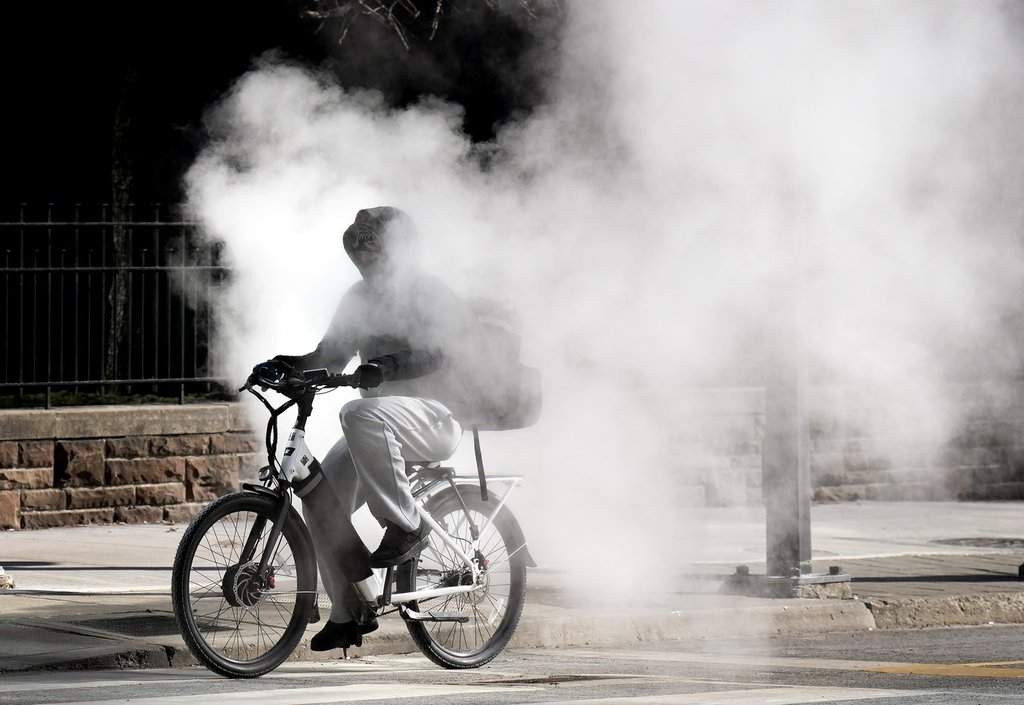
The onset of March in Ontario represents a critical failure of the transitional seasonal model, where residual Arctic air masses override the expected incremental gains in solar irradiance. This thermal deficit is not a simple "cold snap" but a manifestation of high-pressure subsidence that pins frigid temperatures against the ground, creating a localized atmospheric trap. Understanding the mechanics of this phenomenon requires deconstructing the relationship between the Arctic Vortex, the albedo effect of existing snowpack, and the physiological impact of convective heat loss.
The Triad of Thermal Displacement
The current meteorological state in Ontario is governed by three distinct drivers that dictate the severity and duration of the cold.
- High-Pressure Subsidence: A sprawling high-pressure system centered over the Hudson Bay acts as a gravitational anchor for cold air. Because cold air is denser than warm air, it sinks, creating a "dome" effect that prevents warmer, moisture-laden air from the Gulf of Mexico or the Atlantic from penetrating the provincial borders.
- The Albedo Feedback Loop: Despite the calendar turn to March, significant snow cover remains across the Greater Toronto Area (GTA) and Northern Ontario. This snow reflects up to 90% of incoming solar radiation back into space. This prevents the ground from absorbing thermal energy, ensuring that the air immediately above the surface remains refrigerated regardless of cloud cover.
- The Polar Jet Stream Meander: The jet stream—the high-altitude river of air that separates cold northern air from warm southern air—has developed a deep "trough" over Eastern Canada. This structural dip allows the Arctic to bleed southward, effectively moving the climatic conditions of Nunavut into the 45th parallel.
Quantifying the Wind Chill Variable
The "feels like" temperature frequently cited in weather reports is a measure of the Wind Chill Index (WCI), a formula that calculates the rate of heat loss from exposed skin. In the current Ontario context, wind speeds exceeding 40 km/h transform a standard -10°C environment into a high-risk -25°C zone.
The physics here are dictated by the Boundary Layer. In still air, the human body warms a thin layer of air molecules immediately surrounding the skin, providing a microscopic buffer of insulation. Wind strips this layer away instantly, forcing the body to dump internal heat into the atmosphere to compensate. When the WCI crosses the -27 threshold, the risk of frostbite on exposed tissue becomes non-linear, dropping from hours to under 30 minutes.
The Thermal Conductivity of Infrastructure
The cold is not merely a biological threat; it is an engineering stressor. Ontario’s infrastructure operates within a specific "design temperature" range. When ambient temperatures drop below -15°C for extended periods, the failure rate of mechanical systems increases due to material contraction.
- Steel Brittle-Ductile Transition: Bridge components and rail lines experience increased brittleness. While they rarely fail outright, the margin for error during high-stress loads—such as heavy freight transport—narrows significantly.
- Fluid Viscosity Shifts: In residential and commercial HVAC systems, lubricants and fuels thicken. This increases the torque required for motors to start, leading to a spike in electrical demand and a higher frequency of "locked rotor" failures in heat pumps and furnace blowers.
- The Frost Line Advance: Extreme cold drives the frost line deeper into the soil. If this line reaches buried water mains that are older or already stressed by ground shifting, the resulting "frost heave" causes the cast iron or aging PVC to fracture.
Logistics and the Economic Friction of Extreme Cold
The economic output of the province correlates inversely with the severity of the wind chill. The "Friction of Distance" increases as transportation networks slow down to accommodate reduced visibility and traction.
Grid Load Management
Ontario’s Independent Electricity System Operator (IESO) must manage a sharp shift in the "Duck Curve" of energy demand. Unlike summer peaks driven by cooling, winter peaks are sharper and occur in the early morning and late evening. The reliance on electric heating in newer developments creates a massive load on the grid that requires the activation of gas-fired peaker plants. This transition increases the carbon intensity of the provincial energy mix and raises the spot price of electricity.
The Supply Chain Bottleneck
The "Just-In-Time" delivery model used by major retailers in the GTA relies on a constant flow of heavy-duty trucks. In a frigid high-wind scenario:
- Fuel Gelling: Diesel fuel can begin to paraffin (wax) at low temperatures, clogging filters and stalling engines.
- Brake System Moisture: Air brake systems in trucks can freeze if moisture enters the lines, necessitating the use of "air line antifreeze" (methyl alcohol), which adds a layer of maintenance overhead and potential delay.
- Labor Efficiency: Ground crews at Pearson International Airport and logistics hubs experience a 30-50% reduction in movement speed due to the bulk of Arctic-grade Personal Protective Equipment (PPE) and mandatory "warm-up" rotations.
Physiological Defense Systems and Failure Points
The human body’s response to the Ontario cold snap is a masterclass in resource prioritization. To survive, the brain initiates a "Centralization of Volume" strategy.
- Vasoconstriction: Blood vessels in the extremities constrict to keep warm blood centered around the heart, lungs, and brain. This is why fingers and toes are the first to suffer from the cold.
- Thermogenesis through Shivering: The body initiates involuntary muscle contractions to generate kinetic heat. This is an energy-expensive process that rapidly depletes glycogen stores.
- The Paradox of Alcohol: A common misconception is that alcohol "warms you up." In reality, alcohol is a vasodilator. It forces blood back to the surface of the skin, giving a false sensation of warmth while actually accelerating the core's heat loss to the environment. In a -20°C wind chill, this physiological error can be fatal.
The Strategic Response for Residents
Mitigating the risks of this March freeze requires a shift from passive endurance to active systems management.
- Seal the Envelope: 25% of a home’s heat loss occurs through air leakage. Using temporary weather stripping or even heavy blankets over north-facing windows creates a stagnant air pocket that acts as additional insulation.
- Manage Humidity: Dry air feels colder and irritates the respiratory tract, making one more susceptible to viral infections. Maintaining indoor humidity between 30% and 40% improves thermal comfort without causing condensation on windows.
- Redundancy Planning: In rural Ontario or areas prone to power outages, the "Primary Heat Source" should never stand alone. Maintaining a stock of dry wood for fireplaces or a serviced indoor-safe propane heater is a baseline requirement for high-latitude residency.
The Meteorological Exit Ramp
The duration of this cold snap is dictated by the "blocking" pattern of the high-pressure system. Until a significant low-pressure system moves in from the American Midwest to "kick" the Arctic air out of the Great Lakes basin, the province will remain in a state of thermal stagnation.
The strategic play for the next 72 hours is a total pivot to energy conservation and risk avoidance. Industrial operators should postpone non-critical outdoor maintenance to avoid mechanical fatigue. Commuters must account for a 20% increase in travel time due to "black ice" formation—a phenomenon where moisture from car exhausts freezes instantly on the road surface when ambient temperatures are below -10°C.
The current data suggests the high-pressure dome will begin to erode by late week, but the "thermal inertia" of the frozen ground means the transition back to seasonal norms will be sluggish, not immediate. Ground-level operations will continue to face sub-zero challenges well after the air temperature officially "warms up."


