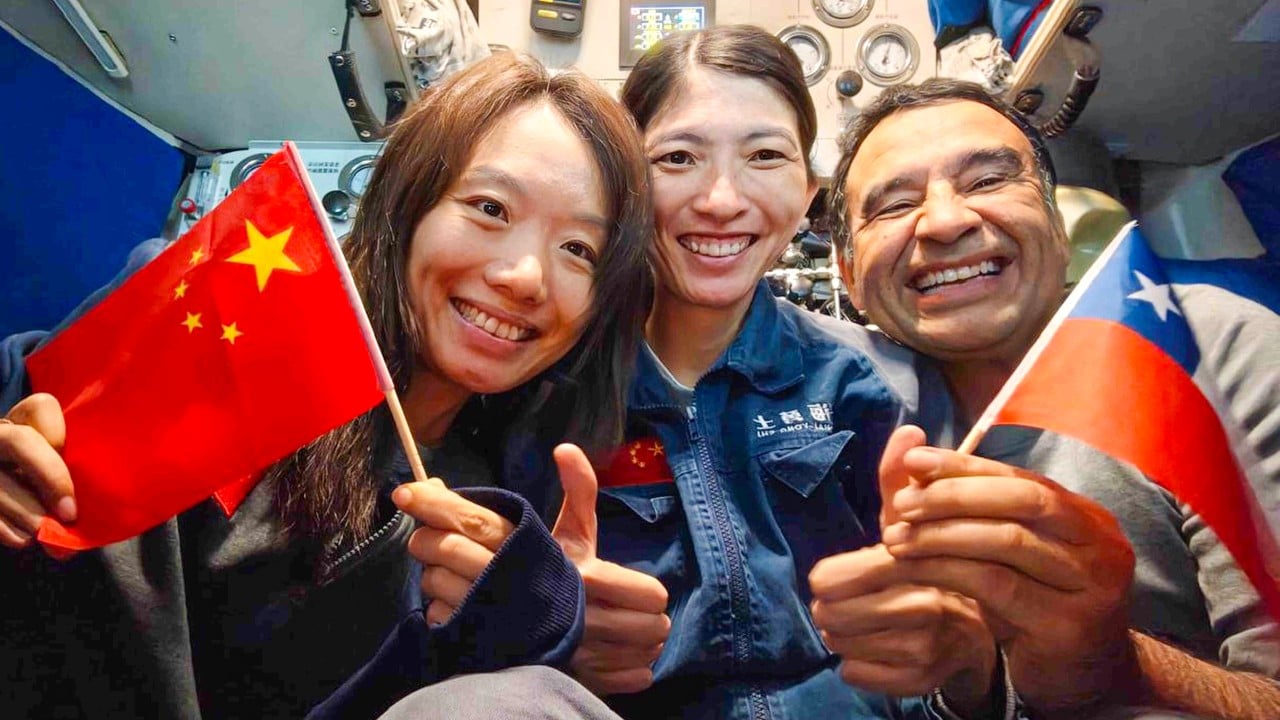
Science isn't just about discovery anymore. It's a scoreboard for superpowers. While the world watched the surface for geopolitical tremors, a Chinese research vessel called the Tan Suo Yi Hao spent months hovering over a jagged 8,000-meter scar in the Pacific floor. The mission to the Atacama Trench just wrapped up in Valparaíso, and if you think this was only about counting sea cucumbers, you're missing the bigger picture. This wasn't just a win for marine biology; it was a high-stakes signal sent directly to Washington.
Chile finds itself in a spot that’s getting increasingly uncomfortable. On one hand, you have the world’s most advanced deep-sea tech arriving from Beijing. On the other, you have the U.S. cranking up the heat, sanctioning officials, and waving the "security threat" flag at every move Chile makes toward China. The Atacama Trench mission is the perfect example of how the "Hadal zone"—the deepest part of the ocean—has become the newest front in a global tug-of-war.
Why the Atacama Trench is the Ultimate Prize
The Atacama Trench isn't just deep. It's a massive subduction zone where the Nazca Plate is grinding underneath the South American Plate. It's essentially an 800-kilometer-long laboratory for earthquakes and tsunamis. For scientists, it’s the "holy grail" of seismic research. But for governments, the stakes are different.
When China brings its Fendouzhe (Striver) submersible to Chile, it’s offering something no one else can. The Fendouzhe is a titanium-hulled beast that can handle pressures 1,100 times greater than at the surface. It’s currently the only manned submersible on the planet capable of doing sustained work at these depths. For Chilean researchers, this is like being offered a ride in a Ferrari when everyone else is still trying to figure out how to build a tricycle.
The Scientific "Covers" for Strategy
- Seismic Early Warnings: By studying the fracture patterns at 7,700 meters, researchers can better predict the megathrust earthquakes that flatten cities.
- Bioprospecting: The extreme life forms down there—creatures that live without sunlight—carry enzymes and molecules that could be worth billions in the pharmaceutical market.
- Carbon Recycling: The trench acts as a giant drain for carbon, making it a critical piece of the climate change puzzle.
But here’s the thing. The same tech used to map a trench for "science" is the exact same tech used to map the seafloor for submarine routes or deep-sea mining. In the eyes of the U.S., there’s no such thing as a "purely scientific" Chinese mission in its own backyard.
Washington's Breaking Point with Chile
The timing of this mission ending is almost poetic. It coincides with a massive shift in Chilean politics as the new right-leaning administration under José Antonio Kast takes over. Kast is already walking a tightrope. Just days ago, his government was met with a blunt instrument from the U.S. State Department.
The U.S. hasn't been subtle. They’ve already slapped travel bans on Chilean officials over a proposed undersea fiber-optic cable that would connect Valparaíso to Hong Kong. They called it a "regional security threat." When the Atacama mission launched, the message from the North was clear: "Don't get too close."
The "Friend-Shoring" Ultimatum
Washington isn't just using the stick; they’re using a very expensive carrot. While China provides the deep-sea submersibles, the U.S. just signed a massive critical minerals framework with Chile. They’re talking about $30 billion in potential investments for lithium and copper through the "FORGE" initiative.
It’s a classic squeeze play. The U.S. wants Chile to ditch Chinese tech (like the fiber-optic cable and the deep-sea partnerships) in exchange for being the primary supplier of the minerals that power the green energy revolution. Honestly, it’s a brutal dilemma for Chile. China is their biggest trading partner, but the U.S. is their oldest security ally.
The Fendouzhe Submersible and Technological Dominance
You can't talk about this mission without talking about the tech. The Fendouzhe isn't just a submarine; it's a statement of sovereign capability. Most countries can only look at the bottom of a trench through a remote-controlled drone. China puts three people in a sphere and sends them down for six hours at a time.
During this mission, they explored over 700 kilometers of the trench. They didn't just take pictures; they used robotic arms to grab samples of "hadal" life and volcanic rocks. This level of access is what the Chinese call "Global TREnD" (Trench Exploration and Diving Program). By inviting Chilean scientists on board, China is practicing "Science Diplomacy" at its most effective. They're giving local experts access to the "forbidden zones" of their own coast, something the U.S. hasn't prioritized in decades.
Why You Should Care About Deep Sea Mining
If you think this is all about fish and dirt, look at your phone. It contains lithium, cobalt, and copper. The Atacama Trench and the surrounding abyssal plains are littered with "potatoes"—polymetallic nodules rich in these minerals.
The debate is heating up. Some Chilean scientists are starting to argue that deep-sea mining might actually be cleaner than land-based mining. It uses less water and produces zero urban pollution. If China controls the tech to reach these minerals, and they have the relationship with Chile to harvest them, the U.S. loses its grip on the green energy supply chain. That's why the pressure is mounting. The Atacama mission is the reconnaissance phase for an industry that hasn't even fully started yet.
The Real Risks Nobody Mentions
- Environmental Ghost Towns: We have no idea what happens to the ecosystem when you "harvest" the seafloor. Some tests in Japan showed a massive drop in fish density after mining trials.
- Data Sovereignty: If the maps of the trench are stored in Beijing, Chile might lose the "home field advantage" in its own waters.
- Military Shadow: Deep-sea submersibles are the perfect tools for tapping into undersea cables—the same ones the U.S. is so worried about.
What Happens Now?
The Tan Suo Yi Hao has packed up its gear. The closing ceremony in Valparaíso was full of handshakes and talk of "science knows no borders." But the borders are more real than ever.
Chile is currently the testing ground for how a mid-sized power survives the collision of two giants. They want the Chinese tech, but they need the American market. For now, the mission is over, and the data is being processed. But the real "mission" for the Chilean government is just beginning. They have to decide if they're willing to risk U.S. sanctions for the sake of scientific and technological independence.
If you're following this, keep an eye on the "FORGE" meetings coming up in the next two weeks. That's where we'll see if the U.S. can actually buy Chile’s loyalty back, or if the lure of the deep sea—and the Chinese subs that can reach it—is too strong to ignore.
Don't wait for the mainstream news to catch up on the mineral trade-offs. Start looking into the specific companies involved in the "FORGE" initiative, like Albemarle and EnergyX, to see where the money is actually flowing. That's where the next "trench" is being dug.