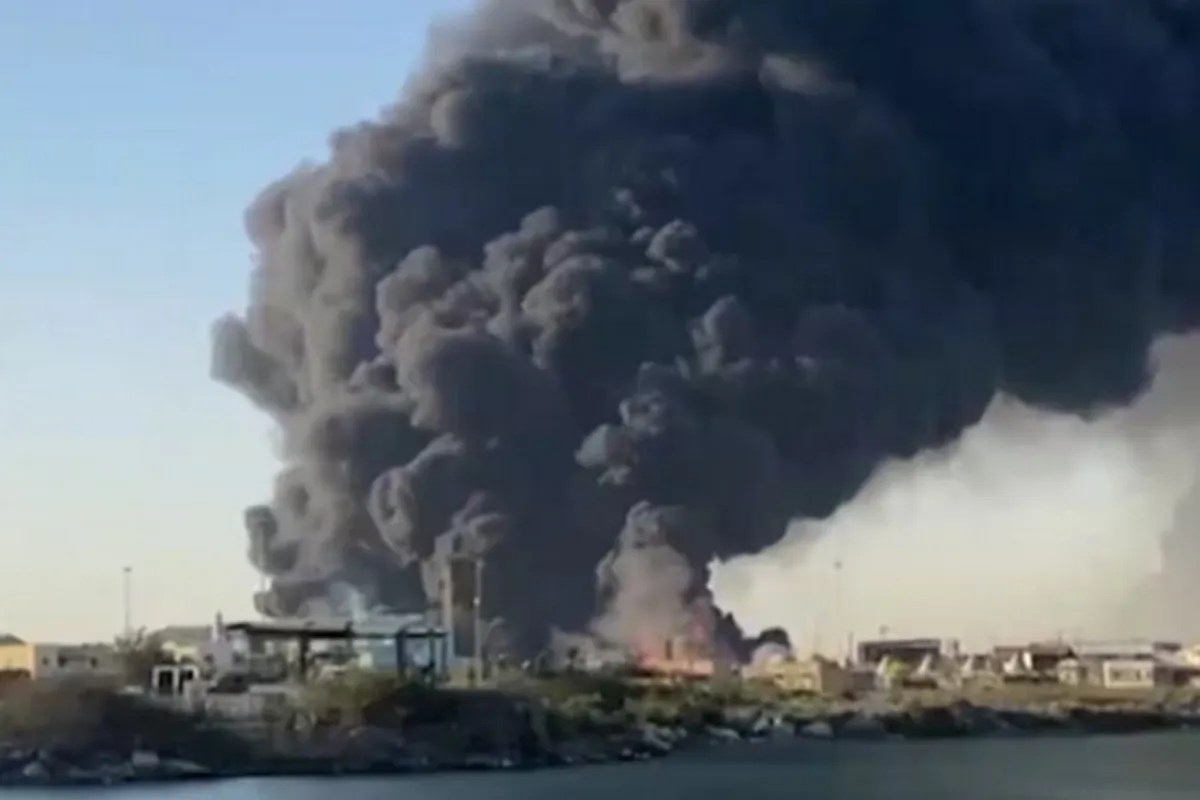
The transformation of the Sudanese civil war from a conventional military confrontation into a systematic campaign of civilian attrition reflects a fundamental shift in the Rapid Support Forces' (RSF) operational doctrine. When paramilitary groups transition from territorial acquisition to the mass targeting of non-combatants—as evidenced by recent aerial and ground strikes resulting in 28 civilian fatalities—the objective is rarely accidental. It is a strategic application of "coercive victimization," where civilian casualties are utilized as a functional variable to degrade the social and logistical base of the Sudanese Armed Forces (SAF).
This escalating violence is not a series of isolated tragedies; it is the output of a specific tactical framework designed to compensate for the RSF's lack of traditional state legitimacy. By analyzing the mechanics of these strikes, we can categorize the violence into three distinct pillars of strategic intent: territorial clearing, psychological destabilization, and the disruption of local resource chains.
The Kinematics of Non-Combatant Targeting
Traditional military engagements operate on the principle of "force on force." However, the current Sudanese theater utilizes "force on value," where the target is the perceived stability of the civilian population. The recent strike resulting in 28 deaths illustrates a breakdown in the distinction between combatant and non-combatant zones. This breakdown occurs through three primary mechanisms.
1. The Proximity Paradox
The RSF frequently embeds its units within dense urban centers. This forces the SAF to choose between ceding territory or conducting high-risk aerial bombardments. The resulting civilian deaths are not merely "collateral damage" in the eyes of the paramilitary; they are a tool for delegitimizing the state’s air power. Every civilian death attributed to an airstrike serves a dual purpose: it removes potential resistance and fuels a narrative of state incompetence or cruelty.
2. Information Asymmetry in Targeting
Precision in modern warfare relies on a feedback loop of signals intelligence (SIGINT) and human intelligence (HUMINT). In the current Sudanese landscape, this loop is compromised. The RSF utilizes "mobile strike clusters" that appear and disappear within civilian neighborhoods faster than the SAF's OODA loop (Observe, Orient, Decide, Act) can process. The lag in this cycle means that by the time a strike is executed, the military target has often relocated, leaving only the civilian infrastructure behind.
3. Logistical Scorched Earth
The destruction of marketplaces and residential clusters serves a brutal economic function. By eliminating the means of local sustenance, the RSF forces a mass migration. This depopulates strategic corridors, making it easier for paramilitary forces to move supplies without being monitored or harassed by local militias. The death of 28 individuals in a single event is a catalyst for the displacement of thousands, which is the actual tactical objective.
The Cost Function of Civilian Attrition
To understand the persistence of these massacres, one must look at the cost-benefit analysis from a paramilitary perspective. International condemnation carries little weight when compared to the immediate tactical advantages of civilian suppression.
- Resource Conservation: Maintaining a garrison in a hostile city is expensive and manpower-intensive. Generating "mass flight" through high-casualty events is a more efficient way to secure a perimeter.
- Political Leverage: High civilian death tolls create international pressure for a ceasefire. For a group like the RSF, which may be losing conventional momentum, a forced ceasefire provides a critical window for re-arming and logistical consolidation.
- Intelligence Suppression: Dead or displaced civilians cannot provide the SAF with intelligence on RSF movements. Silence is bought through the currency of violence.
The "logic" applied here is purely mathematical. If the cost of international sanctions is lower than the cost of losing a strategic hub like Khartoum or El Fasher, the paramilitary will continue to utilize mass-casualty events as a standard operating procedure.
Structural Failures in Humanitarian Intervention
The failure to stop these massacres stems from a fundamental misunderstanding of the conflict's architecture. Most international responses treat these events as "human rights violations" to be documented, rather than "military tactics" to be countered. This creates a bottleneck in effective intervention.
The first limitation is the lack of a "no-fly" or "no-strike" enforcement mechanism. Documentation after the fact does nothing to alter the risk-reward ratio for the commanders on the ground. When the RSF initiates a ground-based massacre or triggers an aerial response that kills 28 innocents, they are operating in a vacuum of accountability.
The second limitation is the degradation of the "Civil Defense" infrastructure within Sudan. Without functional hospitals or early-warning systems, a strike that would cause minor injuries in a stabilized zone becomes a mass-casualty event in Sudan. The lethality of these strikes is amplified by the total collapse of the medical supply chain, a factor that is intentionally exacerbated by the targeting of aid warehouses.
The Attrition Cycle: A Causal Mapping
To visualize how 28 lives are lost in a single day, one must map the causal chain of the engagement:
- Infiltration: RSF units occupy a civilian residential block to use as a shield.
- Detection: SAF surveillance identifies the unit but lacks the precision tools to isolate the target.
- Kinetic Action: A strike is ordered, or a ground raid is initiated.
- Massacre: High-density living conditions turn even small-scale munitions into mass-casualty events.
- Exploitation: The RSF uses the aftermath to signal that the SAF cannot protect its citizens, while simultaneously taking control of the now-vacant property.
This cycle repeats because it is functionally successful. It breaks the social contract between the citizen and the state. When the state (SAF) is seen as the cause of the death (via the airstrike) and the paramilitary (RSF) is seen as the inevitable occupier, the civilian population’s will to resist evaporates.
Deconstructing the 28-Death Metric
The number 28 is significant not just for its scale, but for what it represents in terms of "lethality density." In urban warfare, a casualty count of this size from a single series of strikes indicates the use of unguided munitions or high-explosive payloads in areas with zero evacuation protocols.
This suggests a shift from "selective targeting" to "area denial." When area denial is applied to a city, the city ceases to be a living entity and becomes a series of obstacles. The 28 victims are the statistical evidence that the RSF has moved into a phase of the war where the civilian is no longer an accidental victim, but a structural component of the battlefield.
Strategic Reorientation
Stopping the massacre of innocents in the Sudanese theater requires moving beyond the rhetoric of "tragedy" and into the mechanics of "deterrence."
The most effective lever is the disruption of the paramilitary's financial and logistical nodes that exist outside of Sudan. Since the RSF operates as a corporate-military hybrid, their sensitivity to asset freezes and the interdiction of their gold-export routes is far higher than their sensitivity to human rights reports.
On the ground, the priority must be the establishment of "hardened" civilian zones—areas where the density of observers and the presence of decentralized medical units raise the political and operational cost of a strike. Until the "cost" of killing 28 civilians exceeds the tactical "gain" of clearing a neighborhood, the patterns of violence will remain unchanged. The conflict has reached a stage where the math of war has completely superseded the morality of governance. Any solution that does not address this underlying calculation will inevitably fail to protect the remaining population.
The immediate requirement is the deployment of localized, satellite-monitored "safe corridors" that are tied to automatic, pre-negotiated economic penalties for any party that initiates kinetic activity within those bounds. Only by making civilian lives an expensive target can the current trend of systematic slaughter be curtailed.