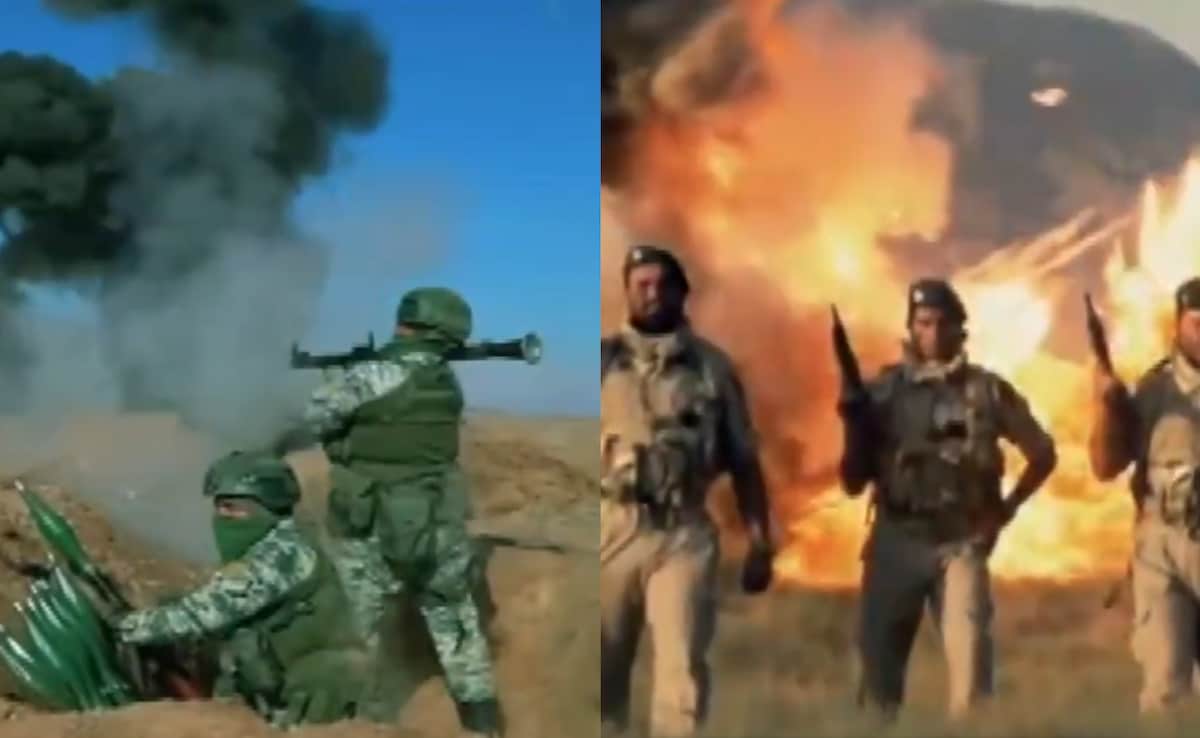
The current expansion of the United States military footprint in the Middle East operates on a fundamental paradox: the deployment of conventional high-end assets to deter unconventional, low-cost provocation. While the arrival of carrier strike groups and advanced fighter squadrons signals a commitment to regional stability, it simultaneously provides Iran with a target-rich environment for its "Gray Zone" doctrine. This doctrine prioritizes the use of proxies, maritime harassment, and kinetic signaling to achieve strategic objectives without crossing the threshold into open warfare. Analyzing this friction requires a breakdown of three specific operational pillars: the cost-imposition ratio of modern munitions, the geography of maritime chokepoints, and the signaling mechanics of distributed lethality.
The Asymmetry of Interdiction
The primary friction point in the Persian Gulf is the radical disparity between the cost of offensive disruption and the cost of defensive protection. Iran’s naval strategy—often referred to as "Mosaic Defense"—relies on high volumes of low-technology assets. This includes fast inshore attack craft (FIAC), midget submarines, and an extensive inventory of anti-ship cruise missiles (ASCMs) and loitering munitions.
The economic reality of this engagement favors the disruptor. A single Iranian-produced loitering munition may cost between $20,000 and $50,000. To intercept such a threat, a US Navy destroyer typically utilizes an SM-2 or Evolved SeaSparrow Missile (ESSM), with unit costs ranging from $1 million to over $2 million. This creates a negative cost-exchange ratio. Over a prolonged engagement, the defender’s magazine depth becomes a strategic vulnerability. Iran does not need to sink a US vessel to achieve a victory; it only needs to exhaust the defender's VLS (Vertical Launch System) cells, forcing a withdrawal for re-arming and leaving the remaining fleet or commercial shipping exposed.
The tactical bottleneck is not technology, but replenishment logistics. If an engagement consumes 40% of a strike group's interceptor inventory in 72 hours, the operational tempo of the entire theater must shift from proactive deterrence to reactive logistics management. This vulnerability is the core of the "Come Close" rhetoric utilized by Iranian officials; they view proximity as an opportunity to maximize the efficiency of their low-cost saturation tactics.
Geopolitical Chokepoints and the Tyranny of Distance
The Strait of Hormuz represents a unique geographical constraint where high-tech maneuverability is neutralized by proximity to land-based batteries. At its narrowest point, the shipping lane is only two miles wide. Within this corridor, the Reaction-Decision Cycle (RDC) for a naval commander is compressed to seconds.
- The Proximity Factor: Land-based ASCMs positioned along the Iranian coastline can strike targets in the center of the Strait within 60 to 90 seconds of launch. This renders traditional early-warning systems less effective than they would be in open-ocean environments like the South China Sea.
- The Swarm Constraint: In confined waters, the ability of a Carrier Strike Group (CSG) to maneuver is restricted. The CSG must maintain a specific orientation to launch and recover aircraft, a predictable pattern that Iranian fast-attack craft can exploit to position themselves for "pop-up" attacks.
- The Intelligence Gap: The transition from routine patrol to hostile intent among small Iranian vessels is nearly impossible to distinguish through satellite or high-altitude surveillance. This ambiguity forces US forces into a permanent state of high-readiness, which induces personnel fatigue and mechanical wear—a form of "attrition by posture."
The US counter-strategy involves "Distributed Maritime Operations" (DMO). By spreading sensors and weapons systems across a wider array of platforms—including unmanned surface vessels (USVs) and dispersed littoral combat ships—the US attempts to complicate Iran’s targeting logic. However, DMO requires a level of network integration and bandwidth that is susceptible to electronic warfare (EW) interference, an area where Iran has invested heavily in Russian and Chinese-origin jamming technology.
Kinetic Signaling and the Threshold of Response
The increase in US military assets serves as a mechanism of "Kinetic Signaling." Every deployment—whether it is a B-52 overflight or the repositioning of an Ohio-class submarine—is a non-verbal communication intended to alter the adversary's risk calculus.
The failure of this signaling often stems from a misalignment in "Risk Appetite." For the United States, the threshold for a major military response is high, governed by domestic political concerns and the desire to avoid a regional conflagration that would spike global oil prices. For Iran, the threshold for low-level provocation is low. They utilize a "Salami Slicing" tactic: conducting small, deniable actions (seizing a tanker, harassing a drone, or funding a proxy strike) that individually do not warrant a full-scale US retaliatory strike, but collectively erode the credibility of US deterrence.
This creates a "Deterrence Gap" where the presence of an aircraft carrier prevents a full-scale invasion of a neighbor but fails to stop the mining of a commercial harbor. The current US footprint expansion is an attempt to close this gap by providing more "flexible deterrent options" (FDOs). These are smaller, more precise tools that can respond to low-level threats without triggering a total war.
The Fragility of the Proxy Network
A critical component of Iran’s response to the US buildup is the activation of the "Axis of Resistance"—a network of proxies in Iraq, Syria, Lebanon, and Yemen. This network functions as a force multiplier that allows Iran to strike at US interests without using Iranian territory as a launch point.
The US strategy for neutralizing this network involves "Integrated Air and Missile Defense" (IAMD) shared with regional partners like Saudi Arabia and the UAE. This system is designed to create a "Transparent Theater" where every launch is tracked and intercepted. The limitation of IAMD is political, not technical. Regional partners are often hesitant to share real-time radar data due to sovereignty concerns and the fear of Iranian retaliation.
Furthermore, the introduction of advanced loitering munitions into proxy hands has changed the threat profile. These systems do not follow a ballistic trajectory; they can maneuver around terrain and stay low to the ground, often flying below the minimum altitude of traditional radar systems.
Strategic Recalibration and the Move Toward Unmanned Systems
To address the cost-imposition and geography challenges, the US military is shifting toward a "High-Low Mix" of assets. The deployment of Task Force 59—a unit dedicated to integrating unmanned systems and artificial intelligence into maritime operations—is the tactical response to Iranian swarm tactics.
- Persistent Surveillance: Low-cost USVs can remain at sea for months, providing a constant "eyes-on" capability that manned ships cannot sustain.
- Automated Detection: AI algorithms can distinguish between fishing vessels and military FIACs faster than human operators, reducing the RDC.
- Dispensable Assets: Losing an unmanned drone to an Iranian missile is a political non-event compared to the loss of a manned destroyer, which allows the US to take higher risks in contested waters.
The long-term success of the US expansion depends on transitioning from a posture of "Massive Retaliation" to one of "Active Denial." This requires the US to prove it can intercept every low-cost threat without depleting its high-value munitions. If the US can demonstrate that Iranian "Gray Zone" tactics are no longer cost-effective, the incentive for Iran to escalate will diminish.
The strategic play is not to match Iran’s volume, but to automate the defense against it. The US must accelerate the deployment of directed-energy weapons (lasers) and high-powered microwave (HPM) systems. These technologies offer a "near-zero" cost per shot, effectively neutralizing the economic advantage of drone swarms. Until these systems are operational at scale, the US presence in the Mideast remains a high-stakes gamble in magazine management and psychological endurance. The move toward a "Silicon Shield" in the Persian Gulf is the only viable path to de-escalating a theater currently defined by the primitive mathematics of the missile exchange.