Conventional military analysis frequently overestimates the efficacy of technological superiority while discounting the structural resilience of decentralized, non-linear defense systems. In the context of a hypothetical ground invasion of Iran, the standard assessment—focusing on comparative sorties, armored divisions, and kinetic output—ignores the fundamental cost-asymmetry of Iranian defensive doctrine. This doctrine is not designed to win a traditional war of maneuver; it is designed to maximize the political and economic cost of occupation until the invader's domestic will collapses.
The Iranian defense architecture rests on three structural pillars: Geographic Friction, Decentralized Command (Mosaic Defense), and The Strategic Depth of Proxy Integration.
The Geographic Friction Coefficient
The Iranian landmass presents a unique topographic barrier that serves as a natural force multiplier for defensive operations. Unlike the flat, open plains of Iraq, Iran’s interior is dominated by the Zagros and Elburz mountain ranges. These formations dictate a limited number of predictable transit corridors, effectively nullifying the advantages of large-scale armored maneuver.
An invading force faces a "Funnel Effect." To reach Tehran or the industrial heartland, mechanized divisions must move through narrow passes where air cover is mitigated by terrain shadowing and where high-altitude positions allow for the deployment of low-cost anti-tank guided missiles (ATGMs). The cost of clearing these passes is not linear; it is exponential. Each kilometer of advance requires a disproportionate increase in logistics security, as the "rear" in Iranian territory is never truly secured due to the porous nature of mountainous terrain.
Mosaic Defense: The Architecture of Distributed Lethality
Since 2005, the Islamic Revolutionary Guard Corps (IRGC) has transitioned from a centralized Soviet-style command structure to a "Mosaic Defense" model. This is a deliberate organizational pivot designed to survive the decapitation of central command and control (C2) by Western air superiority.
The model divides Iran into 31 distinct provinces, each with its own self-sustaining military infrastructure, local intelligence networks, and independent authority to engage.
The Mechanics of Localized Command
- Strategic Autonomy: Provincial commanders are pre-authorized to initiate insurgent-style tactics if communication with Tehran is severed. This removes the "center of gravity" typically targeted in "Shock and Awe" campaigns.
- Resource Pre-positioning: Small-unit caches—containing ATGMs, MANPADS (Man-Portable Air-Defense Systems), and improvised explosive components—are distributed across civilian and rural sectors. This reduces the logistical tail that air power could otherwise sever.
- Information Parity: Local units utilize low-tech communication or hardened fiber-optic networks that are difficult to jam or intercept via signals intelligence (SIGINT).
This structure transforms a ground invasion from a singular campaign into 31 simultaneous, localized wars. The invader cannot achieve a "systemic collapse" because there is no single system to collapse.
The Cost Function of Urban and Subterranean Warfare
A ground invasion eventually terminates in urban centers, where the technological gap between a high-tech military and a defensive force narrows to near-zero. Iran has invested heavily in "Passive Defense"—a doctrine of hardening infrastructure and constructing extensive tunnel networks (the so-called "Missile Cities").
In an urban environment, the "Detection-to-Engagement" cycle favors the defender. Satellite imagery and drone surveillance struggle to penetrate concrete and subterranean layers. Consequently, the invading force must rely on infantry-led clearing operations. The math of urban combat is historically brutal: a defender-to-attacker ratio of 1:10 is often required to secure dense city blocks. Given Iran's population density and the size of the Basij paramilitary force (which claims millions of members, though active combatants are likely in the low hundreds of thousands), the sheer volume of manpower required for an occupation exceeds the historical deployment capacities of the United States and its allies.
Asymmetric Naval and Coastal Interdiction
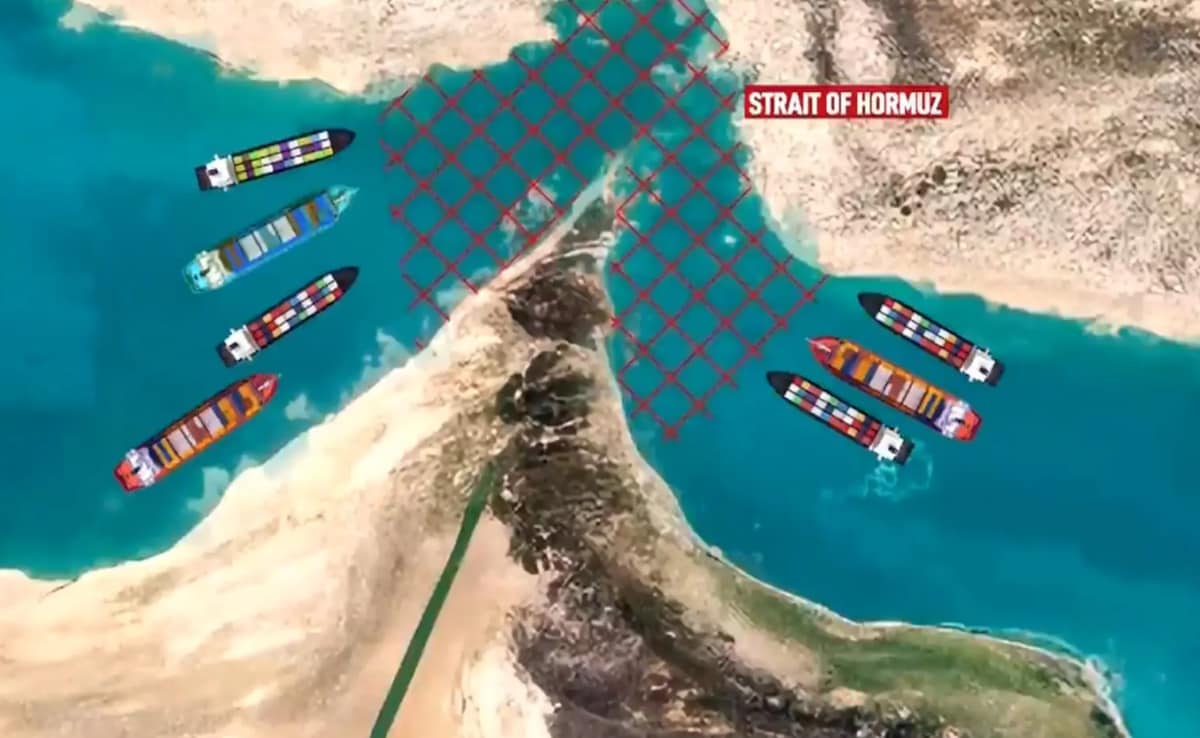
A ground invasion requires a massive sea-based logistics train. The Persian Gulf and the Strait of Hormuz represent a "Kill Zone" governed by the principles of swarm optics. Iran’s naval strategy avoids large frigates—which are easy targets for Harpoon missiles—in favor of hundreds of fast-attack craft equipped with short-range missiles and naval mines.
The risk here is not just the loss of military vessels, but the closure of the Strait. A 10% increase in global oil prices resulting from maritime instability acts as a "Secondary Front" in the war, attacking the invader’s domestic economy. This creates a strategic paradox: to support a ground invasion, the invader must secure the Gulf; but the act of securing the Gulf triggers a global economic shock that undermines the political mandate for the invasion.
The Proxy Feedback Loop
Iran’s strategic depth is not confined to its borders. The "Axis of Resistance"—comprising Hezbollah, various PMFs in Iraq, and the Houthis—functions as a decentralized deterrent. In the event of a ground breach of Iranian territory, these groups are programmed to initiate "Lateral Escalation."
This forces the invader to divert resources from the primary theater (Iran) to secondary theaters (Lebanon, Iraq, Yemen, and the Red Sea) to protect regional bases and allies. The invasion force finds itself fighting a 360-degree war where the front line is everywhere. This is not a "buffer zone" in the traditional sense; it is a networked defense-in-depth that ensures the cost of the war is shared by the invader’s regional partners.
The Threshold of Nuclear Ambiguity
The most significant miscalculation an invader can make is ignoring the "Breakout Response." A ground invasion poses an existential threat to the Iranian state. In such a scenario, any remaining constraints on nuclear development are likely to be discarded. The transition from a "threshold state" to a "nuclear-armed state" would be the ultimate defensive pivot, likely occurring in the chaos of the initial invasion weeks. Even the suspicion of a functional device would freeze conventional movements, as the risk-reward ratio of capturing a specific city or province shifts toward catastrophic loss.
Tactical Reality of Attrition
The success of a ground invasion is measured by the ability to establish a stable, pro-invader governance. In Iran, the combination of nationalist sentiment, topographic difficulty, and the Mosaic Defense structure makes "stability" an impossibility. The invader would likely achieve initial kinetic objectives—taking coastal cities or destroying visible military installations—only to enter a permanent state of high-intensity insurgency.
The logistical requirements to sustain such an operation are calculated in the trillions of dollars and tens of thousands of casualties. Analysts must look past the "inventory" of tanks and planes and instead quantify the "Friction Coefficient" of the Iranian landscape and the "Resilience Quotient" of a decentralized command.
Strategic planners should focus on the following variables to assess the viability of any kinetic intervention:
- The ATGM Saturation Rate: Monitor the density of third-generation anti-tank systems within provincial IRGC units.
- The Urban-to-Rural Insurgency Ratio: Analyze the capacity of the Basij to transition from riot control to decentralized guerrilla warfare.
- The Global Oil Elasticity: Model the exact point at which a Strait of Hormuz closure renders the domestic political cost of war untenable for the invading power.
Would you like me to analyze the specific electronic warfare capabilities Iran uses to protect its Mosaic C2 nodes?