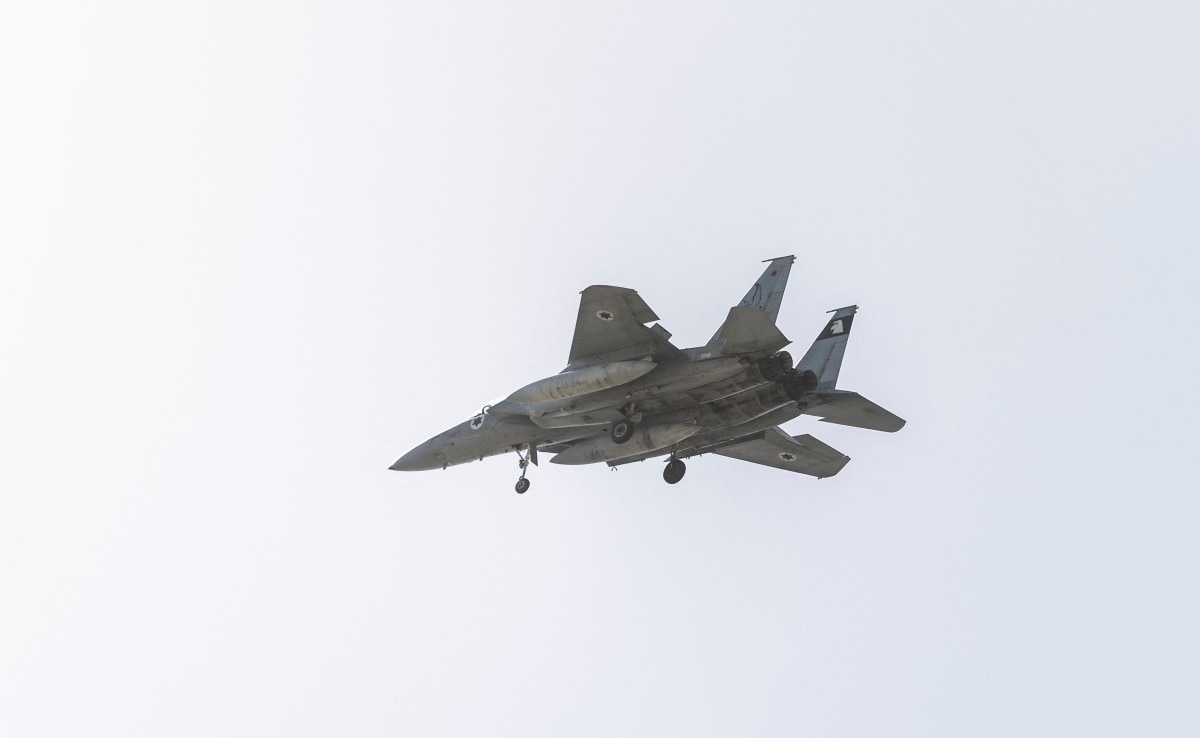
The reported loss of a high-value aerial asset over Iranian territory represents more than a tactical failure; it serves as a stress test for the doctrine of integrated air defense systems (IADS) versus fifth-generation stealth signatures. When an airframe valued at approximately $100 million is neutralized by ground-based interceptors, the economic and psychological return on investment for the defender scales exponentially. This event forces an immediate recalibration of the risk-reward calculus governing regional air superiority. To understand the implications, one must deconstruct the engagement through the lenses of signal processing, kinetic intercept probabilities, and the geopolitical signaling inherent in the capture of high-value personnel.
The Physics of the Intercept
Traditional radar systems operate on the principle of detecting electromagnetic energy reflected off a target’s surface. Stealth technology does not make an aircraft invisible; it reduces the Radar Cross Section (RCS) to a level where the return signal is indistinguishable from background noise at standard engagement ranges. However, several physical bottlenecks can compromise this advantage.
Frequency Agility and Multi-Static Radar
Modern IADS increasingly utilize VHF (Very High Frequency) and UHF (Ultra High Frequency) bands. While these longer wavelengths are less precise for weapons-grade tracking, they are significantly more effective at detecting stealth shapes designed to deflect X-band (fire control) radar. If a defender employs a multi-static radar network—where the transmitter and receiver are in different locations—the "scattered" energy that stealth aircraft deflect away from the source can be picked up by a peripheral receiver.
The Kill Chain Sequence
The destruction of a sophisticated fighter involves a specific sequence of electronic events:
- Early Warning Detection: Identifying a disturbance in the localized electromagnetic field.
- Acquisition: Narrowing the spatial coordinates of the disturbance.
- Targeting Track: Transitioning to a high-frequency lock-on sufficient for missile guidance.
- End-game Intercept: The terminal phase where the interceptor's onboard seeker takes over.
Any failure in the stealth coating, such as a gap in a bay door or the heat signature from the engine nozzles, provides the "thermal or radar spike" necessary for an interceptor like the Iranian Khordad-15 or the Russian-made S-300/S-400 systems to close the distance.
The Economic Asymmetry of Aerial Warfare
The loss of a single $100 million platform to a missile battery costing a fraction of that amount illustrates the concept of "cost-imposition." In a sustained conflict, the aggressor cannot maintain a 1:1 attrition rate when their assets are finite and prohibitively expensive to replace.
- Manufacturing Lead Times: Replacing a fifth-generation fighter takes years, not weeks. The industrial base for high-precision components—semiconductors, specialized composites, and advanced turbines—is sensitive to supply chain shocks.
- Pilot Capital: The pilot is often the most expensive component of the system. Training a combat-ready aviator represents a multi-million dollar investment and a decade of institutional knowledge. The capture of a pilot shifts the conflict from a hardware loss to a political crisis.
Geopolitical Signaling and Information Operations
The immediate announcement of a "shoot down" and "capture" functions as a strategic deterrent. By publicizing the event before the adversary can frame the narrative, the defender achieves several objectives:
Verification of Capability
It validates the domestic defense industry. For a nation under sanctions, demonstrating the ability to down a premier Western fighter serves as a proof of concept for their indigenous radar and missile programs. This increases the "perceived cost" for any future incursions.
Leverage and De-escalation through Escalation
The possession of a captured pilot creates a biological bargaining chip. This introduces a "human cost" that complicates further kinetic responses. Historically, the capture of high-value personnel forces the opposing power into a diplomatic defensive, as public pressure for the safe return of the individual often outweighs the strategic impulse for retaliatory strikes.
Operational Vulnerabilities in Contested Airspace
Even the most advanced aircraft are susceptible to "mission-specific" vulnerabilities. If the aircraft was operating in a predictable pattern or at a specific altitude to facilitate surveillance, it may have been lured into a "SAM trap" (Surface-to-Air Missile trap).
- Electronic Warfare (EW) Saturation: If the defender can jam the aircraft’s GPS or communications link, the pilot may be forced to descend or change course, moving into the lethal envelope of lower-tier defense systems.
- Visual Identification (VID): In some cases, if stealth prevents a radar lock, defenders may use electro-optical tracking systems (infrared) that do not emit signals, making them invisible to the aircraft’s warning receivers until the missile is launched.
The Strategic Shift in Regional Power Dynamics
This event marks a pivot point in how regional conflicts are managed. The myth of total air invincibility is a primary deterrent; when that myth is punctured, the "freedom of maneuver" for high-tech militaries is constrained.
Future operations in the Persian Gulf will likely shift toward unmanned systems. The loss of a $20 million "loyal wingman" drone is a financial setback; the loss of a manned fighter is a national catastrophe. Command structures must now decide if the intelligence gathered by manned overflights is worth the risk of a "hostage-for-policy" trade.
The immediate requirement for naval and air assets in the region is a total audit of Electronic Countermeasure (ECM) protocols. If the shoot-down was achieved through a previously unknown vulnerability in the stealth profile, the entire fleet remains at risk. The tactical priority shifts from "mission execution" to "systemic survival" until the exact mechanism of the intercept is identified through wreckage analysis or signals intelligence.
Military planners must now operate under the assumption that the "denial of access" capabilities of regional actors have matured faster than predicted. The reliance on stealth as a primary shield is no longer a guaranteed strategy. The focus must pivot toward "distributed lethality," where the mission's success does not hinge on a single, expensive, manned platform, but on a swarm of lower-cost, expendable assets that can saturate and overwhelm a defender’s kill chain without risking the political and financial fallout of a captured pilot.