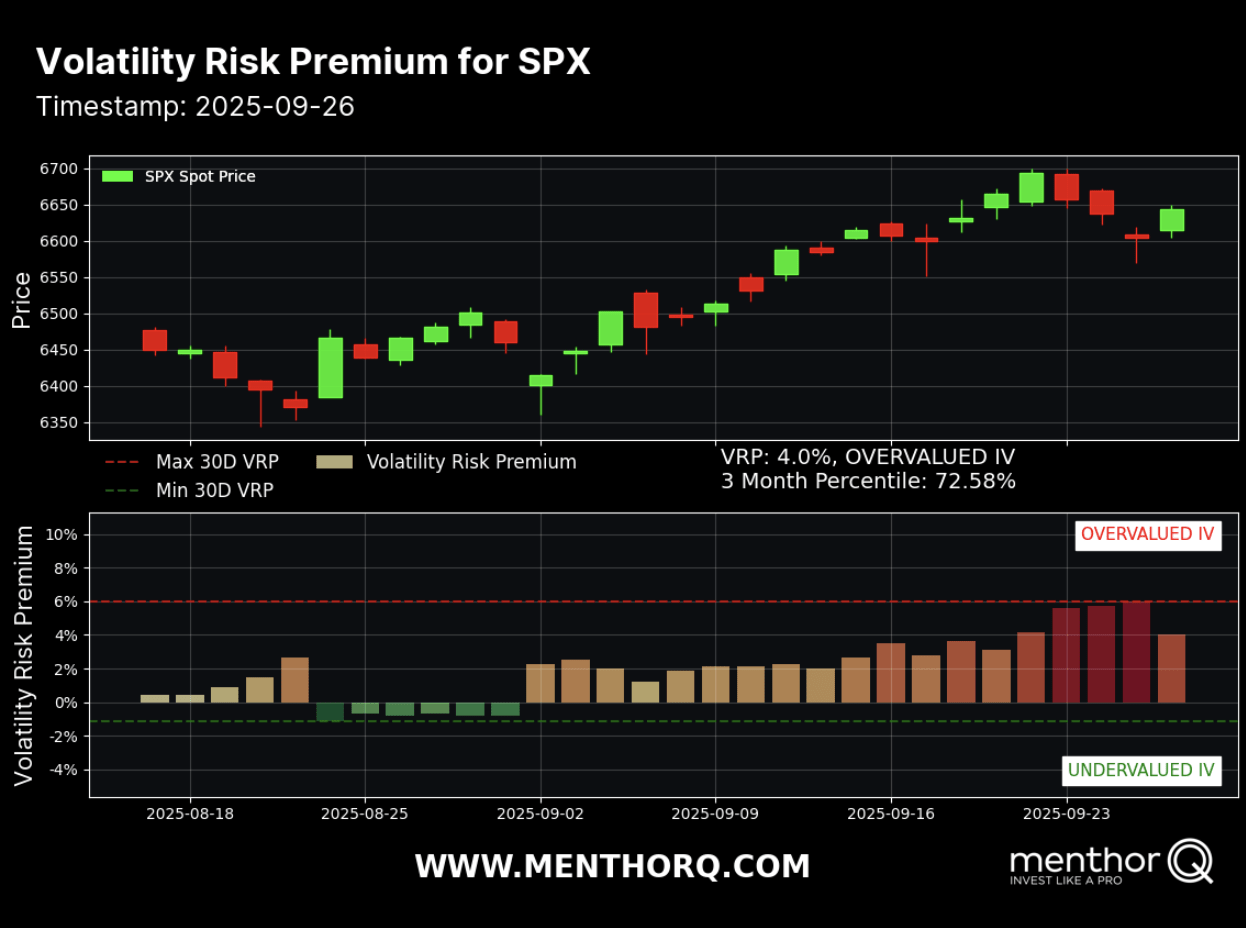
The primary determinant of Asia-Pacific equity performance in the current window is the interplay between imported inflationary pressure and the stabilization of US Treasury yields. When Wall Street closes with gains, it functions as a risk-on signal that lowers the equity risk premium (ERP) globally, but the transmission mechanism into Asian markets is specifically modulated by energy costs. For net-import economies—specifically Japan, South Korea, and India—a decline in crude oil prices acts as an immediate subsidy to industrial margins and a structural relief valve for current account balances. This creates a dual-momentum effect: the technical tailwinds from New York provide the sentiment floor, while falling energy inputs provide the fundamental ceiling lift.
The Mechanics of Market Transmission
The relationship between Wall Street performance and Asia-Pacific opening prices is rarely a simple one-to-one correlation. It is governed by the Global Sentiment Conduit, where institutional capital flows respond to the closing volatility of the S&P 500 and the Nasdaq 100. If US markets rally on the back of cooling inflation data, the primary beneficiary in Asia is the technology sector, particularly semiconductor fabrication and electronics manufacturing. In other developments, we also covered: The Volatility of Viral Food Commodities South Korea’s Pistachio Kataifi Cookie Cycle.
The logic follows a specific sequence:
- The Overnight Beta Shift: US gains reduce the perceived risk of holding emerging and developed Asian equities.
- Currency Valuation Adjustment: A rally in US stocks often coincides with a stabilizing or weakening US Dollar if the rally is driven by expectations of lower interest rates. This eases the pressure on the Japanese Yen and the Korean Won, reducing the cost of dollar-denominated debt for Asian conglomerates.
- Sector-Specific Synchronization: High-growth sectors in Asia track their US counterparts due to shared supply chains and global demand forecasts.
The Energy Input Cost Function
The decline in oil prices is the most significant tactical variable for the region’s heavy industry. Most Asian economies are structurally "short" energy. Therefore, the cost function of their GDP is highly sensitive to fluctuations in Brent and WTI benchmarks. Investopedia has provided coverage on this critical subject in extensive detail.
The Industrial Margin Expansion Model
When oil prices retreat, the benefit flows through three distinct channels:
- Direct Input Costs: Logistics, chemical production, and manufacturing see an immediate reduction in operational expenditure (OPEX).
- Inflationary Dampening: Lower energy prices reduce the Producer Price Index (PPI), which eventually cools the Consumer Price Index (CPI). This gives regional central banks, such as the Bank of Korea or the Reserve Bank of India, more room to pause or reverse hawkish monetary policies.
- Consumer Discretionary Surplus: In markets like China and Southeast Asia, lower fuel costs act as a de facto tax cut for the middle class, shifting capital toward discretionary spending and supporting retail and e-commerce stocks.
Regional Divergence and Structural Constraints
While the "rising tide" of Wall Street gains lifts many boats, structural idiosyncrasies in specific Asian markets create variance in performance.
The Japanese Carry Trade Dynamics
In Japan, the Nikkei 225 reacts not just to Wall Street's direction, but to the reason behind it. If US gains are driven by a strong economy, the Yen typically weakens, benefiting Japanese exporters like Toyota and Sony. However, if the gains are driven by falling yields, the Yen may strengthen, which can actually mute the gains for the Nikkei despite the positive global sentiment.
China’s Decoupling Risks
The correlation between US markets and the Hang Seng or Shanghai Composite has weakened due to domestic regulatory cycles and property sector deleveraging. For Chinese markets to track Wall Street gains, the internal liquidity environment must be favorable. Positive global cues act as a secondary factor to the People's Bank of China (PBOC) policy stance.
Australia’s Counter-Cyclical Position
Unlike its neighbors, Australia is a net energy exporter. A decline in oil prices is a net negative for the ASX 200’s energy heavyweights like Woodside Energy. In this specific sub-market, the gains from Wall Street must be strong enough to offset the drag from the commodities sector.
The Interest Rate Parity Bottleneck
A critical oversight in standard market commentary is the role of the Yield Spread. Asia-Pacific markets are currently hypersensitive to the 10-year US Treasury yield.
$Spread = Y_{US10} - Y_{Local10}$
When Wall Street rallies because yields are falling, the spread narrows. This reduces capital flight from Asian markets back to the US. It stabilizes the local currency, allowing local equity markets to trade on domestic earnings fundamentals rather than currency defense strategies. The current environment suggests that as long as the 10-year US yield stays within a predictable range, Asian equities can maintain their upward trajectory.
Quantifying the Risk Vectors
Despite the optimistic tracking of US gains, three specific risks can break the correlation:
- The Earnings Mismatch: If Wall Street rallies on AI speculation but Asian firms report weak traditional manufacturing data, the correlation will fail at the sector level.
- Geopolitical Friction: Sudden escalations in trade restrictions can override the benefits of lower oil prices, particularly for the semiconductor hubs in Taiwan and South Korea.
- Oil Price Floor: If oil falls because of a global recession forecast rather than supply-side ease, the "relief" of lower prices is replaced by the "fear" of collapsing demand.
The strategic play for the current cycle is to overweight net-energy importers with high-beta exposure to US technology. Specifically, investors should look for firms where the Energy Sensitivity Ratio—the percentage of OPEX tied to fuel and derivatives—is highest, as these entities will capture the most significant margin expansion during this period of declining crude prices. The focus should remain on the 48-hour window following US volatility compression, as this is where the maximum arbitrage between global sentiment and local fundamental adjustment occurs.
As the US market matures in its current valuation cycle, the Asia-Pacific region represents a secondary wave of growth, provided the energy cost ceiling remains low. The immediate priority is monitoring the USD/JPY and USD/KRW pairs; any sudden appreciation in the Dollar will neutralize the gains from Wall Street regardless of how low oil prices fall. Monitor the spread between the S&P 500's earnings yield and the local market's equivalent to identify where the ERP is most compressed.