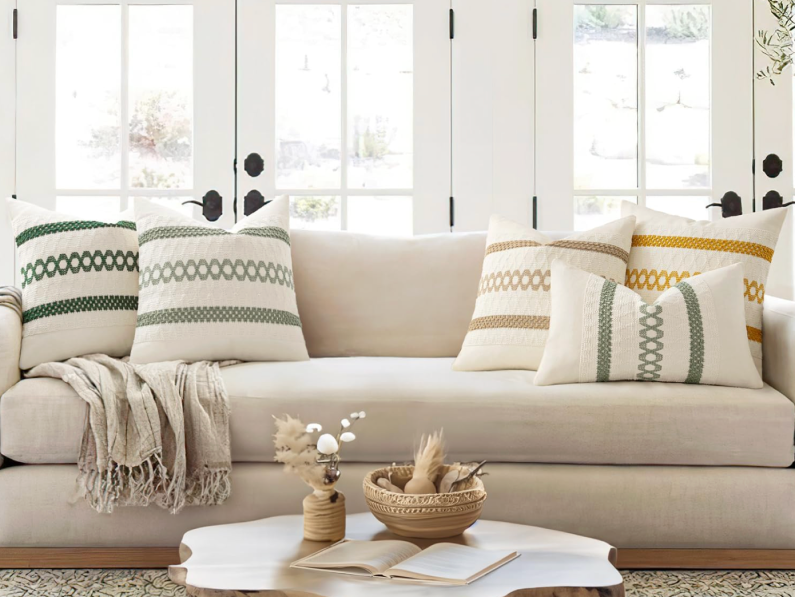
The screen died. It didn't just turn off; it felt like a collapse. Marcus sat in the sudden, aggressive silence of his living room at 11:14 PM, the blue light still burned into his retinas like a ghost. For six hours, he had been everywhere but in his own chair. He had been in a stranger’s kitchen in Copenhagen, a heated political argument in a comment section, and three different eras of a celebrity’s dating history. Now, he was just back. Alone.
The silence began to itch. It felt heavy, a physical weight pressing against his chest. He reached for the phone again, a reflex as natural as breathing, before freezing. The realization hit him with a cold, medicinal clarity: he was terrified of his own company. Building on this idea, you can find more in: How the Pickle Rental App is Finally Fixing the Disaster in Your Closet.
We are the most connected generation in human history, yet we have lost the ability to be solitary. We mistake being alone for being lonely, treating the absence of others like a void that must be filled with the digital equivalent of packing peanuts. But there is a massive, structural difference between the two. Loneliness is a hunger. Solitude is a feast.
The Ghost in the Machine
Blaise Pascal, the 17th-century mathematician, once remarked that all of humanity’s problems stem from man’s inability to sit quietly in a room alone. He wasn’t being hyperbolic. When we are alone without a distraction, we are forced to confront the "unfinished business" of our souls. The anxieties we’ve pushed down, the creative impulses we’ve ignored, and the subtle regrets that wait for a moment of quiet to speak up. Analysts at Vogue have shared their thoughts on this trend.
Think of your mind like a lake. During the day, the wind of social interaction, work, and notifications keeps the surface choppy. You can’t see the bottom. When you finally sit in stillness, the water begins to settle. At first, the sediment rises. The water looks murkier than ever. This is the stage where most people panic and reach for their phones. They see the mud and assume the lake is dirty.
But if you wait—if you actually stay in the room—the sediment eventually sinks. The water becomes glass. For the first time, you can see the terrain of your own life.
The Myth of Productivity
Modern "self-help" culture has hijacked the concept of alone time. It tells you to use your solitude to "grind," to meditate so you can be more efficient at work, or to read books so you can "optimize" your social capital. This is just another form of noise. It’s a way of being busy while being alone, which defeats the entire purpose.
True solitude is non-utilitarian. It has no goal other than presence.
Consider a hypothetical woman named Sarah. Sarah decides to take a Saturday for herself. In the "optimized" version of this story, she wakes up at 5:00 AM, drinks green juice, hits the gym, and listens to three podcasts on market trends. By noon, she is exhausted and feels "productive," but she hasn't spent a single second with Sarah. She’s just been a manager of her own time.
In the narrative version—the one that actually heals—Sarah wakes up and does... nothing. She watches the light move across the wall. she walks through the park without headphones, hearing the actual crunch of gravel instead of a synthesized voice. She eats a meal and focuses entirely on the taste of the salt and the texture of the bread. She allows herself to be bored.
Boredom is the threshold of creativity. It is the waiting room where the best ideas sit, tapping their feet, waiting for you to stop talking so they can finally get a word in edgewise.
The Neurology of the Quiet Room
Science backs up this poetic necessity. Our brains have a "Default Mode Network" (DMN). This system kicks in when we aren't focused on a specific task. It’s the part of the brain responsible for self-reflection, moral reasoning, and imagining the future. When we spend every waking second processing external input—scrolling, talking, working—we effectively starve the DMN.
We lose our sense of self because we never give the brain the "off-clock" time it needs to integrate our experiences. Without solitude, you aren't living your life; you are just reacting to a series of events. You become a leaf in a storm, convinced you are flying when you are actually just being blown around.
The Ritual of Reentry
How do you actually do it? How do you sit in the room without losing your mind?
It starts with an audit of the senses. Most of us live in a state of sensory overcrowding. We have "smart" homes that talk to us, clothes that itch, and a constant hum of electricity. Solitude requires a stripping away.
Start small. Ten minutes. No phone. No book. No music. Sit in a chair.
The first three minutes will be fine. The next four will be agonizing. You will feel a phantom vibration in your pocket. You will remember an email you forgot to send. You will suddenly become intensely aware of a hangnail or a slight ache in your lower back. This is the "sediment" rising to the surface.
Then, around minute eight, something shifts. The urgency begins to drain. You realize that the world hasn't ended because you weren't watching it. You start to notice things. The way the air feels on your skin. The specific rhythm of your own breathing. The strange, miraculous fact that you exist at all.
The Social Paradox
The great irony of mastering solitude is that it makes you a better friend, partner, and citizen. When you are comfortable being alone, your relationships stop being about "need" and start being about "want."
If you can't stand being alone, you use people. You use them as a shield against your own thoughts. You cling to them because the alternative is a silence you can't handle. This creates a desperate, fragile kind of intimacy. But when you are "self-contained"—when you have explored the rooms of your own house and found them habitable—you come to others from a place of wholeness. You don't need them to distract you; you want them to witness you, and you want to witness them in return.
The Invisible Stakes
We are currently in a crisis of the interior life. As the physical world becomes more crowded and the digital world more intrusive, the "private room" of the mind is being auctioned off to the highest bidder. If you don't claim your solitude, someone else will claim your attention.
Marcus eventually put the phone in a drawer. He sat on his balcony and watched the city lights. He didn't try to think deep thoughts. He didn't try to "manifest" a better career. He just sat there until he felt the edges of his own soul again. He realized that for years, he had been a stranger to himself, a ghost haunting his own life.
The silence wasn't a void. It was a mirror. And for the first time in a long time, he didn't look away.
Solitude is the practice of becoming your own best friend. It is the recognition that even if everyone else leaves the room, someone important remains. You are not a problem to be solved or a machine to be optimized. You are a vast, unfolding story, and you deserve a little peace and quiet to hear how it ends.
The world will be there when you get back. It can wait ten minutes. It can wait an hour. But you? You’ve been waiting for yourself for years.
Don't keep yourself waiting any longer.