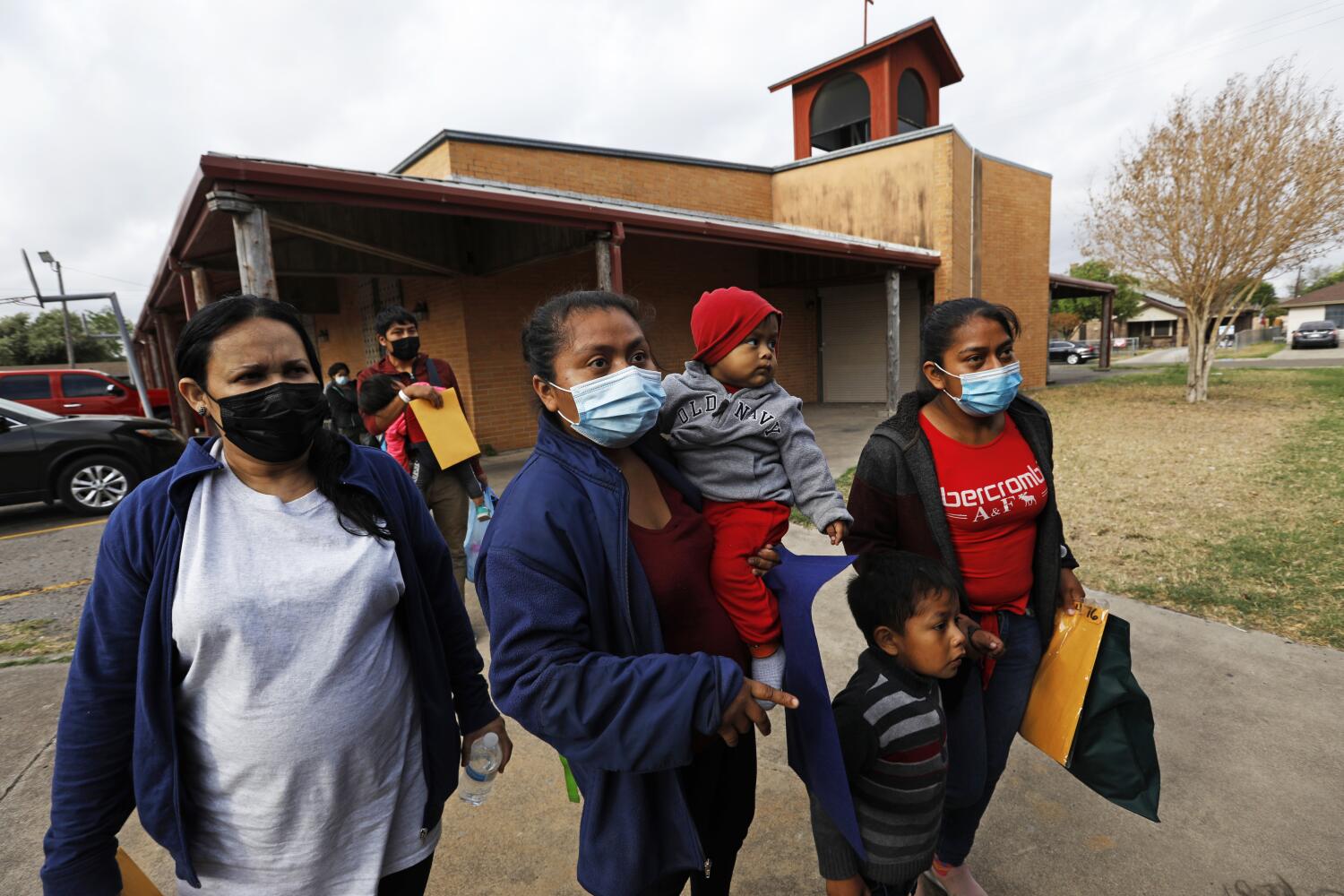
The siren in Haifa doesn't sound like a warning. It sounds like a physical weight, a low-frequency vibration that settles in the marrow of your bones before you even realize you’re running. For a family huddled in a reinforced stairwell, the geopolitics of the Middle East aren't found in white papers or televised briefings. They are found in the dust shaken loose from the ceiling and the frantic grip of a child’s hand. This is the reality of the "strike"—a word used by analysts to describe a million-dollar missile, but experienced by humans as the terrifying possibility of everything ending in a flash of heat.
While the sky over the Galilee regularly lights up with the kinetic choreography of interceptors and drones, a different kind of theater is playing out in the air-conditioned corridors of Mar-a-Lago and the sterile briefing rooms of Tehran. Donald Trump has signaled that despite the smoke, despite the persistent rain of fire directed at Israel and the nervous energy pulsing through the Gulf nations, Iran is ready to "make a deal." It is a claim that feels jarringly at odds with the shrapnel on the ground.
How do we reconcile a nation that is actively pulling the trigger with a nation that is supposedly reaching for the pen?
The answer isn't found in logic. It’s found in the brutal, high-stakes psychology of the bazaar.
The Shadow of the 2015 Ghost
To understand why a deal is being discussed while drones are being launched, we have to look at the scars left by the Joint Comprehensive Plan of Action (JCPOA). For some, that 2015 agreement was a bridge to a safer world. For others, it was a stay of execution that allowed a regional power to fill its coffers while biding its time. When the Trump administration walked away from that table in 2018, the bridge didn't just collapse. It burned.
Since then, the relationship has been defined by "maximum pressure" meeting "maximum resistance." Imagine two heavyweights in a clinch, ribs cracking, both refusing to back down because the first one to breathe deeply loses the position. Iran’s economy has been strangled by sanctions, their currency fluctuating like a dying pulse, yet their regional influence has only metastasized. They have learned to turn their pain into a weapon.
The strikes we see today—the precision hits on shipping lanes in the Gulf, the proxy launches from Lebanon and Yemen—are not necessarily preludes to a total war. Often, they are messages. In the grim language of international brinkmanship, a missile can be a comma in a sentence that ends with a demand.
The Paradox of the Strongman and the Supreme Leader
Donald Trump’s assertion that Iran wants a deal relies on a specific view of human nature: everyone has a price, and everyone eventually gets tired of losing money. From his perspective, the "maximum pressure" campaign didn't fail; it simply hasn't reached its inevitable conclusion. He views the current aggression not as a sign of strength, but as a desperate thrashing before the surrender.
But look at it through the eyes of a merchant in Isfahan or a hardline commander in the Islamic Revolutionary Guard Corps. For them, a "deal" offered under the shadow of a threat is not an opportunity—it is a humiliation. History in this part of the world isn't measured in election cycles. It is measured in centuries. The Iranian leadership operates on a timeline that makes Western diplomacy look like a game of speed chess played by people who haven't read the rules.
There is a profound disconnect in how the two sides define "winning." For Washington, winning is a signed document that limits centrifuges and halts missile programs. For Tehran, winning is survival, the preservation of the revolution, and the slow, steady erosion of American influence in their backyard.
The Invisible Stakes in the Gulf
Move the map slightly to the south. In Riyadh and Abu Dhabi, the conversation about a "deal" isn't academic. It’s existential. These nations sit on the world’s energy jugular. A single well-placed strike on a desalination plant or an oil refinery doesn't just move the markets; it threatens the very viability of life in the desert.
The Gulf nations have spent decades under the American security umbrella, but that umbrella has started to leak. They have watched the U.S. pivot toward Asia, then pivot back, then hesitate. This inconsistency has forced a quiet, desperate pragmatism. They are hedging their bets. While Trump speaks of a grand bargain, Saudi Arabia and Iran have been engaged in their own quiet diplomacy, brokered by China.
It is a strange, flickering reality. On Monday, they might trade accusations of terrorism. By Wednesday, their diplomats are sharing tea in Beijing. This isn't because they have found common ground. It's because they have realized that the cost of the status quo is becoming higher than the cost of a cold, uncomfortable peace.
The Human Cost of the Waiting Game
We often talk about "Iran" as a monolith, a singular entity with one mind. It isn't. Behind the rhetoric are eighty million people who are caught in the gears of this grand strategy.
Consider a hypothetical student in Tehran, let's call her Maryam. She is brilliant, speaks three languages, and wants to work in biotech. But because of the sanctions, she can't buy the reagents she needs for her research. Her father’s pension has been devoured by inflation. When she hears about "strikes" and "deals," she doesn't think about regional hegemony. She thinks about whether she will ever be able to afford a home or if her life will be spent in a perpetual waiting room, held hostage by men in suits and robes who will never meet her.
On the other side of the border, in a kibbutz near the Lebanese frontier, a farmer looks at his scorched fields. He isn't a politician. He just wants to know if the next "message" sent by a proxy group will land in his barn or his bedroom.
These are the people who pay the "maximum pressure" tax. They are the collateral of the brink.
Why the Deal is a Ghost
If Iran truly wants a deal, as Trump claims, it is because the internal pressure has become unbearable. The protests that have flared up across Iranian cities over the last few years weren't just about headscarves; they were about a fundamental breakdown of the social contract. The government is failing to provide a future. A deal—any deal—that lifts the foot of sanctions from the neck of the economy would be a massive win for the pragmatic wing of the Iranian government.
But the hardliners have a counter-argument that is difficult to beat: Why trust a nation that can change its entire foreign policy every four years?
If a deal is signed in 2025, what happens in 2029? This is the fundamental flaw in the American approach to the Middle East. Our democracy, our greatest strength, is our greatest weakness in long-term diplomacy. We offer "forever deals" that have the shelf life of a carton of milk.
The Mechanics of the Possible
What would this "deal" actually look like? It wouldn't be the grand embrace that optimists dream of. It would be a transactional, ugly, and deeply cynical arrangement.
- The Nuclear Freeze: Iran stops enriching uranium beyond a certain point in exchange for specific, targeted sanctions relief. Not a total lifting, but a "breather."
- The Proxy Ceiling: A quiet agreement to keep the "strikes" below a certain threshold of lethality. It’s the gruesome math of modern war: five rockets are a message; fifty are a provocation; five hundred are a war.
- The Economic Pressure Valve: Allowing Iranian oil to flow more freely to specific markets, providing the regime with the hard currency it needs to prevent a total domestic collapse.
It is a deal of small steps, conducted in the dark. But even this modest goal is haunted by the reality of the strikes. Every time a drone hits a target, the political cost of sitting down at the table goes up. For an American president, "rewarding" aggression is a domestic nightmare. For an Iranian leader, "bowing" to pressure is a death sentence.
The Sound of the Next Siren
The tragedy of the current moment is that both sides believe they are winning by not losing. Trump believes his rhetoric and the looming threat of his return to power are forcing Iran's hand. Iran believes that by continuing to strike, they are proving that they cannot be ignored or bullied into total submission.
It is a game of chicken played with hypersonic missiles and the lives of millions.
In the end, a "deal" isn't a piece of paper. It’s a change in the atmosphere. It’s the moment when the people in Haifa and the people in Tehran stop looking at the sky with fear and start looking at the ground with hope. Trump’s claim that a deal is coming might be a genuine insight into a back-channel negotiation, or it might be the practiced confidence of a salesman who knows that the best way to close a sale is to act like it's already done.
But as the sun sets over the Mediterranean, the reality remains unchanged. The drones are still fueled. The interceptors are still warm. The deal is a ghost, hovering just out of reach, while the people below wait for the sound of the next siren, praying it’s just another message and not the final word.
The air remains thick with the smell of ozone and burnt metal, a reminder that in the Middle East, the distance between a handshake and a heartbeat is often measured in seconds. If a deal is truly on the horizon, it will have to be written in something more permanent than the shifting sands of political convenience. It will have to account for the dust on the ceiling of that stairwell in Haifa and the empty cupboards in Tehran. Until then, we are all just spectators in a theater of fire, waiting to see if the actors decide to change the script before the theater burns down.
The silence between the sirens is the loudest sound of all.
Would you like me to research the specific economic indicators within Iran that might be driving this shift toward a potential negotiation?