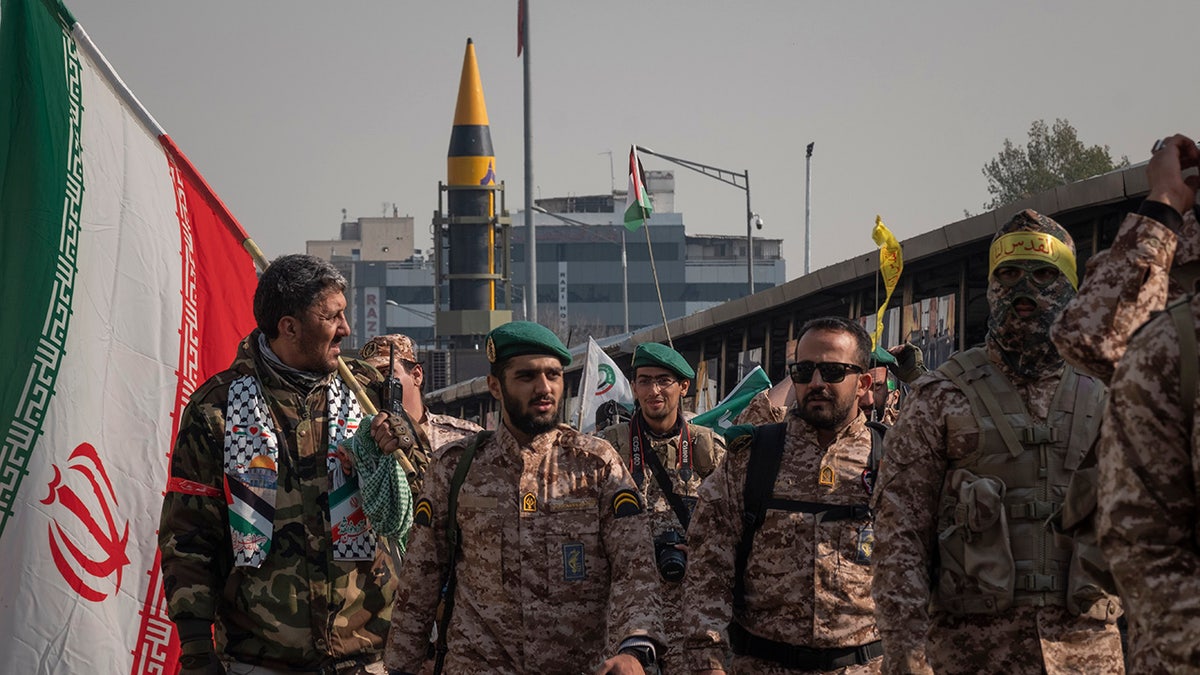
Argentina just designated Iran’s Islamic Revolutionary Guard Corps (IRGC) as a terrorist organization. The mainstream press is busy clapping. They see a nation finally "aligning with the West" and "standing up to state-sponsored terror."
They are wrong.
This move isn't about security. It isn't about the 1994 AMIA bombing. It isn't even about Iran. This is a desperate, calculated branding exercise by a debt-ridden administration trying to trade foreign policy concessions for economic lifelines. If you think labeling a branch of a sovereign military as "terrorists" changes the tactical reality on the ground in Buenos Aires or the Tri-Border Area, you’ve been sold a cheap bill of goods.
The Myth of Symbolic Deterrence
The "lazy consensus" suggests that blacklisting the IRGC cripples their ability to operate. In reality, the IRGC has been under a microscopic lens of US and EU sanctions for decades. Argentina adding its name to the list is like a small-town sheriff issuing an arrest warrant for a cartel boss who is already on the FBI’s Ten Most Wanted list. It feels good at the press conference, but it changes nothing for the guy holding the gun.
The IRGC isn't a shadowy cell of insurgents hiding in caves. It is a massive institutional beast with its own army, navy, and air force, controlling roughly one-third of the Iranian economy. They operate through front companies, sovereign wealth maneuvers, and complex maritime shell games.
When Argentina "designates" them, they aren't freezing hidden Swiss bank accounts that the Americans somehow missed. They are making a noise. In the world of high-stakes intelligence, noise is usually a distraction from a lack of signal. I have watched governments burn through diplomatic capital on these designations for years, only to realize that the "terrorists" they just banned don't actually have any assets in their jurisdiction to seize.
Javier Milei’s Real Motivation: The IMF Handshake
Let’s look at the timing. Argentina is suffocating under triple-digit inflation and a mountain of debt to the International Monetary Fund (IMF). President Javier Milei isn't making this move because he suddenly found new evidence in a thirty-year-old cold case. He’s doing it because he needs to be the "best student" in the American classroom.
By designating the IRGC, Argentina is signaling a total pivot toward the Washington-Tel Aviv axis. This is a commodity trade. Milei is trading Argentina’s traditional "Third Way" neutrality for the hope of favorable debt restructuring and perhaps a seat at the table for US-led tech investments.
- The Reality Check: You don't fight terror with a pen. You fight it with signals intelligence, border enforcement, and financial transparency.
- The Illusion: Argentina’s financial intelligence units are notoriously underfunded. They can barely track domestic tax evasion, let alone the sophisticated "Hawala" money transfer systems used by IRGC proxies like Hezbollah.
Why This Actually Increases Risk
The amateur view is that being "tough" makes you safer. The pro view is that being "loud" makes you a target without providing a shield.
Historically, the IRGC and its proxies operate on a doctrine of "asymmetric reciprocity." When a country moves from passive disagreement to active designation, it moves up the target list. Argentina has already suffered two massive attacks—the 1992 embassy bombing and the 1994 AMIA massacre.
By declaring the IRGC a terrorist group, Milei is removing the diplomatic "gray zone" that allowed for backchannel communication. He is betting that US protection will outweigh the increased risk of Iranian retaliation. Given the porous nature of the Tri-Border Area (TBA) where Argentina, Brazil, and Paraguay meet, this is a massive gamble with civilian lives.
The TBA is a bazaar of illicit finance. You can move millions of dollars in knock-off electronics, drugs, and weapons through Ciudad del Este faster than you can clear a check in Buenos Aires. If Argentina wanted to hurt the IRGC, they wouldn't issue a decree; they would deploy a division of elite financial auditors to the border and shut down the money exchange houses. They won't do that, because those same houses are often tied to local political interests.
The Definition Trap
We need to talk about the term "Terrorist Organization."
In international law, this is usually reserved for non-state actors—Al-Qaeda, ISIS, etc. The IRGC is a branch of a recognized government. By blurring the line between "state military" and "terrorist group," Argentina (following the US lead) is dismantling the last vestiges of the Westphalian system.
If a state military can be a terrorist group, then every action they take—even conventional ones—is "terrorism." This makes off-ramps impossible. You don't negotiate with terrorists. Therefore, you can never negotiate with Iran as long as the IRGC exists. This isn't a strategy; it’s a hostage situation where the hostage is global stability.
Follow the Money: The Ghost Fleet
If you want to understand the IRGC's power, stop reading headlines about "terror" and start looking at oil tankers. The IRGC manages the "Ghost Fleet"—hundreds of aging vessels that move sanctioned Iranian crude under false flags.
Argentina’s move does zero to stop this. Why? Because the global commodities market is addicted to the "discounted" oil that these sanctions create. China, India, and even some European intermediaries benefit from the price delta created by the very sanctions Argentina is now endorsing.
Argentina is essentially joining a boycott of a store they never shopped at, while the big players are still buying out the back door. It is a performance for an audience of one: the US State Department.
The Actionable Truth for Investors and Analysts
If you are watching Argentina, stop looking at the security briefings. Look at the balance sheet.
- Sovereign Risk: This move increases the geopolitical risk profile of Argentine bonds. It signals a departure from the "non-aligned" status that usually protects emerging markets from being dragged into Middle Eastern proxy wars.
- Trade Divergence: Watch for a cooling of relations with BRICS nations. While Argentina declined the invitation to join, this IRGC move cements their status as an outlier in the Global South.
- The "Alignment" Tax: Expect Milei to demand specific concessions in exchange for this. If the IMF doesn't blink, or if the US doesn't provide a significant security or investment package, Milei will have painted a target on his country's back for nothing.
Stop Asking "Is This Good?"
The question isn't whether the IRGC is a "bad actor." Of course they are. They have been destabilizing the Middle East for forty years. The question is whether Argentina’s designation is a functional tool or a political costume.
It’s a costume.
It provides the illusion of action while avoiding the hard work of domestic reform. It’s easier to sign a decree against a foreign general than it is to fix a corrupt customs office in Iguazú.
Argentina is playing a high-stakes game of "Follow the Leader" with a superpower that is currently distracted by three other major conflicts. They are buying a ticket to a fight they can't afford to win, using currency they don't actually have.
This isn't leadership. It's a PR stunt masquerading as a security policy.
Stop treating foreign policy like a moral crusade and start treating it like a ledger. On the ledger of Argentine national interest, this move is a high-interest loan with no clear way to pay it back.
Get ready for the fallout.