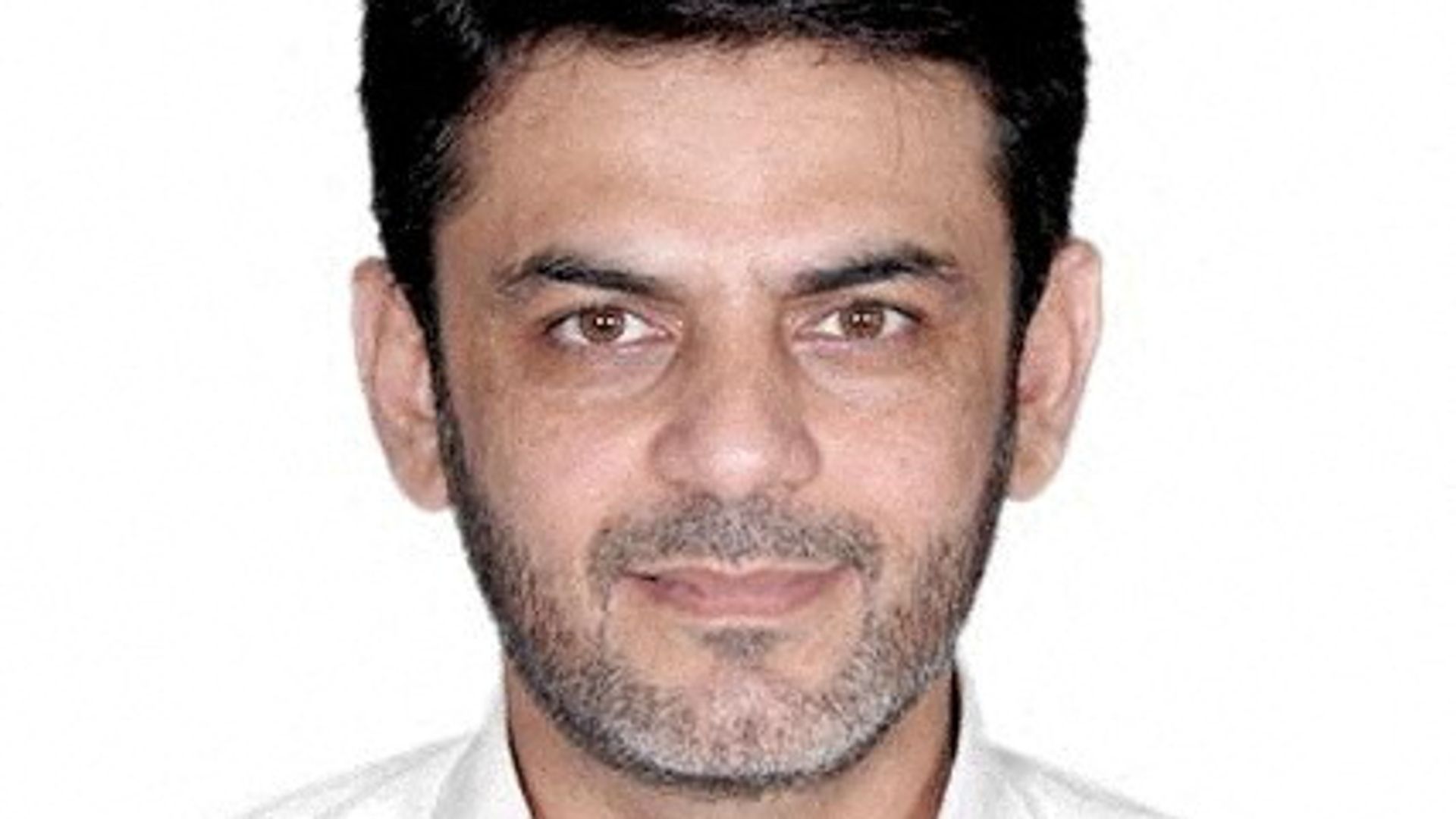
The conviction of Farhad Shakeri and his co-conspirators regarding a plot to assassinate Donald Trump represents more than a criminal milestone; it serves as a structural blueprint for how state-sponsored actors now utilize decentralized, "gig-economy" criminal networks to execute high-value kinetic operations on foreign soil. To understand the gravity of this case, one must look past the headlines and examine the operational mechanics of the IRGC (Islamic Revolutionary Guard Corps) strategy, which prioritizes deniability and cost-efficiency over traditional professional tradecraft.
The Tripartite Model of Surrogate Operations
The Shakeri plot succeeded in the planning phase because it adhered to a specific organizational framework designed to bypass domestic counter-intelligence. This framework consists of three distinct layers:
- The Strategic Architect (The IRGC): This layer provides the objective, the funding, and the ideological motivation. In this instance, the motive was explicitly retaliatory, linked to the 2020 killing of Qasem Soleimani. The state actor remains offshore, communicating through encrypted channels.
- The Operational Manager (Farhad Shakeri): This is the bridge. Shakeri, an Afghan national deported from the U.S. after serving time for robbery, possessed the "local-global" duality required. He understood the American landscape but resided in Tehran, placing him beyond the immediate reach of U.S. law enforcement while he managed assets within the country.
- The Disposable Kinetic Layer (Carlisle Rivera and Jonathan Loadholt): This layer consists of domestic criminals recruited through prison connections or underworld networks. These individuals are often motivated by financial gain rather than ideology, providing the state sponsor with "reverse-engineered deniability." If they are caught, the link to the foreign government is obscured by their lengthy criminal records and lack of formal intelligence training.
The Surveillance-to-Strike Pipeline
The prosecution's evidence indicates that the plot was not a singular event but a series of escalating operational tests. The IRGC did not start with a former president; they began with lower-stakes targets to validate the reliability of their domestic assets. This is known as "probing the perimeter."
Before the Trump plot was solidified, Shakeri directed his assets to surveil a prominent Iranian-American journalist in Brooklyn. This serves two functions:
- Asset Vetting: It confirms the domestic assets can follow directions, conduct surveillance without detection, and provide photographic proof of work.
- Resource Allocation: It allows the handler to gauge the "burn rate" of capital. Reports indicate Shakeri offered $100,000 to $200,000 for the journalist's murder, a fraction of the cost required to deploy a professional hit team from abroad.
The transition to the Trump target signaled a shift in risk appetite. Shakeri was reportedly tasked in September 2024 to provide a plan within seven days. This compressed timeline suggests that the state sponsor was looking for a "window of opportunity" rather than a perfectly calibrated operation, favoring speed over precision—a hallmark of desperate or highly pressurized intelligence requirements.
The Digital Footprint and the Failure of OPSEC
The collapse of the Shakeri network provides a case study in the friction between modern encryption and human error. While the IRGC likely mandated the use of encrypted messaging apps, the "human-in-the-loop" remained the weakest link.
Shakeri’s willingness to communicate with the FBI in recorded interviews—under the guise of seeking a sentence reduction for an associate—was a massive strategic miscalculation. It revealed the internal pressure he was under from his IRGC handlers. This creates a specific data point: state-sponsored handlers often use coercive pressure on their managers, which in turn leads to sloppy operational security (OPSEC) as the manager tries to satisfy the handler while simultaneously hedging their own risks.
The recovery of digital messages between Shakeri, Rivera, and Loadholt created a linear chain of evidence. In transnational crime, the "last mile" of communication is where most plots fail. The transition from encrypted high-level directives to tactical coordination on the ground often involves unencrypted or poorly managed devices, allowing SIGINT (Signals Intelligence) to bridge the gap between a domestic crime and a foreign conspiracy.
The Economic Logic of Proxy Killings
Why would a state power use "unqualified" criminals for a high-stakes assassination? The answer lies in the cost-benefit analysis of modern asymmetric warfare.
- Financial Arbitrage: A professional operative costs millions in training, fake identities, and extraction plans. A domestic criminal is "rented" for a few hundred thousand dollars. Even if the criminal fails or is captured, the financial loss to the state sponsor is negligible.
- Political Buffer: When a professional intelligence officer is caught, it is an act of war or a major diplomatic crisis. When a domestic felon is caught, the state sponsor can claim the individual acted alone or was part of a private vendetta, creating enough "noise" to prevent a unified international response.
- Saturation Strategy: By employing multiple low-level cells simultaneously, a state actor can overwhelm domestic counter-terrorism resources. Law enforcement may stop one or two plots, but the sheer volume of "freelance" threats increases the statistical probability of one succeeding.
Intelligence Gaps and Systemic Vulnerabilities
The Shakeri case highlights a critical vulnerability in the U.S. immigration and penal systems: the "deportee-to-proxy" pipeline. Shakeri spent years in the U.S. prison system, where he built the very social capital—relationships with other inmates—that he later used to recruit hitmen for the IRGC.
The U.S. currently lacks a comprehensive mechanism to track the influence of foreign intelligence services within the prison population. When inmates are deported, they carry with them a Rolodex of domestic criminals who are often marginalized, technologically literate, and susceptible to high-dollar recruitment. This makes the prison system an inadvertent "recruitment center" for foreign adversaries.
Furthermore, the shift toward "remote-controlled" plots means that the traditional "red flags" of foreign intelligence activity—such as suspicious travel patterns or diplomatic pouch abuse—are becoming obsolete. The threat is now indigenous, using domestic hardware and local knowledge, making it nearly indistinguishable from high-level organized crime until the final stages of the operation.
Strategic Counter-Measures
To neutralize this evolving threat, the security apparatus must move beyond reactive prosecution and toward structural disruption.
The primary point of failure in the Shakeri plot was the hand-off between the offshore manager and the domestic cell. Strengthening the monitoring of financial flows—specifically the "hawala" systems or cryptocurrency mixers used to pay these domestic assets—is the most effective way to break the link. If the money cannot reach the kinetic layer safely, the incentive for domestic criminals to participate vanishes.
A secondary focus must be placed on "Pre-Kinetic Disruption." This involves identifying the surveillance phase of a plot through AI-driven pattern recognition in public spaces. Since these proxy actors are not trained in professional countersurveillance, their "stalking" patterns are often repetitive and detectable by modern smart-city infrastructure.
The Shakeri conviction is a warning that the era of the "lone wolf" is being replaced by the "remote-controlled pack." The threat is no longer just the ideology; it is the infrastructure that allows that ideology to buy violence at scale. Future defense strategies must treat these plots not as isolated criminal acts, but as nodes in a distributed network of state-sponsored attrition.
The logical next step in mitigating this risk is the implementation of a cross-agency task force specifically designed to map the intersections of deported felons and foreign intelligence recruitment hubs. Without this "network-on-network" approach, the domestic criminal justice system will continue to serve as a talent pool for offshore adversaries.
Would you like me to analyze the specific financial patterns used in IRGC-linked hawala transfers to better understand how these domestic cells are funded?