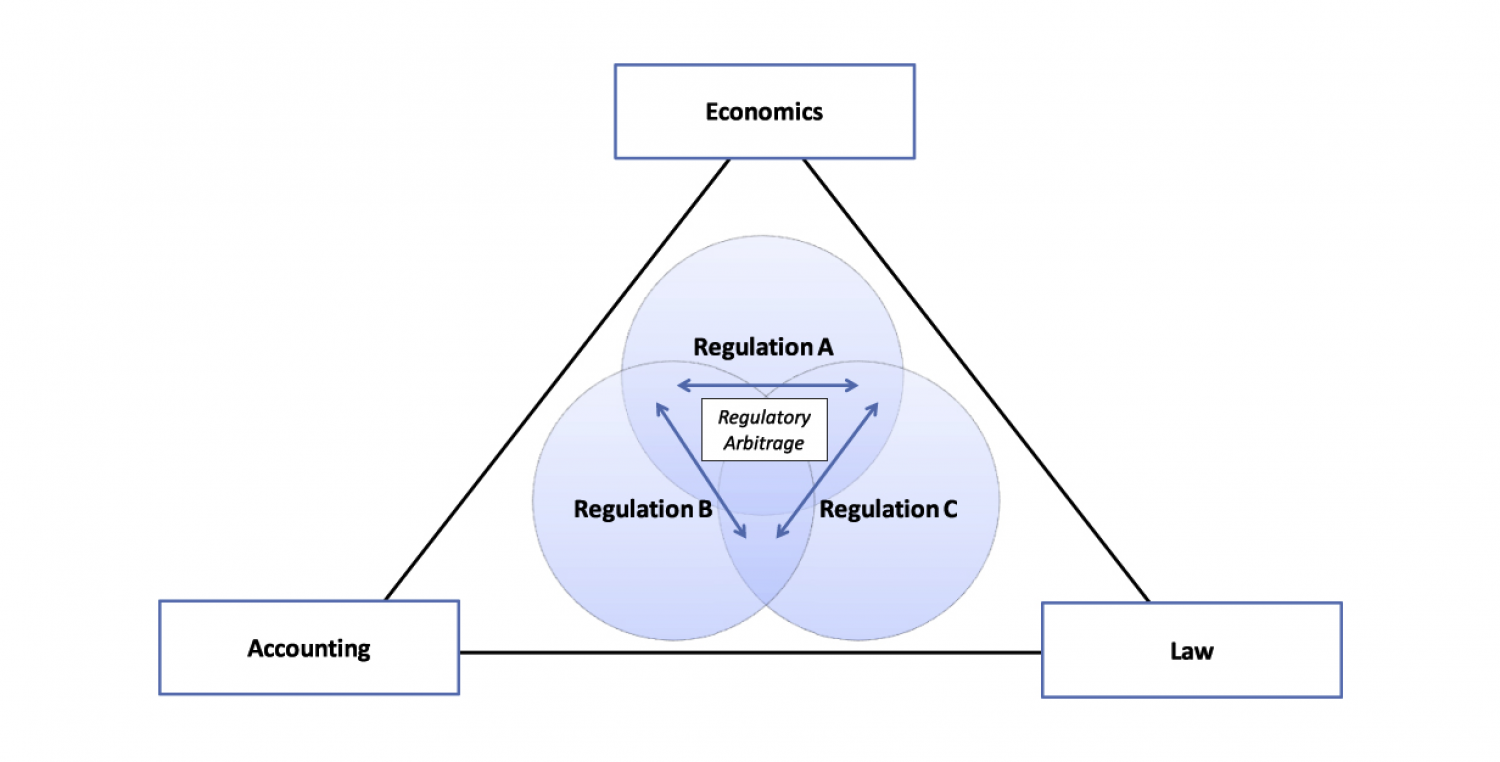
Flutter Entertainment is navigating a structural divergence in the U.S. gaming market by bifurcating its product stack between hard-coded gambling and "prediction-based" engagement. This is not a pivot; it is a calculated expansion of the addressable market through a mechanism known as regulatory arbitrage. By shifting the user's value proposition from a wager on an outcome to a prediction within a free-to-play or social-gaming wrapper, FanDuel bypasses the restrictive licensing requirements of the Professional and Amateur Sports Protection Act (PASPA) successors while maintaining the same acquisition funnel and data-harvesting capabilities of its core sportsbook.
The strategic logic rests on three distinct pillars: jurisdictional permeability, customer acquisition cost (CAC) suppression, and the exploitation of the "social gaming" legal corridor.
The Tri-Level Constraint Model of U.S. Gaming
To understand how the FanDuel predictions platform operates, one must first categorize the three layers of legal friction that currently throttle growth in the American market.
- Legislative Friction: Only 38 states plus D.C. have legalized some form of sports betting. This creates a hard ceiling on the Total Addressable Market (TAM).
- Taxation Friction: High-tax jurisdictions like New York (51% GGR tax) erode the Lifetime Value (LTV) of a customer.
- Operational Friction: The cost of maintaining separate licenses, geofencing technologies, and state-specific compliance teams creates a high barrier to entry and a heavy overhead for every new market entry.
The prediction platform removes these frictions by stripping the "consideration" element from the legal definition of gambling. In most U.S. jurisdictions, gambling requires three components: Prize, Chance, and Consideration. By removing "Consideration" (the money paid to enter), the platform transforms into a promotional tool or a sweepstakes, which is governed by much more lenient consumer protection laws rather than stringent gaming commissions.
Engineering the Top-of-Funnel Conversion Engine
The primary utility of the prediction platform is not direct revenue generation but the optimization of the Unit Economic Flywheel. In a traditional sportsbook environment, CAC is inflated by intense competition and high media spend. By offering a prediction-based product in non-legal states, FanDuel achieves two critical objectives.
Database Priming
FanDuel builds a "warm" list of users in states like California or Texas before those states legalize sports betting. When legalization eventually occurs, the cost to convert an existing prediction-platform user into a real-money bettor is significantly lower than acquiring a cold lead. This creates a first-mover advantage that is essentially pre-paid through the prediction platform's operational costs.
Behavioral Training
The UI/UX of the prediction platform mirrors the sportsbook. Users become accustomed to the "betting" interface—selecting odds, building parlays, and monitoring live scores—without the psychological barrier of losing capital. This creates a cognitive habit loop. Once a state flips to legal, the friction of moving from "free" to "paid" is minimized because the user is already proficient in the platform’s specific architecture.
The Mathematics of the Prediction Wedge
The efficacy of this strategy can be measured by the Wedge Ratio, which is the relationship between the cost of maintaining the free platform and the projected reduction in future CAC.
Let $C_f$ be the annual cost of operating the prediction platform in a non-legal state and $U$ be the number of active users acquired. The cost per pre-legal user is:
$$CPC_{pre} = \frac{C_f}{U}$$
If the traditional CAC in a newly legalized state is $CAC_{trad}$, the prediction platform is financially viable if:
$$CPC_{pre} + ConversionCost < CAC_{trad}$$
Given that traditional CAC in the U.S. market often exceeds $500 per head, the prediction wedge allows Flutter to amortize that cost over several years of "free" engagement, often resulting in a 30-40% lower effective CAC upon market launch.
Algorithmic Personalization and Risk Profiling
The prediction platform serves as a high-fidelity laboratory for user data. While users aren't wagering real money, their behavior on the platform provides a data set that includes:
- Risk Tolerance: Do they chase long-shot parlays or stick to favorites?
- Sport Affinity: Which leagues drive the most engagement for this specific user?
- Price Sensitivity: At what "virtual" odds do they hesitate to place a prediction?
This data allows FanDuel to build a comprehensive risk profile for every user before they ever place a real-money wager. When the user eventually migrates to the real-money platform, the "Next Best Action" (NBA) algorithms can serve highly personalized offers that maximize the Initial Deposit Amount and Retention Rate.
Technical Barriers to Replication
While the "free-to-play" model seems easy to mimic, the backend integration required to make it a true business driver is substantial. Flutter’s advantage lies in its Global Risk & Trading (GR&T) engine.
The prediction platform isn't a standalone app; it is a filtered view of the core sportsbook's API. This ensures that the "odds" and "lines" seen in the prediction tool are identical to the live markets. For a competitor to replicate this, they must solve the synchronization problem: ensuring that a free-to-play experience in a non-legal state feels as authentic and high-stakes as the real thing, without crossing the legal line into offering "consideration."
The operational challenge is maintaining a single user identity (Single Sign-On or SSO) across disparate legal frameworks. FanDuel’s infrastructure allows a user to move from a "Prediction Mode" in California to a "Sportsbook Mode" the moment they cross the border into Arizona, with their history, preferences, and data intact.
Structural Vulnerabilities in the Prediction Model
The strategy is not without systemic risks. The primary threat is Regulatory Reclassification. If state attorneys general decide that "free-to-play" games with prizes constitute a form of illegal lottery or "gambling-lite" that targets vulnerable demographics, the "prediction" loophole could close overnight.
The second limitation is User Fatigue. Without the "skin in the game" provided by real-money stakes, retention rates on free platforms tend to decay faster than on real-money platforms. Flutter must constantly inject artificial stakes—such as leaderboard prizes, "boosts," or social prestige—to keep the engine running. This adds to the operational cost, potentially bloating $C_f$ to the point where the Wedge Ratio is no longer favorable.
The Strategic Pivot to Engagement-as-a-Service
Flutter is transitioning from a "Bookmaker" to an "Entertainment Ecosystem." The prediction platform is the first step toward a model where gambling is just one of several monetization levers.
The shift focuses on the Duration of Engagement rather than the Volume of Handle. By capturing 15 minutes of a user's attention in a non-legal state through predictions, FanDuel prevents that user from engaging with a competitor’s media product (like ESPN or YouTube). This is a defensive play as much as an offensive one. In the attention economy, the platform that owns the screen during the game owns the eventual transaction.
The focus must now shift to integrating live streaming and real-time social features directly into the prediction interface. By layering "watch-and-predict" functionality, Flutter can increase the density of interactions per game. This transforms the prediction platform from a static acquisition tool into a dynamic media property.
The objective is to reach a state of Platform Ubiquity, where the brand is the default interface for sports fans regardless of their local gambling laws. The execution of this model suggests that the future of the industry is not in the "bet" itself, but in the ownership of the predictive intent that precedes it. Companies failing to build these non-wagering engagement layers will find themselves trapped in a high-CAC cycle, unable to compete with the subsidized acquisition funnels of the industry leaders.
The next tactical move is the aggressive integration of loyalty points (FanDuel Points) that accrue across both free and paid platforms. This creates a "synthetic equity" for the user, making the cost of switching to a competitor's app—even if they offer better odds—prohibitively high due to the lost value of the accumulated points. This creates a locked-in ecosystem that functions as a private economy, further insulating the business from the volatility of individual state regulations.