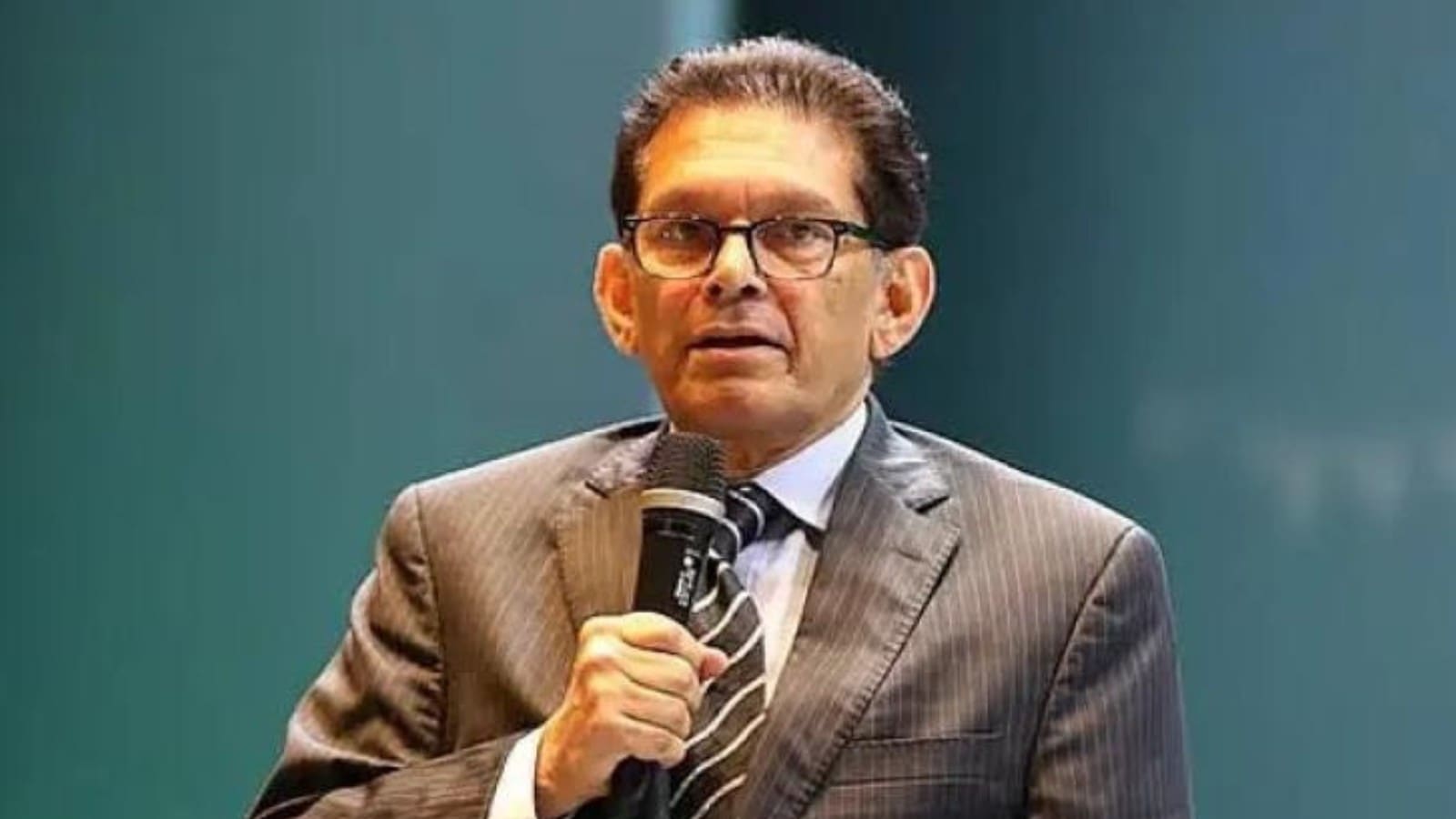
The rapid ascent of Khalilur Rahman from the shadows of bureaucratic diplomacy to the epicenter of Bangladeshi statecraft is not a fluke of revolutionary chaos. It is a calculated move in a high-stakes game of regional survival. Following the seismic collapse of the Sheikh Hasina regime in August 2024, the interim administration led by Muhammad Yunus needed more than just a placeholder for the role of National Security Advisor. They needed a bridge between the old guard and a volatile future. Rahman became that bridge. Now, as his profile shifts toward the helm of the Foreign Ministry in a potential Tarique Rahman-led government, the implications for Dhaka’s alignment with New Delhi and Washington are coming into sharp focus.
To understand Rahman’s utility, one must look at the vacuum left behind by the Awami League. For fifteen years, the security apparatus was a monolith of party loyalty. When that monolith shattered, the interim government found itself presiding over a country with fractured intelligence services and a demoralized police force. Khalilur Rahman did not enter this space as a firebrand or a street activist. He entered as a technician.
The Bureaucratic Strategist
Rahman’s pedigree is rooted in the Ministry of Foreign Affairs, a background that distinguishes him from the military generals who historically occupied the National Security Advisor (NSA) role in South Asia. His tenure as a career diplomat provided him with a specific set of tools: the ability to speak the language of international legitimacy while managing the internal anxieties of the state.
When Yunus appointed him as the high-representative on Rohingya issues and subsequently leveraged his expertise for broader security concerns, it was a signal to the West. The administration was moving away from the "securocrat" model and toward a "diplomat-strategist" model. Rahman’s primary task was to convince the world that the post-Hasina transition was not a descent into fundamentalism or anarchy, but a sophisticated reboot of the democratic engine.
Navigating the Tarique Rahman Factor
The political reality in Bangladesh is that the interim government is a transition, not a destination. The Bangladesh Nationalist Party (BNP), led from London by Tarique Rahman, remains the most formidable political force waiting in the wings. Speculation regarding Khalilur Rahman’s future role as Foreign Minister under a BNP mandate is more than idle gossip. It represents a convergence of interests.
Tarique Rahman has spent years in exile, working to shed the "militant-adjacent" label that dogging the BNP during the mid-2000s. To govern effectively in 2026 and beyond, he needs faces that the international community trusts. Khalilur Rahman fits the requirement perfectly. He is seen as a "safe" pair of hands—someone who understands the intricacies of the Belt and Road Initiative and the Indo-Pacific Strategy without being ideologically tethered to either.
Redefining the National Security Doctrine
Under Khalilur Rahman’s influence, the definition of security in Dhaka has shifted. It is no longer just about border suppression or internal dissent management. He has pivoted the conversation toward economic security and institutional resilience.
He recognizes that Bangladesh’s greatest threat is not a foreign invasion, but an economic blockade or a loss of trade privileges with the European Union and the United States. His approach to the NSA role emphasized:
- Diversification of Defense Procurement: Breaking the over-reliance on a single regional neighbor for military hardware.
- Intelligence Reform: Attempting to decouple the intelligence wings from partisan politics to prevent the "disappearance culture" that defined the previous decade.
- Transnational Coordination: Re-engaging with ASEAN and Western partners on the Rohingya crisis, moving it from a humanitarian burden to a regional security priority.
The Delhi Dilemma
New Delhi is watching Khalilur Rahman with a mixture of caution and necessity. For years, India’s "neighborhood first" policy was essentially a "Hasina first" policy. With that pillar gone, Indian intelligence and diplomatic circles are scrambling to find reliable interlocutors in Dhaka.
Rahman represents a challenge to the old status quo. He is not overtly anti-India, but he is unapologetically pro-Bangladesh interest. This subtle distinction is where the friction lies. In his worldview, the relationship must be reciprocal. The days of lopsided transit agreements and water-sharing promises that never materialize are likely over. If he transitions to the Foreign Ministry, India will have to negotiate with a man who knows exactly how to use Washington and Beijing as leverage.
Internal Friction and the Reform Agenda
It has not been a smooth ride. Within the student-led movement that ousted the previous regime, there are whispers that the interim government is too reliant on "remnants of the old system." Khalilur Rahman, despite his professional distance from the Awami League’s worst excesses, is still a man of the system.
He faces the monumental task of purging the security forces of highly politicized officers while ensuring the country doesn't fall into a total security lapse. This is a tightrope walk. If he moves too fast, he risks a mutiny or a coup. If he moves too slow, he loses the trust of the "Gen Z" revolutionaries who put the interim government in power.
The Pivot to Global Markets
The real test of Rahman’s strategy lies in the garment sector and the remittance economy. Political instability in late 2024 and early 2025 saw buyers looking toward Vietnam and India. Rahman’s behind-the-scenes work involves assuring global brands that the security situation on the ground is stable enough for long-term investment.
This is where the NSA role and the potential Foreign Minister role overlap. In the modern era, a nation's top diplomat is its chief economic salesman. Rahman is positioning Bangladesh as a neutral, stable, and rule-based market. He is betting that the world’s hunger for a China-plus-one manufacturing strategy will outweigh the temporary jitters caused by a change in government.
The Washington Connection
If there is one area where Khalilur Rahman has excelled, it is in managing the American relationship. The Biden and subsequent administrations have been vocal about labor rights and democratic norms in Bangladesh. Rahman has used his diplomatic polish to frame the current transition as a fulfillment of those American demands.
By framing the security apparatus as a guardian of the constitution rather than a tool of an autocrat, he has successfully lobbied for continued—and in some cases increased—cooperation with U.S. agencies. This relationship serves as a shield against potential regional interference. It also provides the BNP with a template for how they might govern without immediately triggering Western sanctions or disapproval.
A New Class of Leadership
Khalilur Rahman represents the rise of the "Techno-Diplomat" in South Asian politics. He is part of a trend where the traditional politician is being sidelined in favor of experts who can navigate the complexities of global finance, international law, and cyber-security.
Whether he remains a key figure in the interim setup or takes the formal mantle of Foreign Minister in a future Tarique Rahman cabinet, his influence is baked into the new Bangladeshi state. He has moved the needle from a survivalist security posture to a competitive one.
The question remains whether the civilian political class will allow this professionalization to last once a formal election is held. Historically, the pull of patronage politics in Dhaka is strong. It consumes reformers and rewards loyalists. Khalilur Rahman’s legacy will depend on whether he can remain indispensable to the politicians without becoming one of them.
The transition from the barracks to the boardroom and the embassy is the defining narrative of the new Bangladesh. Rahman is not just a participant in this narrative; he is the one holding the pen.
Monitor the next round of appointments in the Ministry of Foreign Affairs. If the "Rahman Doctrine" of balanced neutrality and economic-first security takes hold, the region’s geopolitical map will look very different by the end of the decade. The shift is already underway, and the quiet diplomat is the loudest voice in the room.
Check the official government gazettes for updates on the Foreign Ministry's leadership structure.