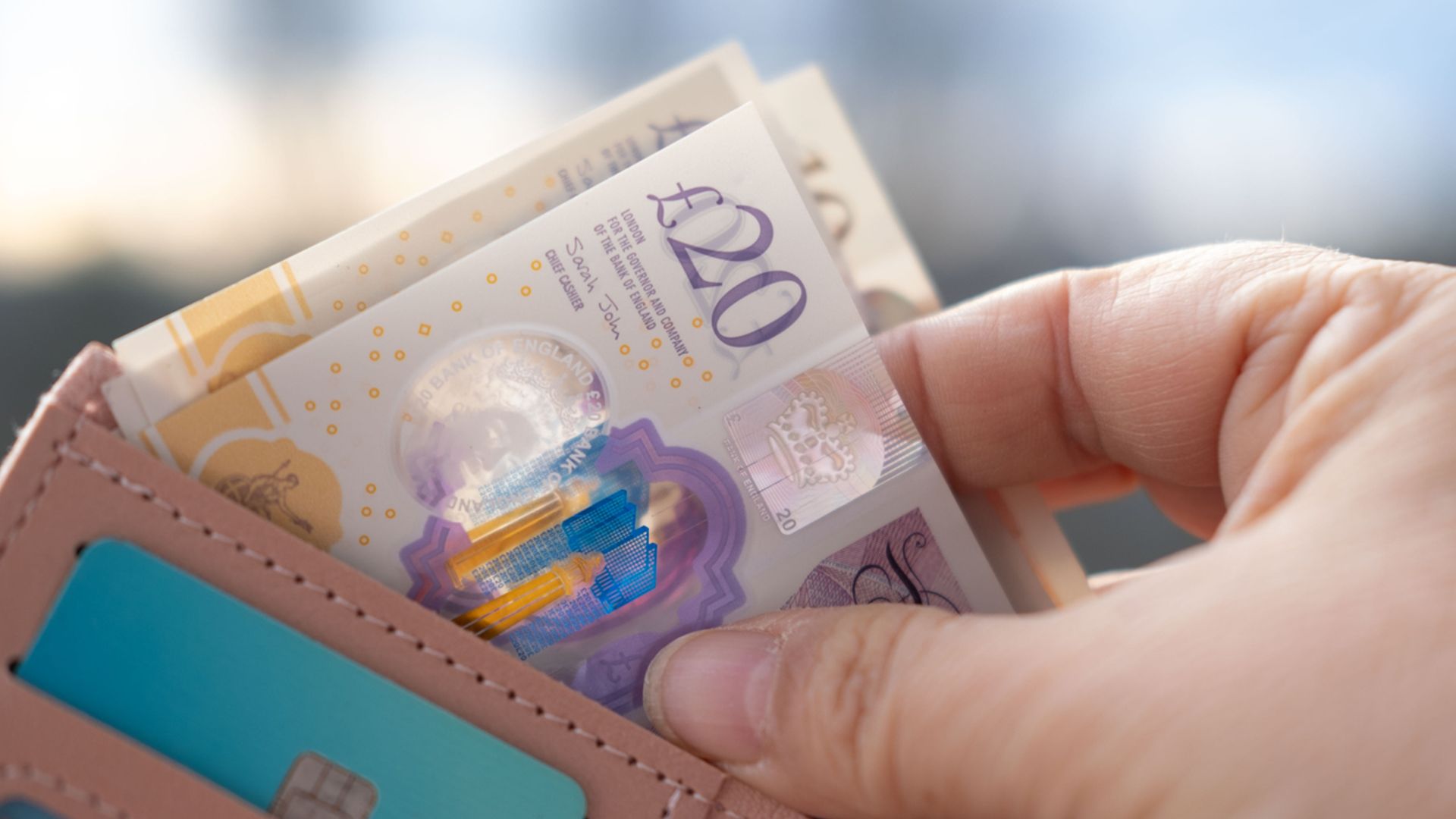
The morning air in early April has a specific, deceptive bite. It carries the scent of damp earth and the promise of blooming jasmine, but for millions of people sitting at kitchen tables across the country, the sweetness is soured by a stack of envelopes. These aren't just letters. They are the quiet, rhythmic sounds of a system resetting its prices.
We often talk about "the economy" as if it were a weather pattern—something vast, impersonal, and unavoidable. But the changes arriving this month aren't clouds. They are choices. As the calendar flips, a series of scheduled hikes in utility bills, council taxes, and everyday costs begin to drain the reservoir of our bank accounts.
Consider Sarah. She is a hypothetical composite of the people I’ve interviewed over the last decade—a nurse, a mother, someone who prides herself on "doing the math." Sarah knows that her broadband provider is raising its rates by 7.9%. She knows the water company wants another £30 a year. Individually, these numbers look like static. Together, they are a symphony of attrition.
The Invisible Tax on Staying Connected
Our lives are now built on invisible tethers. We don't just "buy" things anymore; we rent our existence through subscriptions and service contracts. In April, those tethers get tighter.
Most major broadband and mobile providers use a formula that feels like a mathematical trap. they take the Consumer Price Index (CPI) or the Retail Price Index (RPI) and add an arbitrary 3.9% on top. It is a legalized "plus-one" that ensures your bill outpaces your reality. When you see that notification in your inbox, it isn't just an adjustment for inflation. It is a transfer of wealth.
For Sarah, that 7.9% hike on her "triple-play" package of internet, TV, and mobile means the price of a bag of groceries disappears from her budget every month. The frustration isn't just about the money. It's about the feeling of being locked in. These contracts are designed to be friction-heavy. Leaving feels like an ordeal, so we stay, and we pay the "loyalty penalty."
The reality is that "loyalty" in the corporate world is a one-way street. The most effective way to fight this April sting isn't to hope for mercy from a provider; it is to treat your household budget like a business. If the contract has ended, the power has shifted. Every minute spent on a "retentions" line is a negotiation for your own labor.
The Ground Beneath Your Feet
While the digital world gets more expensive, the physical world demands its share too. Council Tax is the most visceral of the April changes. It is the price of the streetlights, the bin collections, and the social care for the neighbor you’ve never met.
In most areas, rates are climbing by the maximum allowed 5%. On a Band D property, that’s often an extra £100 a year. Unlike a streaming service, you cannot "cancel" your council tax. You cannot switch to a cheaper borough while staying in your own house.
This is where the human element of economics becomes painful. For those on fixed incomes—pensioners who have lived in the same drafty Victorian terrace for forty years—this isn't a "percentage." It is a choice between heating the guest room or buying fresh fruit. The system sees a property value; the inhabitant sees a home they are slowly being priced out of.
There is a small mercy, though. Many people are unaware that they qualify for discounts. If you live alone, you get 25% off. If you are a student, or if you have certain disabilities, the bill can shrink. But the burden of proof is on the individual. The state rarely knocks on your door to tell you that you owe them less money.
The Flow of Basic Needs
Water bills are the third prong of the April trident. Across England and Wales, the average bill is rising by about 6%—roughly £27 a year. It sounds small. "It's just two pounds a month," the press releases say.
But pennies have a way of aggregating.
We are living through a period where the fundamental requirements of biological and social life—water, warmth, and communication—are all inflating simultaneously. The "Standing Charge" on energy bills is another culprit. Even if you sit in the dark, even if you keep the thermostat at a shivering 15°C, you are charged for the privilege of being connected to the grid.
It feels like a tax on existing.
To understand the stakes, you have to look at the "Marginal Pound." For a high-earner, an extra £40 a month is a rounding error. For someone living on the edge, that £40 is the "safety buffer." It is the money for a child’s new shoes or the repair of a leaking tap. When the buffer vanishes, the stress levels rise. Cortisol becomes a permanent resident in the household.
The Silver Lining in the Ledger
If this narrative feels heavy, it’s because the reality is heavy. But April isn't just a month of taking. It is also a month of structural rebalancing.
The National Living Wage is seeing one of its most significant jumps in history. For a full-time worker, this could mean an extra £1,800 a year. It is a massive, overdue correction. For Sarah, if she were working a minimum-wage role, this increase wouldn't just cover the bills; it would actually put her ahead.
Then there is the National Insurance cut. The government has shaved another 2% off the main rate. If you earn £35,000, that’s roughly £450 back in your pocket over the year.
This is the central tension of April: a tug-of-war between your "Gross" and your "Net." The state and the corporations are pulling on one side, and the wage increases and tax cuts are pulling on the other. For many, it will feel like a dead heat. You work harder, you earn more, but the "cost of standing still" has risen.
The Psychology of the Reset
Why does it all happen at once? Why is April the month of financial reckoning?
It’s a relic of the 18th century. When the British calendar shifted from the Julian to the Gregorian system in 1752, the tax year got bumped from March 25th to April 6th to ensure the Treasury didn't lose eleven days of revenue. We are essentially living by the bookkeeping rules of a world that used quill pens and horse-drawn carriages.
But there is a psychological benefit to this synchronized shift. It provides a "Fresh Start Effect."
In behavioral economics, we are more likely to change our habits during "temporal landmarks"—birthdays, New Year’s Day, or the start of a new tax year. April is the perfect time to perform a financial audit. It is the moment to look at every direct debit and ask: "Does this serve me, or am I just serving it?"
I remember a man I met at a community center who called this his "April Purge." He would spend one Saturday morning every year calling his providers. He didn't use a script. He just told them the truth: "I can't afford this anymore. What can you do?"
Usually, they found a way. The "social tariffs" offered by water and broadband companies are the best-kept secrets in the UK. They are low-cost plans for people on benefits, but you have to ask for them. They aren't advertised during the halftime break of a football match.
The Weight of the Future
Beyond the bills, April changes the way we save for the end of the story. The State Pension is rising by 8.5% thanks to the "Triple Lock." For those who have already crossed the finish line of their career, this is a lifeline. It is the difference between dignity and desperation.
For those of us still running the race, the ISA limits remain a crucial tool. You can tuck away £20,000 a year without the taxman touching the gains. It feels like a tool for the wealthy, but the principle applies to everyone: find a way to shield your growth.
Even if you can only save £10 a month, the act of saving is a psychological middle finger to the rising tide of costs. It is an assertion of agency. It says, "I am not just a consumer; I am an owner."
The Quiet Reality
When the letters are finally filed away and the new direct debits are set, the house grows quiet again. The flowers keep blooming. The bite in the air eventually softens into summer.
We navigate these changes because we have to. Humans are remarkably resilient to "incremental creep." We adjust. We swap the name-brand cereal for the supermarket own-brand. We cancel the gym membership we weren't using anyway. We find ways to make the math work.
But we shouldn't have to do it in the dark.
The real danger of the April changes isn't the total amount of money lost. It is the feeling of powerlessness. It is the sense that the world is getting more expensive while we remain the same. The antidote to that feeling is knowledge and action.
Understand that the 7.9% hike is a choice made in a boardroom. Understand that the Council Tax rise is a reflection of a strained social contract. Understand that your paycheck is growing, even if it doesn't feel like it yet.
As you sit at your kitchen table this week, look at the numbers not as a defeat, but as a map. There are routes around the obstacles. There are discounts to be claimed, contracts to be broken, and better deals to be struck.
The system resets in April. You should too.
Don't let the silent inflation of spring catch you looking the other way. The most expensive thing you can own is a closed mind and a signed contract you haven't questioned in three years.