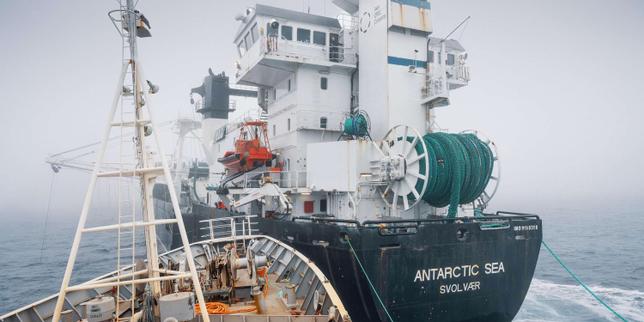
The media loves a collision. It’s cinematic. It’s easy to digest. When a Paul Watson Foundation vessel slams into a Norwegian trawler in the freezing isolation of the Antarctic, the press immediately reverts to its favorite script: "Eco-pirates vs. Law-abiding Industry." They frame it as a breach of maritime etiquette, a reckless stunt that puts lives at risk.
They are wrong.
What the "lazy consensus" ignores is that these collisions are not accidents, nor are they merely protests. They are the final, desperate price discovery mechanism in a global commons where regulation has failed. We aren't looking at a maritime safety incident; we are looking at the brutal reality of enforcement in a vacuum. If you think this is about "out-of-control" activists, you’ve been reading the wrong reports.
The Trawl of Deception
Mainstream coverage focuses on the physical impact. They count the dented hulls and analyze the "Rules of the Road" under the International Regulations for Preventing Collisions at Sea (COLREGs). But the real impact is the massive, systemic failure of the Commission for the Conservation of Antarctic Marine Living Resources (CCAMLR).
Norway prides itself on "sustainable" krill fishing. It’s a clean, high-tech narrative. But let’s look at the mechanics. Krill is the bedrock of the Southern Ocean. Without it, the entire trophic web collapses. When a Norwegian super-trawler like those operated by Aker Biomarine enters these waters, they aren't just fishing; they are vacuuming.
The industry argues that they only take a small percentage of the biomass. This is a classic statistical sleight of hand. It doesn't matter if you take 1% of the global supply if you take 90% of it from the specific feeding grounds of a whale population. By framing the argument around "global quotas," the industry hides the localized devastation. Watson’s ships aren't "percuté" (striking) a boat; they are interrupting a liquidation sale of the planet's lungs.
The Myth of the "Law-Abiding" Trawler
The common refrain is that the Norwegian vessels are there legally. Technically, yes. But legality is a flimsy shield in international waters.
In my years tracking maritime policy and resource extraction, I’ve seen how "legal" is often just a synonym for "unwatched." The Antarctic is the Wild West with better GPS. The CCAMLR relies on consensus. If one nation—say, a nation with a massive stake in the krill oil supplement market—doesn't want stricter rules, those rules don't happen.
When the law is paralyzed by corporate lobbying and diplomatic inertia, the only thing left is direct action. To call Watson’s tactics "terrorism" is to fundamentally misunderstand the term. It is extra-legal enforcement. It is the physical manifestation of a "Stop" order when the judge has been paid off or hasn't shown up to court for thirty years.
The Physics of Direct Action
Let’s talk about the John Paul DeJoria and the Norwegian trawlers. These are massive pieces of industrial capital. A collision is a financial disaster.
The strategy here is simple: Increase the insurance premium of destruction. If a fishing company knows that every trip to the Antarctic carries the risk of a high-speed hull-to-hull interaction, the ROI changes. The cost of doing business suddenly includes the repair of a bow or the loss of a season's catch due to mechanical failure. This is the only language the board of directors speaks. You can sign as many Change.org petitions as you want; the CEO won't care until the hull is breached and the dry-dock fees start piling up.
Why "Civil Discourse" is a Death Sentence
The critics say Watson should use "proper channels."
- Fact: The Antarctic Treaty System moves at the speed of a receding glacier.
- Fact: Krill populations are already shifting due to thermal stress.
- Fact: By the time a new "protection zone" is negotiated, the ecosystem it was meant to protect will be gone.
Imagine a scenario where a thief is emptying your house. You call the police, but they tell you they need to hold a three-year committee meeting to decide if the thief’s crowbar is "sustainable." Would you wait for the meeting? Or would you block the driveway?
The Paul Watson Foundation is blocking the driveway. The "outrage" over the collision is a distraction from the larger crime: the industrial-scale extraction of the very base of the oceanic food chain to make "omega-3" pills for people who could just eat flaxseed.
The Technology of Conflict
The Norwegian fleet uses sophisticated acoustic tech to find krill. They use continuous pumping systems to bring them on board. It’s a masterclass in engineering efficiency.
On the other side, the activists are using drones, high-speed interceptors, and—yes—their own hulls as weapons. This is an asymmetrical technological war. The trawlers have the advantage of size and state backing. The activists have the advantage of total commitment.
There is a deep irony in the "safety" argument. The Norwegian maritime authorities claim the activists are "risking lives." This is a fascinating bit of gaslighting. The industrial fishing industry is one of the most dangerous on earth, with a staggering mortality rate compared to almost any other sector. They don't care about lives; they care about predictability. A collision is unpredictable. It breaks the model.
The Brutal Truth of Conservation
Conservation isn't a gala dinner. It isn't a documentary with a soothing voiceover. It is a gritty, cold, and often violent struggle over the last remaining resources on this planet.
If we are honest with ourselves, we know that "sustainable fishing" in the Antarctic is a marketing term, not a biological reality. There is no such thing as removing millions of tons of krill from a fragile ecosystem without consequence.
The Paul Watson Foundation is the only entity being honest about the stakes. They are willing to put their lives and their ships on the line because they recognize that the "rules" were written by the people doing the harvesting.
Dismantling the "Pirate" Narrative
The media uses the word "pirate" to delegitimize the movement. But historically, privateers were often the only ones protecting the interests of the public when the state was too weak or too corrupt to act.
If protecting the oxygen-producing capacity of the Southern Ocean makes you a pirate, then we need more pirates. The real "piracy" is the extraction of public goods for private profit under the guise of "national interest."
The Actionable Reality
Stop looking at the collision as a "failure of communication." It was the most effective communication possible.
If you are an investor, look at the risk profiles of these fishing conglomerates. They are one major incident away from a PR nightmare and a massive spike in operating costs. If you are a consumer, realize that your krill oil supplements are literally being fought over in the coldest waters on Earth.
The status quo is a slow-motion suicide pact. The collision is a wake-up call.
We have tried the meetings. We have tried the treaties. We have tried the "proper channels." None of it has stopped the decline of the Antarctic ecosystem. The only thing that has ever slowed down the industrial machine is a physical obstacle.
The Norwegian trawler wasn't "deliberately struck" by a rogue ship; it was met by the only force capable of saying "no" in a world that only knows how to say "more."
Stop apologizing for the tactics. Start questioning why these tactics are the only ones left. If the price of a healthy ocean is a few dented Norwegian hulls, that’s the best bargain we’ve been offered in a century.
Get used to the sound of metal on metal. It’s the sound of the planet fighting back.