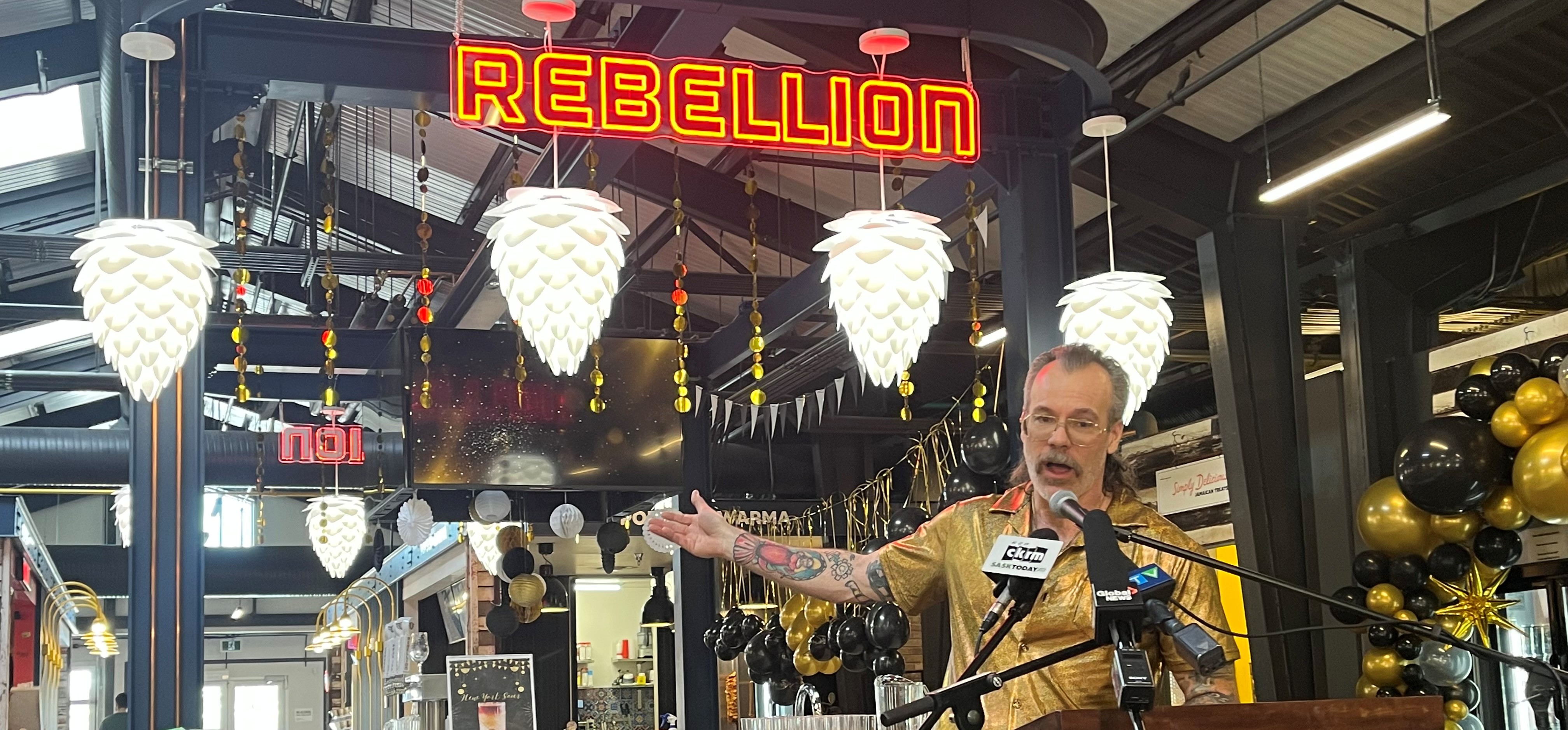
Saskatoon is celebrating the news that Rebellion Brewing is moving into the Gather Local Market. The headlines read like a victory lap for local commerce. They call it a "perfect fit." They call it an "anchor."
They are wrong.
The traditional "anchor tenant" model is a relic of 1980s mall culture that has no business being applied to a high-density, high-rent urban food hall. By treating a brewery as the savior of a market, developers are actually cannibalizing their own ecosystems. I have watched developers across North America sink millions into these "destination" deals, only to realize six months later that they’ve built a lopsided profit engine that kills the variety they promised the public.
The Myth of the Anchor Tenant
The "anchor" logic is simple: get a big name to pull people through the door, and the smaller vendors will live off the crumbs. In a suburban mall with a 100,000-square-foot Sears, that worked. In a localized food hall like Gather, it’s a death sentence for diversity.
When you give a massive footprint to a single brewery, you aren't just giving them space. You are giving them the oxygen.
- Revenue Density vs. Physical Footprint: A brewery occupies a disproportionate amount of square footage for the revenue it generates per hour compared to a specialized food stall.
- The "One-and-Done" Loop: If the brewery is the destination, the customer comes for a pint and leaves. They don't browse. They don't discover the local spice merchant or the boutique baker. The brewery becomes a silo, not a bridge.
- Price Point Parity: Breweries often command higher margins on lower labor costs than food vendors. This creates an internal economy where the brewery can outbid and out-survive everyone else while the actual "market" stalls—the reason people visit a market instead of a pub—struggle to pay the bills.
I’ve seen this play out in Denver and Chicago. The brewery wins. The market loses its soul. Eventually, you don’t have a market; you have a taproom with a few expensive snack stands attached.
The Cannibalization of the Local Experience
The "Gather" concept implies a curated, diverse experience. But when Rebellion—a successful, established brand—steps in, the power dynamic shifts.
The industry likes to use the word "community," but let’s talk about floor economics. Every square meter given to a fermentation tank or a massive bar is a square meter taken away from a startup entrepreneur. These markets are supposed to be incubators. They are meant to be the "Stage 1" for the next great chef.
By prioritizing a "big" name, the developers are choosing safety over innovation. It’s a hedge against risk that fundamentally undermines the value proposition of a local market. If I wanted a Rebellion beer, I could go to a liquor store or their existing locations. I go to a market to find the thing I can’t find anywhere else.
The False Promise of Foot Traffic
"But they bring the crowds!"
This is the most common defense. It’s also the most flawed. Not all foot traffic is created equal.
If you attract 500 people on a Friday night who are there specifically to sit in one spot for three hours and drink four IPAs, those 500 people are worth almost zero to the surrounding vendors. Most food hall stalls close by 8:00 PM or 9:00 PM. Brewery crowds peak late.
The result? You have a crowded room where the "market" part of the building is a ghost town while the "anchor" is packed. This creates a visual of success that masks a structural failure.
The Math of the Modern Food Hall
Let’s break down the actual utility. In a high-functioning market, the goal is Velocity of Transaction. You want people moving, tasting, and buying from multiple points.
A brewery is the opposite of velocity. It is stagnation.
Imagine a scenario where the 2,000 square feet allocated to a single brewery was instead split into five "micro-stalls."
- Stall A: Artisan Cheese ($45/sq ft revenue)
- Stall B: Specialty Coffee ($60/sq ft revenue)
- Stall C: Import Spices ($40/sq ft revenue)
- Stall D: Handmade Pasta ($55/sq ft revenue)
- Stall E: Rotating Pop-up ($70/sq ft revenue)
The brewery might offer a stable rent check, but the five-stall model creates a reason to visit the market five times a week. The brewery creates a reason to visit once every two weeks. When you favor the anchor, you trade Frequency for Volume. In the long term, Frequency is what keeps a neighborhood alive.
The Risk Nobody Discusses: Brand Fatigue
There is an unspoken danger in leaning on "local heroes." When a brand like Rebellion becomes synonymous with the Saskatoon "scene," it reaches a saturation point.
By placing it as the centerpiece of Gather, the developers are betting that the brand's current heat will last for the duration of a ten-year lease. But consumer tastes in craft beer are notoriously fickle. We are already seeing a "cooling off" in the craft sector across Canada. If the anchor loses its luster, the entire ship takes on water.
A market should be an agile entity. It should be able to pivot when trends change. You can’t pivot when half your floor plan is bolted down with brewing equipment and heavy timber bars.
Stop Building Pubs and Calling Them Markets
If we want Saskatoon’s food scene to actually evolve, we have to stop giving the best seats at the table to the players who have already won the game.
The "Gather" model only works if the gathering is actually diverse. Relying on a brewery to do the heavy lifting is a sign of a developer who doesn't trust their own concept. It's a sign that they are more interested in a "safe" lease than a vibrant marketplace.
True market success isn't measured by how many people are sitting down with a beer. It’s measured by how many bags are in their hands when they leave.
Stop looking for an anchor. Start looking for an engine.
If you are a vendor in a market being "anchored" by a giant taproom, start renegotiating your lease now. You aren't a partner; you're the decor for a bar.


