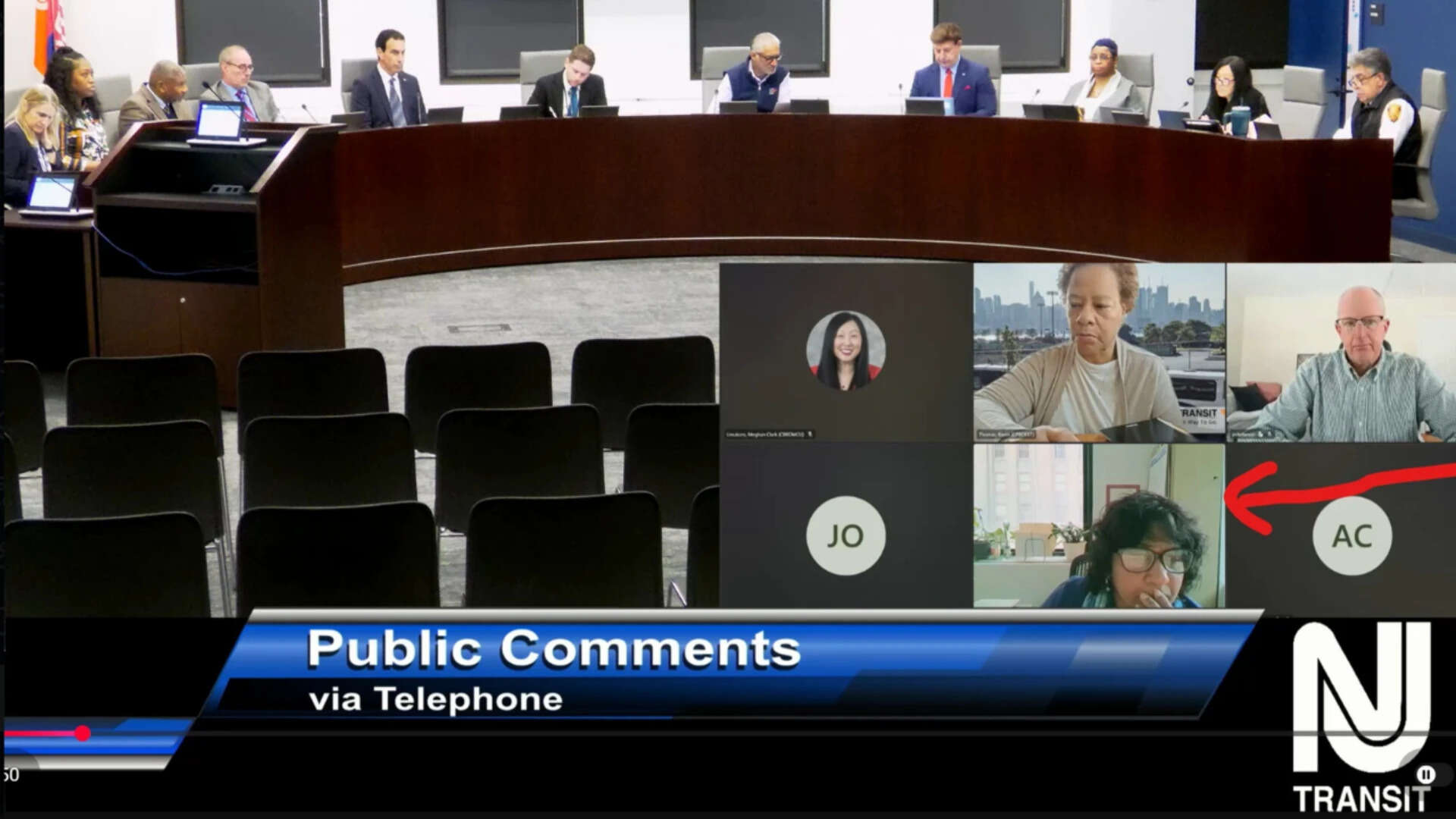
The recent escalation of public hostility toward NJ Transit board member Shanti Narra reveals a fundamental decoupling between institutional protocols and public expectations of accountability. On February 27, 2026, Narra’s remote participation in an Operations and Customer Service Committee meeting triggered a wave of vitriol that transcended policy critique, devolving into targeted ethnic attacks and demands for her resignation. While the surface-level conflict centers on "online attendance," the underlying mechanism is a systemic failure of perceived presence during a period of acute operational instability.
To understand the volatility of this row, one must look past the digital interface and analyze the friction between three critical variables: the legal framework of the Open Public Meetings Act (OPMA), the optics of "absentee leadership" in a failing infrastructure environment, and the weaponization of identity in the vacuum of effective corporate communication. For a different look, consider: this related article.
The Structural Legitimacy of Remote Governance
The contention that Narra’s remote attendance is a resignable offense ignores the codified flexibility of New Jersey’s Sunshine Laws. Under the Open Public Meetings Act (OPMA), public bodies are mandated to ensure transparency, yet the statute does not explicitly prohibit teleconferencing for board members, provided a quorum is established and the public retains the right to witness deliberations.
The shift in 2020 toward hybrid models was not a temporary convenience but a permanent expansion of the administrative toolkit. Narra’s participation from a remote location is technically indistinguishable from physical presence regarding the legality of a vote or the validity of a committee session. However, the crisis emerges from the Presence-Performance Correlation. For a transit agency plagued by 15% fare hikes and consistent service cancellations, the physical absence of a board member at a meeting functions as a visual proxy for an agency that is "out of touch" with the physical reality of the commuter. Related analysis on this matter has been shared by Al Jazeera.
The Mechanism of Public Dissatisfaction
The specific animosity directed at Narra is a byproduct of three distinct pressure points:
- The Fiduciary Friction: In April 2024, Narra voted in favor of a 15% fare increase, characterizing it as a "gut-wrenching" necessity to close a $119 million budget gap. When a board member who authorized increased financial burdens on the public chooses not to share the physical space where those grievances are aired, it creates a perceived "accountability gap."
- Operational Decay: NJ Transit is currently navigating a critical shortage of locomotive engineers—down nearly 50 from previous years—and a multi-million dollar traction infrastructure deficit. The public views board meetings not as administrative formalities, but as forums for "shared suffering." Remote attendance breaks this unspoken social contract.
- Identity Weaponization: The emergence of "DEI: Deport Every Indian" rhetoric on social media platforms indicates that legitimate frustration with transit utility is being funneled into xenophobic frameworks. By targeting Narra’s heritage—despite her being a New Jersey resident since age two and a graduate of Georgetown Law—detractors are using her background to explain institutional incompetence through a false lens of "foreign" mismanagement.
The Cost Function of Invisible Leadership
In high-stakes public utilities, the "Cost of Absence" is measured in lost trust equity. When a board member logs in remotely, they avoid the direct physical feedback of an "angry rail rider" packed into a meeting hall. This creates a bottleneck in empathy-driven decision-making.
From an operational standpoint, Narra’s professional history as a public defender and union vice president for the Legal Aid Society suggests a career built on systemic advocacy. However, in the context of NJ Transit, that expertise is currently eclipsed by the Visibility Paradox: the more automated and "online" the board becomes, the more the riding public feels the agency is a black box.
The second limitation is the failure of NJ Transit’s communications department to frame remote attendance within a standardized policy. By allowing individual members to become lightning rods for attendance-related criticism, the agency has outsourced its reputational risk to its personnel.
The Logic of the Response
The current strategy of ignoring social media "rows" is insufficient because it fails to address the underlying demand for tangible presence. The relationship between the board and the commuter is currently a zero-sum game of perceived respect.
To stabilize the governance environment, NJ Transit must transition from a defensive posture to a structural one. This requires:
- Standardizing Hybrid Protocols: Codifying exactly when remote attendance is permissible (e.g., medical necessity or official county business) to remove the "arbitrary" label from the public's vocabulary.
- Decoupling Identity from Performance: Directing public discourse toward the engineering and budgetary metrics that Narra actually influences, such as the 3% annual automatic fare increases.
- Physical Rotation Requirements: Ensuring that committee chairs and key voting members maintain a minimum "physical presence" quota during periods of fare adjustments or significant service disruptions.
The hostility toward Shanti Narra is a symptom of a transit system where the physical infrastructure is failing, making any perceived retreat into the digital realm look like a flight from the consequences of one's own policy decisions. Until the agency solves the engineering and fiscal shortages, the "online" board member will remain a target for those who have no choice but to stand on a platform waiting for a train that isn't coming.
NJ Transit should immediately release a formal attendance policy for the remainder of the 2026 fiscal year to protect board members from targeted harassment while restoring a baseline of public expectations for in-person accountability.