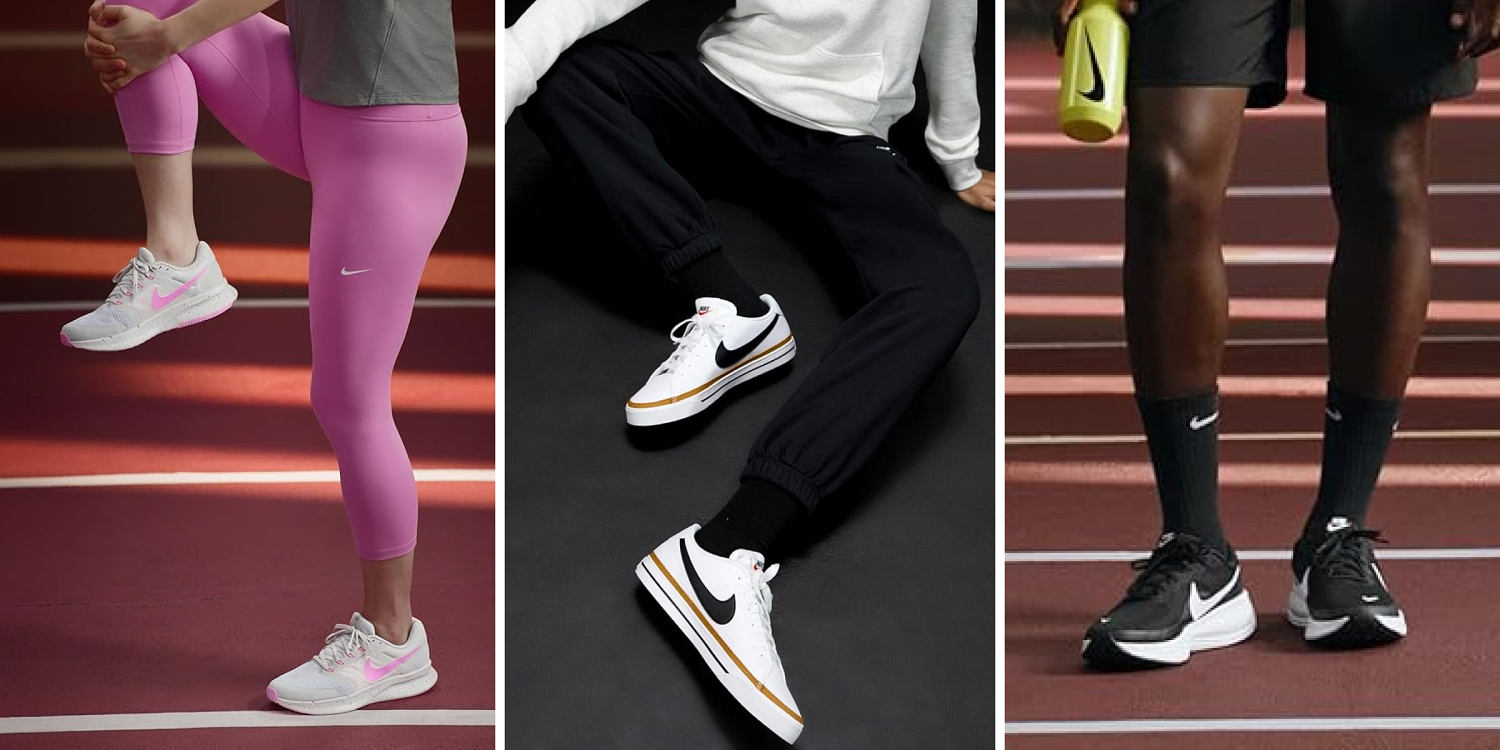
Amazon is where Nike goes to die.
Every year, lifestyle blogs and "deal hunters" light up the internet with news of a "secret" Nike sale on Amazon. They tell you to hurry. They give you a list of 15-percent-off Pegasus runners and sweat-wicking tees. They treat it like a hidden treasure map.
It isn't. It’s a clearance rack in a digital basement.
If you think you’re winning by snagging a pair of mid-tier monarchs at a slight discount, you’ve already lost the game. You aren't "hacking" retail; you are participating in the systematic liquidation of Nike’s least desirable inventory. I’ve spent a decade analyzing retail supply chains and brand positioning. I’ve watched how "Big Sport" handles the fallout of overproduction. What you see on Amazon isn't a sale—it's an exit strategy for products the brand no longer wants to be associated with.
The Myth of the Secret Discount
The term "secret sale" is a marketing hallucination. In the world of high-velocity e-commerce, nothing is secret. Algorithms determine these prices based on overstock levels, seasonal shifts, and the terrifying reality of warehouse storage fees.
Nike has spent the last five years trying to break up with third-party retailers. They want a direct-to-consumer (DTC) relationship. They want you on their app. They want your data. When Nike products show up in bulk on Amazon—often through secondary distributors or the "Brand Registry" back door—it represents a failure of that DTC strategy.
You aren’t buying the "cutting-edge" (excuse the term, let's say bleeding-edge) Vaporfly tech. You are buying the stuff that sat in a shipping container in Long Beach for three months too long.
Why You Should Stop Chasing 20 Percent Off
Let’s talk about the math of "value." Most shoppers look at a $120 shoe marked down to $95 and see a $25 win. I see a $95 loss.
When you buy Nike on Amazon, you are often buying "takedown" models. These are shoes designed to look like the premium versions but built with inferior foam, heavier rubbers, and simplified uppers.
- The Midsole Trap: Premium Nikes use ZoomX or React foam. Amazon-tier "sale" shoes often use basic EVA or older iterations of Air that have a shorter shelf life and less energy return.
- The Aesthetic Tax: You’re paying for the Swoosh, but getting the performance of a generic trainer.
- The Counterfeit Risk: Even with Amazon’s transparency programs, the "commingled inventory" system means your genuine pair might be stored in the same bin as a high-quality "super-fake."
If you actually care about your feet, your gait, or your style, buying the "sale" items is a compromise that yields zero ROI. You are better off buying one pair of top-tier shoes at full price every 18 months than cycling through three pairs of Amazon-sourced "deals" in the same timeframe.
The Logistics of the Dump
Retailers use Amazon as a pressure valve. When a product line like the Revolution or the Tanjun overstays its welcome, it gets shifted to the "Everything Store" to clear the books.
Imagine a scenario where Nike realizes they overproduced 400,000 units of a specific colorway of the Air Max Excee. Keeping those in their own Nike-owned stores dilutes the brand’s premium feel. They need them gone. They wholesale them out. The "secret sale" you’re clicking on is just the sound of a brand taking out the trash.
People Also Ask: "Is it safe to buy Nikes on Amazon?"
The question is wrong. It’s not about "safety"—Amazon is great at refunds if you get a box of rocks. The question is: "Is it worth it?"
The answer is almost always no. When you buy through the Nike App or specialized running boutiques, you get a 60-day "wear test" guarantee. You can run in the mud, decide they hurt your arches, and send them back for a full refund. Amazon’s 30-day window usually requires the product to be in "new and unused condition."
You are trading the world’s best return policy for a $15 discount. That isn't being a "savvy shopper." That's being a sucker.
The Better Way to Buy
If you want the "deal" without the "dross," you have to look where the hype isn't.
- Refurbished Programs: Nike has an official "Refurbished" program in select stores. These are shoes returned within the 60-day window, cleaned, and graded. You get $180 shoes for $80. That is a real discount on real performance.
- The Out-of-Cycle Buy: Don’t look for "Sales." Look for the moment a new version of a flagship shoe drops (e.g., the transition from the Pegasus 40 to the 41). The previous version—a proven, high-performance tool—will hit the clearance wall of the actual Nike site.
- The Local Independent: Run shops often have "last pair" racks. These aren't the mass-market garbage found on Amazon; these are high-end technical specs that just happened to be the wrong size for the local demographic.
The Real Cost of Cheap Sneakers
We’ve been conditioned to believe that "more for less" is the pinnacle of consumer intelligence. In the footwear industry, "more for less" usually results in more physical waste and less actual utility.
A "secret sale" on Amazon encourages impulsive buying of items you didn't want three minutes before you saw the ad. It feeds the cycle of "disposable" fitness gear. If you’re serious about your training—or even just your daily comfort—stop looking for the discount code.
Start looking at the spec sheet.
If the foam isn't specified, if the weight isn't listed, and if the seller is a third-party entity with a name like "GlobalTradeExpress," close the tab. You are being sold a legacy. You aren't being sold a shoe.
Nike is a marketing company that happens to make shoes. Amazon is a logistics company that happens to sell everything. When they collide in a "secret sale," the only person not making money is you.
Stop digging for gold in a landfill.
Go to a real store. Buy the right shoe. Pay the price it’s actually worth.
Everything else is just noise.