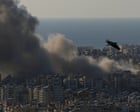
The air above Tehran doesn't just carry the scent of exhaust and roasting saffron; it carries a weight. It is the weight of a sky that has become a chessboard. For decades, the Iranian capital has lived under a ceiling of aging metal—Phantoms and Tomcats held together by little more than prayer and smuggled bolts. But the sound echoing off the Alborz Mountains is changing. It is becoming smoother, more digital, and significantly more ominous.
The arrival of the Yak-130 Mitten is not merely a line item in a defense budget. It is a metamorphosis.
When the first of these sleek, Russian-made trainers touched down at Shahid Babaei Air Base, they weren't just bringing new engines. They were bringing a new philosophy of warfare. To understand why a small, subsonic jet matters more than a supersonic relic, you have to look at the ground. You have to look at the people stuck in the infamous Tehran traffic, glancing up at a silver speck and wondering if the pilot is even human.
The Bridge to a Ghost Fleet
Iran’s air force has long been a flying museum. Imagine trying to run a modern tech firm on Windows 95. That is the daily reality for Iranian mechanics. They are brilliant, resourceful, and exhausted. They have spent forty years cannibalizing parts to keep pre-Revolution American jets in the air.
Then comes the Yak-130.
This aircraft is a "lead-in" fighter trainer. In simpler terms, it is a classroom with wings. It features a fully glass cockpit—digital screens instead of the vibrating analog needles of the 1970s. It mimics the flight characteristics of the world’s most advanced 4.5 and 5th-generation fighters. For the young Iranian pilot, sitting in this cockpit is like stepping out of a horse-drawn carriage and into a Tesla.
But the jet serves a darker, more pragmatic purpose. It is the missing link between a pilot and a swarm.
Consider a hypothetical pilot named Reza. For years, Reza has trained on simulators that feel like arcade games. He knows that if he ever had to fly a mission, his chances of survival against a modern integrated air defense system would be slim. His jet would be seen before he even flipped a switch. Now, Reza sits in the Yak-130. He isn't just learning how to dogfight; he is learning how to manage data.
The Yak-130 is designed to coordinate. It can act as a command-and-control node for the very things that have made Iran a household name in modern conflict: drones.
The Shepherd and the Wolves
In the West, we often view drones as independent hunters. We see the grainy black-and-white footage of a Shahed drone spiraling toward a target and think of it as a singular event. That is a mistake. The real power of a drone isn't the explosion; it's the saturation.
By deploying the Yak-130 for "drone patrols" over the capital, Tehran is practicing a concept known as Manned-Unmanned Teaming.
Imagine a shepherd watching over a hundred wolves. The shepherd doesn't need to be the fastest or the strongest; he just needs to be the one who sees the whole field. The Yak-130 is that shepherd. From its cockpit, a pilot can potentially direct a flock of loitering munitions, using the jet's superior radar and sensors to find gaps in an enemy’s armor that a ground-based operator might miss.
This isn't about defending against a traditional invasion. It is about a 24/7 presence.
The drones provide the persistence—they can stay up for hours, watching, waiting, an unblinking eye over the smog-choked streets of the metropolis. The Yak-130 provides the brain. It can loiter at altitude, invisible to the naked eye but deeply felt in the electronic spectrum, weaving a net of surveillance and strike capability that turns the entire city into a fortress.
The Invisible Stakes of a Digital Sky
There is a psychological cost to this transition. Warfare used to be loud. It used to be obvious. A screaming jet engine is a clear signal of intent. But the new era of Iranian air power is quieter. It is the hum of a propeller and the soft glow of a liquid-crystal display.
For the citizens of Tehran, the stakes are invisible until they aren't.
Every time a Yak-130 takes off, it reinforces a domestic narrative of self-reliance and "Eastern" partnership. It tells the population that the sanctions haven't worked, that the sky is still theirs, and that Russia is a brother in arms. It is a performance of power as much as it is a tactical reality.
Yet, there is a fragility here. Relying on Russian hardware means tying one's fate to a nation currently embroiled in its own existential quagmire. The "synergy"—to use a word that fits the cold reality of logistics—between Tehran and Moscow is a marriage of necessity. Iran provides the drones that haunt the skies over Kyiv; Russia provides the jets that will train the next generation of Iranian pilots to fly the Su-35 Flanker.
It is a circular trade of destruction.
The Ghost in the Machine
We must ask ourselves what happens when the human element is slowly phased out of the patrol.
The Yak-130 makes it easier to fly, easier to target, and easier to kill. When a cockpit becomes a computer interface, the distance between the finger and the trigger feels longer, yet the action becomes more clinical. If Reza, our hypothetical pilot, sees a blip on a screen instead of a wingman or a city, the moral weight of his mission shifts.
The jet's advanced fly-by-wire system means the plane is literally preventing the pilot from making certain mistakes. It corrects his tilt. It manages his thrust. It is a machine teaching a human how to be more like a machine.
This is the true revolution of the Mitten's arrival. It isn't just about patrols over Tehran. It is about the professionalization of a force that has been "making do" for half a century. It is the sound of an old guard passing the torch to a digital one.
The Phantoms will eventually fall silent. Their engines, loud enough to rattle windows and shake teeth, will be replaced by the more polite, whistling sound of the Yak-130. But don't let the quieter tone fool you. The new sound is more dangerous. It represents a military that has stopped looking backward at what it lost in 1979 and started looking forward at a sky filled with autonomous killers and the men trained to lead them.
As the sun sets over the Milad Tower, casting long, jagged shadows across the concrete, the Yak-130 banks into a turn. Below, the city lights flicker on, millions of lives continuing their quiet, frantic pace. Above, the pilot checks his screens. The drones are already there, hovering in the dark, waiting for a command that travels at the speed of light.
The sky is no longer a void. It is a dense, interconnected web of data and fire, and for the first time in a generation, the people holding the remote have a clear view of the board.