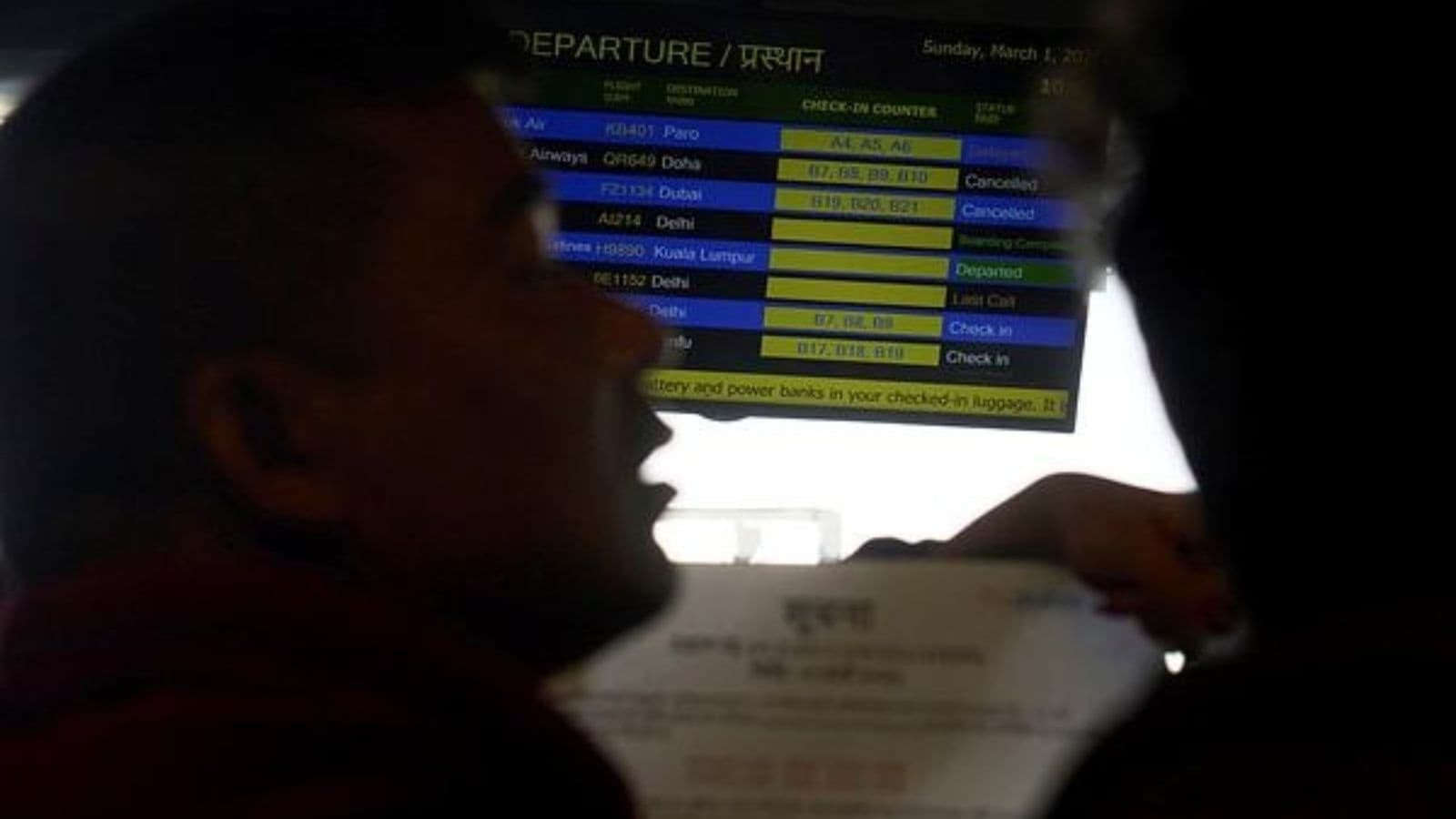
The ice in a plastic cup shouldn't feel like a countdown timer. But when you are suspended in a pressurized tube over the dark expanse of the Middle East, and the flight map on the screen in front of you suddenly performs a sharp, unexplained U-turn, the rhythmic clinking of those cubes against the sides of the glass becomes the only clock that matters.
Most people view air travel as a series of mundane hurdles: the TSA line, the battle for overhead bin space, the lukewarm pasta. We trade our autonomy for the promise of being somewhere else. We trust the physics, the pilots, and the invisible lines drawn across the globe. But those lines aren't just longitudinal coordinates. They are geopolitical borders. And sometimes, those borders reach up and grab you.
The First Pivot
We were three hours into the flight from Athens, cruising toward the glittering promise of Dubai. The cabin was in that mid-flight trance where the hum of the engines becomes a lullaby and the world below feels abstract. Then, the plane tilted. It wasn’t the jarring shudder of turbulence. It was a purposeful, sweeping bank.
The moving map confirmed what our inner ears suspected. The little digital airplane, once pointing steadfastly toward the Persian Gulf, was now retreating toward Europe.
There is a specific kind of silence that descends on a cabin when passengers realize something is wrong, but no one has said it yet. It’s a collective holding of breath. Then came the captain’s voice—controlled, professional, and terrifyingly vague. Due to "operational reasons" and the closure of Iranian airspace, we were heading back.
He didn't mention missiles. He didn't need to. Everyone with a working smartphone had seen the headlines before boarding. We were flying through a corridor of tension, and the corridor had just slammed shut.
The Mechanics of Uncertainty
To understand the sheer logistical nightmare of a flight turning around twice, you have to look past the seatback pocket. An Airbus A380 or a Boeing 777 isn’t just a vehicle; it’s a delicate balance of fuel weight, crew hours, and landing slots.
When a conflict erupts on the ground, the sky doesn't just become "blocked." It becomes a puzzle of risk assessment. Airlines have to weigh the safety of 400 souls against the massive cost of a diversion. When the Iranian Revolutionary Guard launches a volley of ballistic missiles, that "risk" isn't a theoretical percentage in a boardroom. It is a physical reality streaking through the atmosphere at several times the speed of sound.
We landed back where we started, a ghost flight that had spent six hours going nowhere.
The terminal at two in the morning is a purgatory of fluorescent lights and closed duty-free shops. You see the human element clearly here. There was a young woman traveling to see her dying father, her face a mask of frantic calculation. There were business travelers staring at their phones as their deals evaporated in real-time. We were all bound by a conflict we didn't start, in a country most of us had never stepped foot in.
The Second Attempt and the False Dawn
Hope is a dangerous thing in an airport lounge. Six hours later, we were told the "situation" had stabilized. The airspace was clear. We boarded again. The same seats, the same smell of recycled air, the same forced smiles from the cabin crew who were likely more exhausted than we were.
We took off. We climbed. We reached that same invisible threshold in the sky.
And then, it happened again.
The tilt. The bank. The digital plane on the screen turned its back on Dubai once more.
This time, the silence was replaced by a low, communal groan that sounded like a physical ache. The "operational reasons" were now a known quantity. The sky was falling, or at least, parts of it were. For the second time in twelve hours, we were retreating from a war zone we couldn't see.
Consider the perspective of the flight crew. They are trained for engine failures, medical emergencies, and unruly passengers. But how do you navigate the psychology of a cabin that knows they are being hunted by proxy? The pilots are looking at fuel gauges and alternate airports, while the passengers are looking out the windows, half-expecting to see a trail of white smoke rising from the horizon.
The Invisible Stakes of a Diverted Life
We often talk about "travel disruptions" as if they are merely inconveniences. We focus on the lost luggage or the missed connections. But the real cost is the psychological toll of being reminded that our modern, interconnected world is incredibly fragile.
We live in an era of "just-in-time" logistics. We expect our blueberries from Peru, our electronics from China, and our bodies to be transported across continents in less than a day. But that entire system relies on the assumption of peace. When that assumption fails, the system doesn't just slow down; it breaks.
During that second turnaround, I watched an elderly couple holding hands so tightly their knuckles were white. They weren't afraid of the plane crashing. They were afraid of the world. They were experiencing the sudden, jarring realization that the thin skin of civilization—the laws, the treaties, the flight paths—is just an agreement. And agreements can be torn up in a second.
The logistical math of the second turnaround was even more brutal than the first. We couldn't go back to the original gate. We were diverted to a secondary hub, a place where the airline had no infrastructure, no ground crews, and no hotel vouchers. We were 400 people dropped into a city we didn't choose, because of a war we didn't want.
The Geography of Fear
Why does this matter to someone who isn't on that specific flight? Because the closure of Iranian airspace doesn't just affect a few flights to Dubai. It creates a ripple effect that touches every corner of the globe.
When a major artery of global aviation is severed, planes have to fly longer routes, burning millions of gallons of extra fuel. This drives up ticket prices, increases carbon emissions, and puts immense strain on the remaining "safe" corridors over countries like Turkey or Saudi Arabia. The sky becomes crowded. The margins for error shrink.
But more than the economics, it's about the erosion of our sense of place. For a few hours on that flight, we weren't citizens of any country. We were inhabitants of the "in-between." We were people without a destination, caught in the crossfire of history.
The irony of modern travel is that it makes the world feel small until something goes wrong. Then, you realize exactly how vast and indifferent the earth really is. You realize that a missile launched from a desert floor can reach up and stop a grandmother from seeing her grandchild three countries away.
The Long Way Home
Eventually, we did make it. After forty-eight hours, three boardings, and two mid-air retreats, the wheels finally touched down in Dubai. The "Welcome" sign in the arrivals hall felt like a mockery. We weren't just tired; we were altered.
I walked out into the humid Gulf air, the sun reflecting off the Burj Khalifa in the distance. The city was bustling, oblivious to the drama that had unfolded thirty thousand feet above. People were hailing taxis, buying coffee, and checking their watches.
I looked up at the sky. It was a perfect, clear blue. There were no streaks of smoke, no digital planes turning around. But I knew better now. I knew that the blue was a curtain. Behind it, there were people making decisions about who gets to cross which line, and when.
We like to think we are the masters of our journeys. We buy our tickets, select our seats, and plan our itineraries with the precision of a military campaign. But we are always, at every moment, traveling at the mercy of the world’s temper. We are just guests in the sky, permitted to pass only as long as the people on the ground agree to keep their eyes on the horizon and their hands off the triggers.
The next time you hear a pilot announce a delay, or you see a flight path bend on a screen, remember that it isn't just a change in plans. It’s a reminder of the invisible threads that hold our world together—and how easily they can be cut.
I still have that plastic cup. The ice is long gone, evaporated into the dry air of a cabin that finally reached its destination. But every time I hear a distant rumble in the sky, I don’t just see a plane. I see 400 people, suspended in the dark, waiting for the tilt.