Catalonia’s political map just got messy. If you’ve been following the region’s push for independence over the last decade, you probably remember the high-stakes 2017 referendum and the subsequent crackdown from Madrid. Back then, the movement felt like a unified, albeit chaotic, front. Fast forward to today and the old guard is looking over its shoulder. A new force called Aliança Catalana is tearing up the traditional separatist playbook and it’s making everyone from Barcelona to Madrid extremely nervous.
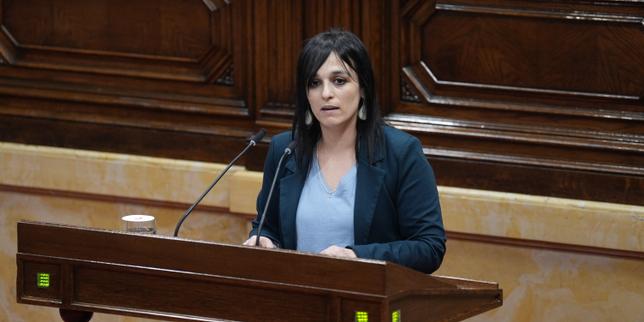
This isn't just another small fringe group. Led by Sílvia Orriols, the mayor of Ripoll, the party managed to snag two seats in the Catalan parliament during the last elections. That might sound like a tiny ripple, but in the fragile world of coalition governments, it’s a tectonic shift. They’ve managed to marry hardline separatism with a brand of identity politics that was previously considered taboo in the Catalan independence movement. Honestly, it’s a wake-up call for the establishment.
The Ripoll effect and the rise of Sílvia Orriols
You can't talk about Aliança Catalana without talking about Ripoll. This small town in the Pyrenees foothills became the epicenter of a national conversation. Orriols didn't just stumble into power; she built a base by focusing on things the bigger parties were too scared to touch. She talks about immigration, secularism, and "Catalan essence" with a bluntness that shocks some and relieves others.
Her narrative is simple. She argues that traditional separatist parties like Junts and ERC have failed because they were too soft. In her view, they traded the dream of a republic for comfortable seats in the Spanish parliament. Orriols positions herself as the only one willing to protect Catalan culture from what she describes as the dual threat of Spanish centralism and uncontrolled immigration. It’s a potent mix. It resonates with voters who feel their identity is being diluted from two different directions at once.
The 2017 attacks in Barcelona and Cambrils, which were planned by a cell based in Ripoll, left a deep scar on the town. Orriols leveraged the lingering unease from those events to push a platform that critics call Islamophobic but she calls "defensive." She isn't interested in the inclusive, "one people" rhetoric that defined the Jordi Cuixart era of the independence movement. She wants a Catalonia for Catalans, defined by very specific cultural markers.
Why the old independence movement is terrified
For years, the pro-independence movement worked hard to present itself as progressive, European, and civic-minded. They wanted to show the world they weren't like the ethno-nationalist movements of the past. Then Aliança Catalana showed up and blew that branding to pieces.
The established parties are in a bind. If they ignore Orriols, she keeps growing by siphoning off frustrated voters. If they attack her, they risk turning her into a martyr for "free speech" against the "woke establishment." It’s a classic populist trap. We’ve seen it in France with Marine Le Pen and in Germany with the AfD. The difference here is the separatist twist.
Junts+, led by Carles Puigdemont, has had the hardest time. They share some of the same voter base—people who want a clean break from Spain and aren't afraid of a bit of confrontation. But while Puigdemont tries to play the international statesman in Brussels, Orriols is on the ground talking about local security and the closure of mosques. She’s making the "respectable" separatists look out of touch.
The numbers behind the noise
Let's look at the data because that's where the real story lives. In the May 2024 regional elections, Aliança Catalana pulled in over 118,000 votes. That’s roughly 3.7% of the total. While that only translated to two seats due to the way the electoral system weighs different provinces, the geographic spread was telling. They performed exceptionally well in inland areas, the traditional heartlands of Catalan nationalism.
In Ripoll, Orriols didn't just win; she dominated. Her party took over 30% of the vote there. This proves her message isn't just an internet phenomenon. It has real-world legs. People are showing up at the polls because they feel the current system—both the Spanish state and the Catalan regional government—isn't listening to their specific anxieties about safety and cultural survival.
Critics often label the party as "far-right," a term Orriols rejects. She claims the labels of "left" and "right" are Spanish imports used to divide Catalans. By framing her movement as purely "pro-Catalonia," she bypasses traditional political baggage. It’s a clever move. It allows her to pick up voters who might usually lean left on economic issues but feel conservative on social and cultural ones.
Breaking the cordon sanitaire
In European politics, there’s this idea of a "cordon sanitaire"—a pact where mainstream parties agree never to work with the far-right. In Catalonia, the major players tried to implement this against Aliança Catalana. They wanted to keep Orriols out of any meaningful discussions or committees.
It backfired.
By trying to silence her, they gave her a massive megaphone. Every time a mainstream politician refuses to say her name or walks out of the room when she speaks, her social media engagement spikes. Her followers see it as proof that the "elites" are scared of the truth. It’s a cycle that only fuels her momentum.
The reality is that Aliança Catalana has forced immigration onto the legislative agenda. Before they arrived, the independence movement rarely discussed immigration in anything but positive, integration-focused terms. Now, the discourse has shifted. Even Junts has started using tougher language on migration and border control to stop their voters from defecting to Orriols. She’s effectively moving the goalposts for the entire region.
What this means for the Spanish government
Pedro Sánchez and his government in Madrid are watching this with gritted teeth. Sánchez relies on the support of Catalan separatist parties (Junts and ERC) to stay in power. Anything that destabilizes those parties makes his life a nightmare.
If Aliança Catalana continues to grow, it puts immense pressure on Junts to be more radical. To keep their voters, Junts might feel forced to take a harder line against Madrid, making it impossible for Sánchez to cut the deals he needs to pass budgets or legislation. The "Orriols factor" could indirectly lead to the collapse of the Spanish national government if it pushes the Catalan mainstream into a corner.
There’s also the question of the 1978 Constitution. Aliança Catalana doesn't care about Spanish law. At all. While other parties talk about "dialogue tables" and "legal pathways," Orriols talks about unilateralism as the only path. She’s the ghost of 2017 returned, but with a much sharper, more exclusionary edge.
Living in the tension
You have to understand the atmosphere in towns like Ripoll or Manresa to get why this is happening. It isn't just about big political theories. It’s about the feeling that the local pharmacy is closing, the schools are changing, and the kids are moving to Barcelona because there’s no future in the countryside.
Orriols taps into that specific rural and small-town resentment. She tells these voters their problems aren't their fault—they’re the fault of a negligent Madrid and a weak Barcelona. She offers a sense of pride and a clear enemy. In a world that feels increasingly complex and indifferent, that's a very seductive product.
The mainstream media in Spain often portrays her as a monster. But if you watch her interviews, she’s calm, articulate, and extremely disciplined. She doesn't scream. She speaks with a quiet intensity that many find more convincing than the usual political theater. That’s what makes her dangerous to the status quo. She isn't a caricature; she’s a politician who knows exactly who her audience is.
Watch the local elections
The next big test won't be in the national headlines but in the municipal elections across Catalonia. If Aliança Catalana can replicate the "Ripoll model" in ten or twenty other towns, the regional government will be forced to deal with them as a legitimate power broker.
Keep an eye on the voter turnout in the "Catalan heartland." If people who usually stay home start showing up for Orriols, the political landscape won't just be "bushed"—it’ll be unrecognizable. The era of polite, civic-minded separatism is hitting a wall. What comes next is likely to be much more polarized and much less predictable.
Don't expect the "cordon sanitaire" to hold forever. History shows that when a party gets enough votes, the "respectable" parties eventually find a way to talk to them, usually behind closed doors first. The shift is already happening in the rhetoric. The policy shifts won't be far behind. If you're looking at Spanish politics and thinking it's business as usual, you're missing the most important story in the room. Orriols isn't just a flash in the pan; she's the flame that's starting to burn the old map.
If you want to understand where this is going, stop looking at the polls in Madrid and start looking at the town halls in rural Girona. That’s where the real fight for the future of Catalonia is being waged. The old alliances are dead. Long live the new, messy, and deeply divided reality. You should start tracking the local council debates in the Osona and Ripollès regions. That's where you'll see the first signs of the next major shift in the Catalan independence movement.